Christmas and Expectations
When I was a young adult, I remember hearing that the holidays were hard for many people. I understood what the words meant, but because my family’s holidays had always been uncomplicated and upbeat, I didn’t appreciate what people were talking about when they said it.
Then I got married, adopted a child, and got divorced. And I began to understand why holidays might be hard.
I distinctly remember the first several years after my husband and I split up. We had decided on an alternating schedule for our son. He would have Thanksgiving with one family and Christmas with the other. The following year, we would do the reverse.
We had also agreed to stay in Virginia for at least part of Christmas Day, even though both of our extended families were from New York, so the off-year parent could see our son for a few hours, exchange gifts, and have some version of a meal.
When my son was about five, it was an off-year Christmas on my end, so he was with me for a few hours in the morning. Then he went to New York with his dad. I had a girlfriend at the time, and she went to visit her family in another state.
That left me alone by about 1 p.m. It was a weekday Christmas–a Tuesday–and I remember sitting at the kitchen table, paying bills like it was any other Tuesday. It was pretty depressing.
Each year since then, I’ve been sure to make plans that involve something other than paying bills, and some of those holidays have been lots of fun. But none of them have had the look or feel of the Christmases I grew up with and expected to replicate as an adult.
Christmas was a big deal in my house when I was a kid.
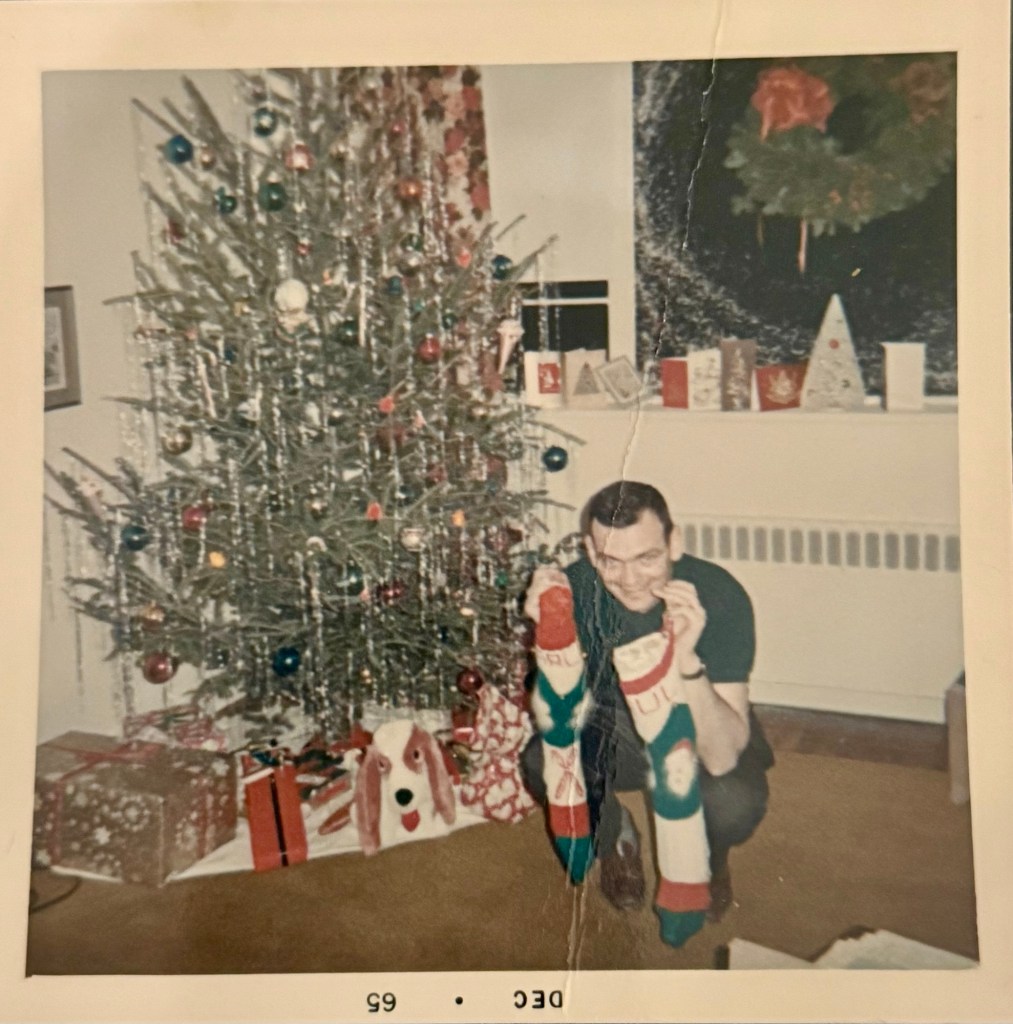
Every year, my parents put up a tree a few weeks before the holiday, and we all decorated it together. My dad made two big wreaths and hung them on either side of the front door, then strung lights in the bushes outside. Inside, my mom put up greens and holiday decorations collected over the years. The stockings she had knitted for each family member were hung on the mantle.

Dinner on Christmas Eve was usually spent with family friends. When we got home that night, we drank eggnog and sang Christmas carols from songbooks I can still picture.
My sister and I slept in the same room on Christmas Eve, even after we moved to a house where we had our own rooms. Whoever was up first woke the other person, usually at a ridiculously early hour. We then had to wait until 7 a.m., when my parents allowed us to go downstairs.
Next to the Christmas tree in the living room was a crèche. Baby Jesus spent the weeks leading up to Christmas lying next to the manger. On Christmas morning, my father read a very long Bible passage about the Nativity, and then one of us got to move baby Jesus into the manger. Then we (finally) got to open our gifts before going to Mass.
After church, my mom made a big brunch, and we ate on special Christmas plates her father had collected one by one over a number of years.

Christmas afternoon always involved a big gathering with my father’s brothers and their families. It was a busy day with cousins, aunts, uncles, grandmothers, food, gifts, chatter, and laughter.
My childhood Christmases probably had tensions I don’t remember or didn’t even realize were there. I just remember them being lively and full.
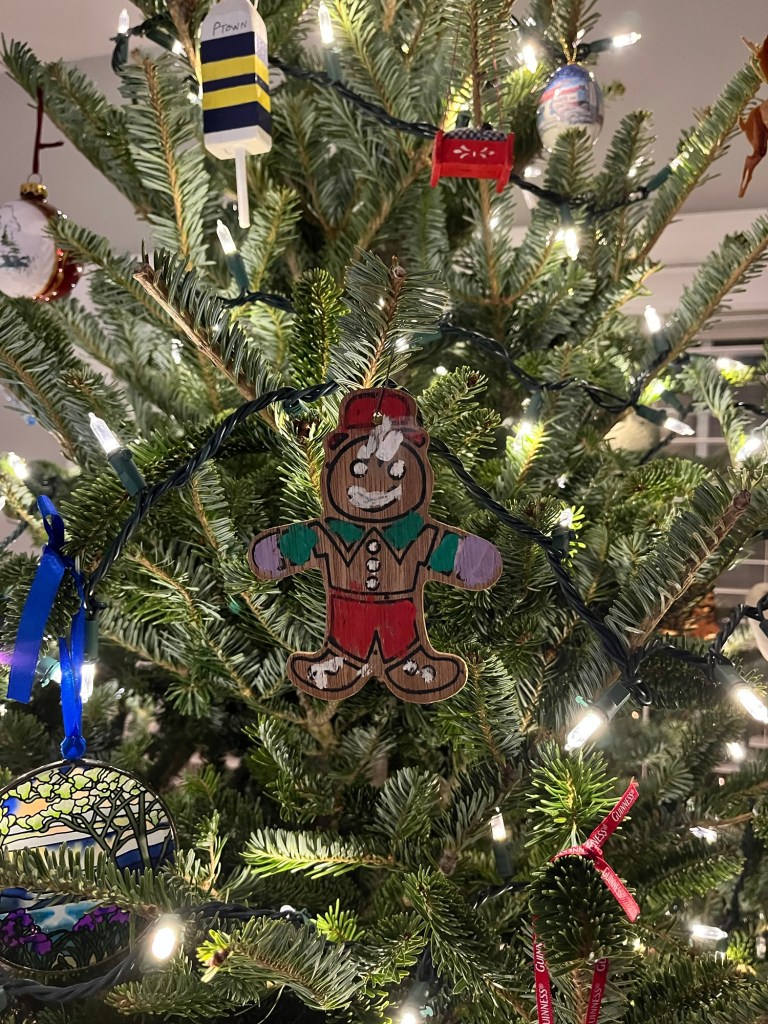
I have replicated a few of those traditions as an adult. I get a tree every year and put up some of the ornaments that used to hang on my parents’ tree. I also put out some decorations around the house, though in a style more minimalist than my parents. But the day is much quieter than it was when I was young, and the way I celebrate it has changed every year.
Some years my son has been with me, and some he hasn’t. Some years I’ve been partnered, and many years I haven’t. Since getting divorced from my husband, I’ve never developed a consistent, happy Christmas Day routine like I had when I was a kid or during the years we were married.
Instead, I’ve found myself cobbling together plans each year and getting through Christmas Day, rather than looking forward to it.
I recognize that other people have far weightier reasons for struggling through the holidays, especially those who have lost someone close to them.
Ironically, some of my family’s happy routines likely grew out of my mom’s response to the glum holidays she experienced as a child.
My grandmother’s father died of tuberculosis when she was four; nearly 20 years later, her mother died in a psychiatric institution; and when my grandmother was 30, her first child died of pneumonia at 19 months.
I know early death was much more common in those days. Still, that was a lot of loss for a young person to handle, and I can see how someone would feel low during the holidays many years later, thinking of all the people they were missing. I believe my mom went to great lengths to make our holidays celebratory and special so that we wouldn’t experience them as she likely did as a child.
I’m sure many people who struggle through the holidays have things under the surface that they’re thinking about, as my grandmother undoubtedly did. Holidays can shine a spotlight on anything that isn’t right in your life; any emptiness feels worse at Christmas.
It dawned on me recently that I’ve been focusing on emptiness for the past 20 years. When I was young, I always assumed I would be married for life, to a man, and have three or four children. (Wrong, wrong, and wrong.)
While I know that divorcing my husband and living a gay life was right for me, I realize that I’ve spent decades feeling sad that my makeshift holidays bear no resemblance to the Norman Rockwell-ish Christmases from my youth.
And I think it’s about time for me to give up the ghost, as they say, to stop feeling that my Christmases these days are “less than” because they don’t look like they did 50 years ago, under entirely different circumstances.
So, here’s to the setting of a new tradition from a person who has spent a lifetime seeing the glass as half empty. Here’s to recognizing that all of my Christmases, every single one of them, have been incredibly abundant and privileged.
And here’s to letting go of the expectations of how things were supposed to be and appreciating and celebrating how good things actually are.



 I Can See Kinda Clearly Now
Hi Cuz. Another great post. As someone who had similar past experiences this one I am all too familiar…the holidays are a struggle. I hope your new way of thinking rubs off a bit on me 🙂 Merry Christmas!!
LikeLiked by 1 person