Today is the unofficial end of summer, and I couldn’t resist the chance to do to myself what I have asked my students to do each fall when they return to my high school English classroom – write about their summer vacation. Here are a few highlights from my COVID-tinged time off …
Crab Apple Pie
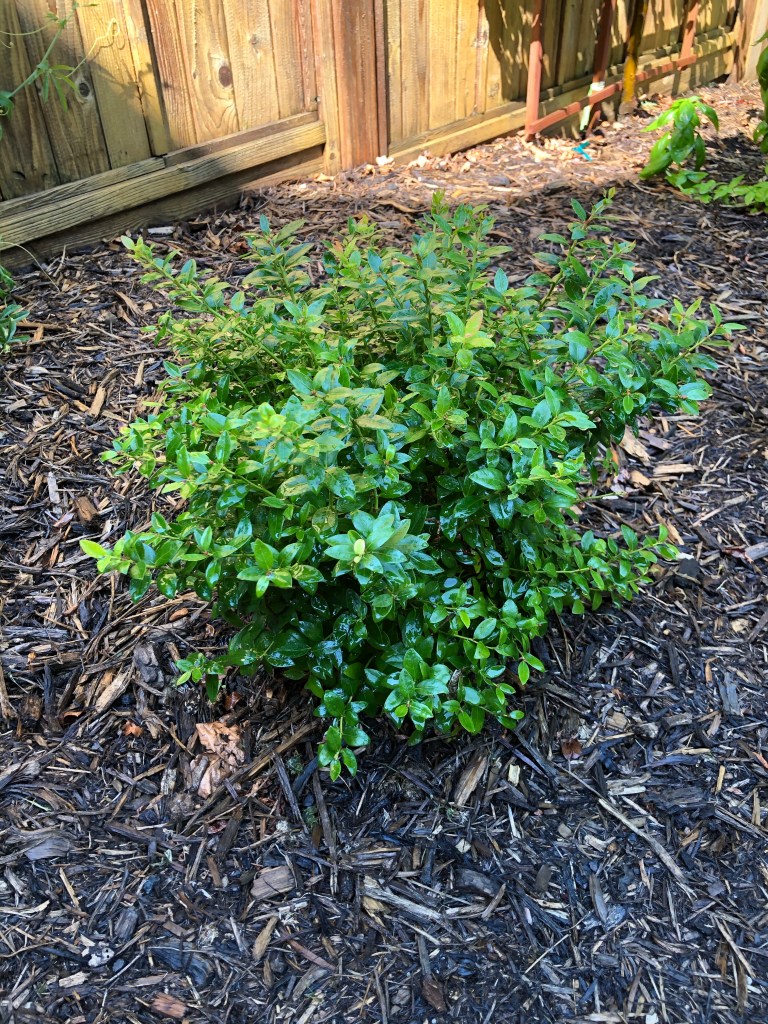
When my local pool announced they would not be opening this summer, thereby squashing my annual summertime lap swimming routine, I felt panicked about not having any outside time for several months. I did a lot of walking this spring, but exercising outside of a pool in Virginia in the summer is out of the question for ladies like me who can’t stand feeling overheated. I realized I needed to find a reason to be outdoors, albeit in short spurts.
A friend told me that for a small fee, a local garden center would send a landscape designer to my house to advise me on what kind of garden I might be able to plant. What a great idea! As a new vegan, I could grow a vegetable garden and supply one of my main sources of food simply by turning 1/8 of my suburban back yard into farmland! Now I would know where some of my food was sourced, and I could continue my march towards being off the grid. Or something like that.
A few weeks later, I set up the appointment and a landscape designer came to show me how and where to plant some tomatoes and cucumbers, or so I thought. As it turned out, she had something more elaborate in mind, dropping words like “espalier” and “small boulders” as she conveyed her vision. I realized this was going to be more involved than I had originally planned.
I told her what my budget was, exaggerating by double in hopes of impressing her because I thought she was attractive. She proposed that what I really wanted would cost double that figure (if you’re doing the math, you realize we’ve now quadrupled my actual budget). She did say I could cut out any of the plantings she was going to include in her quote if I didn’t want to spend that much.
The proposal she emailed a few days later confirmed that she wasn’t kidding – her plan was going to cost one-third of my paycheck for the summer school class I was teaching. Well, I told myself, I didn’t expect to be hired to teach the summer school class, so this garden could be a bonus expenditure for the summer. In a moment of whimsy, I opted to go ahead with the whole plan. Or, as Monty Python’s Mr. Creosote would say (the character poised to order every item on a French restaurant menu), “I’ll have the lot.”
A bunch of men came over a few weeks later and spent the better part of a day digging stuff up and hauling things around. The cute landscape designer had moved out of town just before the garden installation and never came back. So much for impressing the lady.
Here’s the backyard makeover.

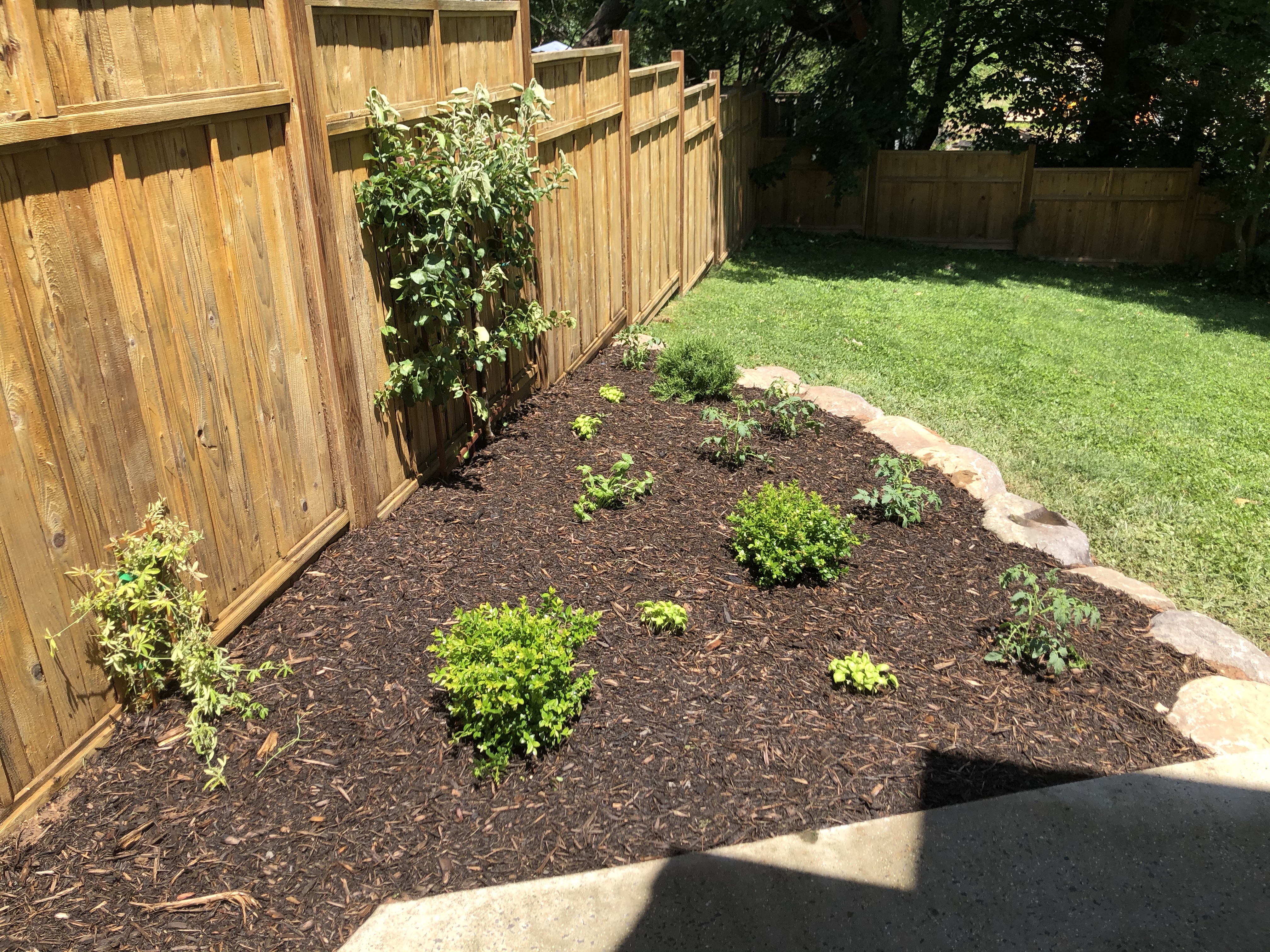
Slide the screen to see the before and after

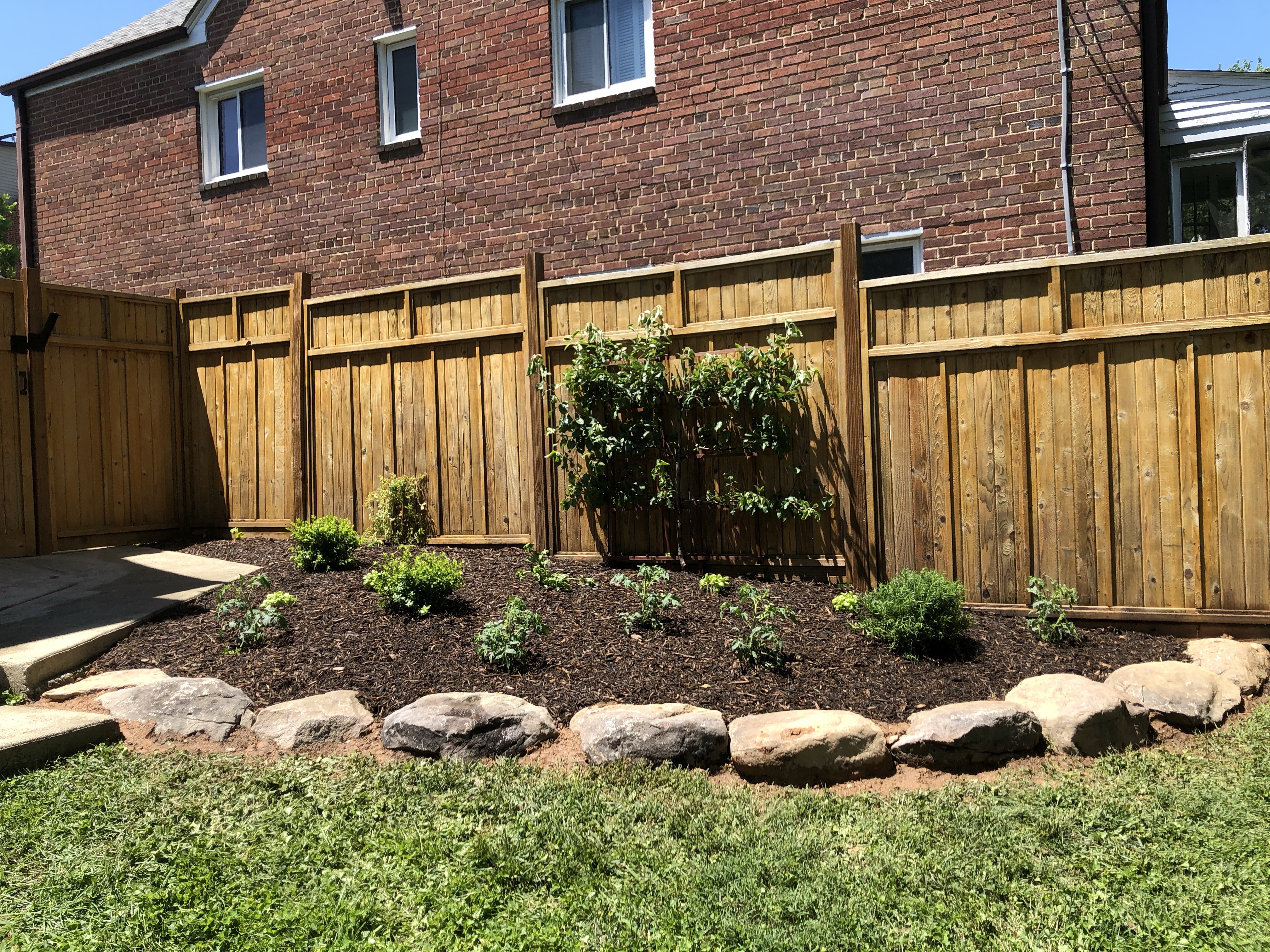
Jack and the Beanstalk action going on as of today (two months after the install):

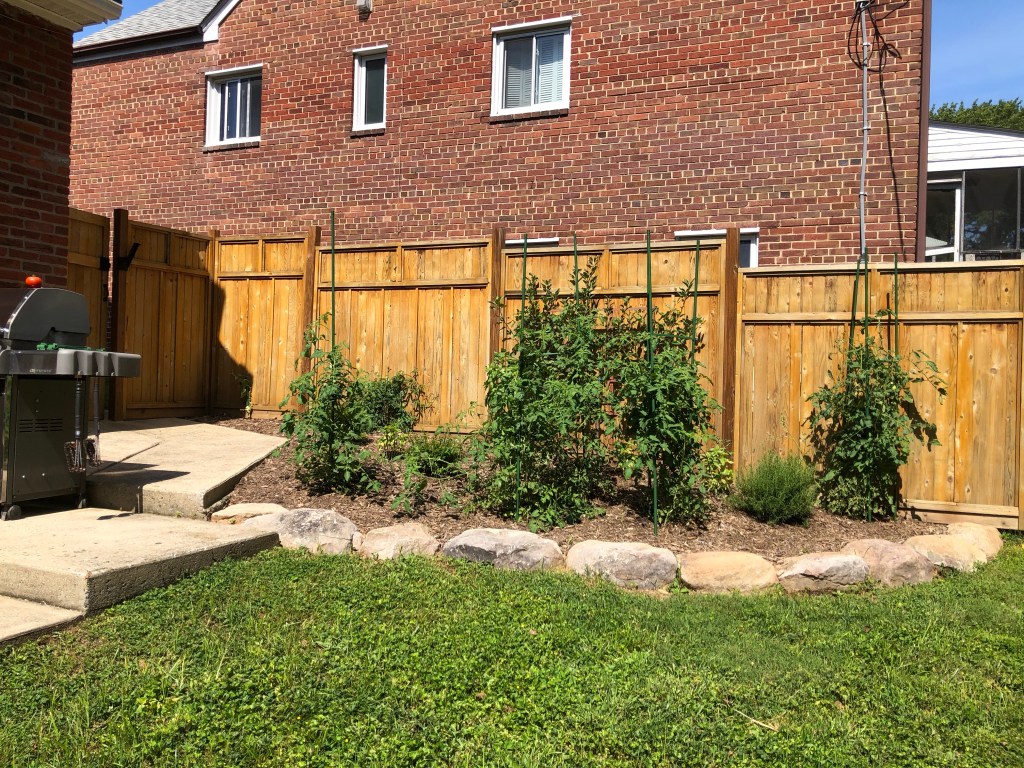
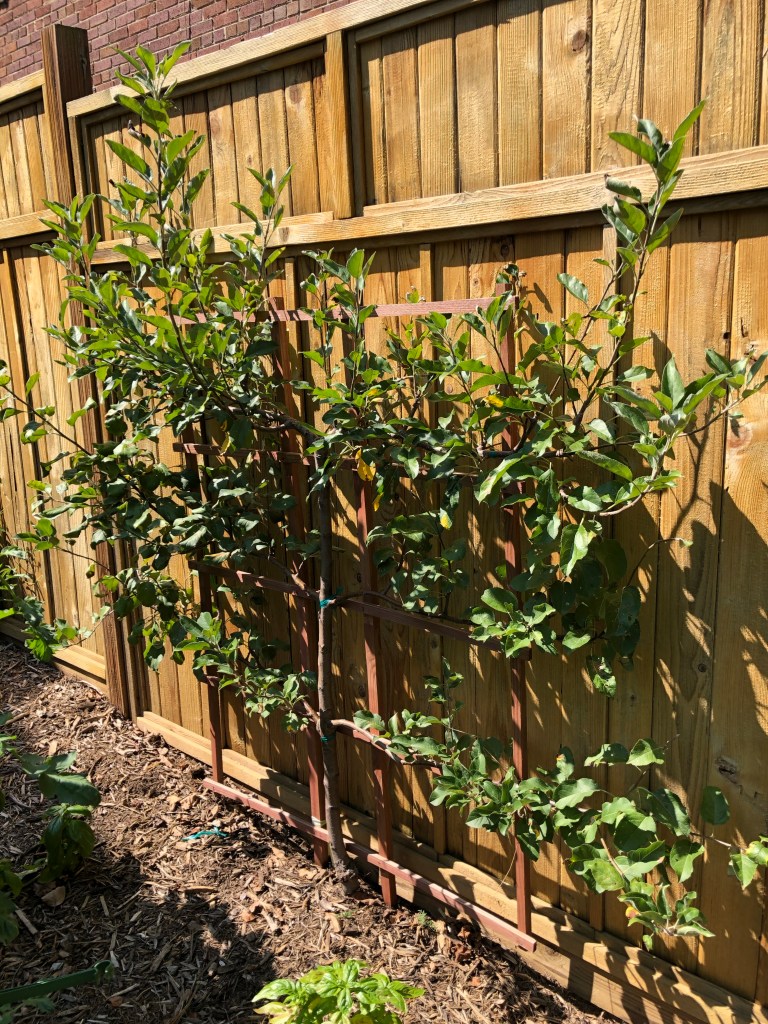
When I told a friend who is an avid and talented gardener how much I had spent and on what, she could barely contain herself. One of the things she yelled was, “An apple espalier??? The only thing that’s going to grow is crab apples!”
I said, “Well, then I’ll be happy to have you over for crab apple pie. A la mode.”
I did end up growing one edible tomato, a boatload of rosemary, and enough basil to supply all of the Olive Gardens in Northern Virginia for at least a week.
I also got my very important outdoor time. I would say I spent an extra 48 minutes outside (total) this summer, mostly turning the sprinkler on and off. No, I didn’t bother to water the garden by hand with the new hose I purchased, or lovingly putz around pulling weeds and fluffing things up. Instead, I mostly dragged that sprinkler around and then came inside feeling annoyed that my flip flops were wet and grassy.
Definitely a win.

Neither can I



Eufy
Summer highlight #2: getting a robot vacuum.
I began coveting robot vacuums a few months ago after seeing an ad for one. I love a neat home, but I hate to vacuum. A robot vacuum seemed like a perfect solution – a machine makes the room tidy while I watch Hulu.
I only hesitated to buy one because they aren’t cheap. However, after filling out a health assessment survey for Kaiser Permanente for the sole purpose of earning a $100 Visa reward card, I felt justified in buying a Eufy.
“It’s practically free!” I told myself.
A friend who has owned both of the leading brands (iRobot and Eufy) told me Eufy was the better choice. I followed her advice and ordered one, and in early July, the nice people at Amazon delivered the new addition to my family. It was love at first sight.
All I have to do is move any cords or small objects off the floor and turn the Eufy on. It does the rest, efficiently working the room to restore order.
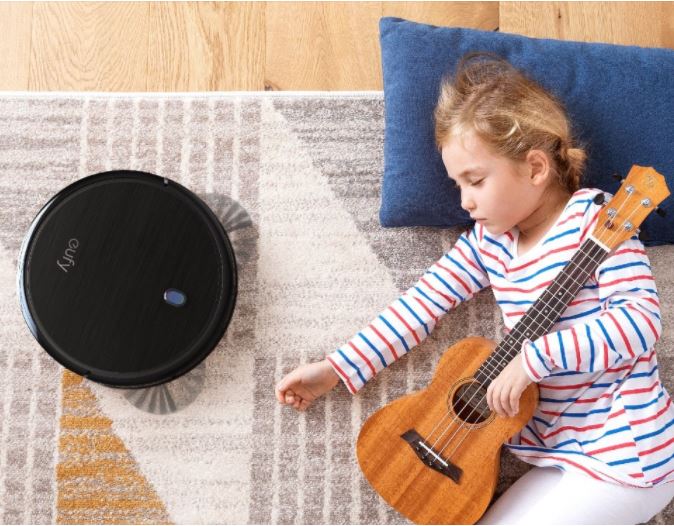
I love this photo of the vacuum in action found on the Eufy website, www.eufylife.com. (It’s not just a vacuum! It’s a lifestyle!) Presumably, the point is to reassure you that Eufy won’t inhale your ukulele-playing three-year-old as it quietly cleans your rug. Having watched this thing operate, though, I promise you that it will wake her up. Maybe she shouldn’t nap in the middle of the living room floor?
But I digress.
I started noticing recently that I feel something oddly akin to parental pride when Eufy successfully cleans up some crumbs or cleverly turns away from the edge of the stairs.
I was disappointed the other day when Eufy tried for the millionth time to climb over the wooden border around the fireplace. I wondered why there wasn’t an algorithm or something that helps the vacuum remember it’s been down this road before and it doesn’t end well.
Remember? You’re going to get marooned again!
I walked over to the fireplace and said out loud, “You know better than that, Eufy!” before gently helping it off the ledge and back onto solid ground.
If you are wondering why I’ve grown so attached to a small appliance and/or why I view buying a vacuum as a highlight of the summer, you have company. I think I need a pet. Stat.
Frank Sinatra
A highlight of the summer that was more meaningful than apples or vacuums was taking a creative nonfiction writing class. Pre-pandemic, I would have searched for an in-person class somewhere in the D.C. area; however, because that wasn’t an option, I took an online course with Gotham Writers Workshop, a group located in New York City.
It was a six-week course that offered an overview of various types of nonfiction writing: personal essays, memoir, travel writing, profiles, feature articles, and reviews. The class met on Zoom every Wednesday night for three hours, and while most of my 11 classmates were in the New York City area, there were people taking the course from all over the country.
Unlike in college, where I Cliff-Noted my way past many of the traditional readings that did not hold my attention, I found the reading assignments for this course extremely interesting. My two favorites were On Earth We’re Briefly Gorgeous, a memoir by Ocean Vuong, and “Frank Sinatra Has a Cold,” a profile article by Gay Talese about Ol’ Blue Eyes.

The readings were compelling and the discussions thought-provoking; I also felt I learned a lot about writing. The 500-word limit on each assignment challenged me to hone the skill of packing more description into fewer words. Turns out the “less is more” philosophy I employ in other areas of my life (home decorating, for example) is necessary in my writing as well.
But I think the bigger takeaway in this experience came in the reminder that for me, in order to “live” and not just “endure” life as a middle-aged single mom sharing space with an often-times irritable teen, I need to continue to learn and grow.
So there it is – my summer vacation. No swirling romances, no European sojourns. Just me, my tomato, my over-achieving vacuum, and a newly found creative itch that I’m scratching. More to come…











 I Can See Kinda Clearly Now