Giving Up the Ghost

Christmas and Expectations

When I was a young adult, I remember hearing that the holidays were hard for many people. I understood what the words meant, but because my familyโ€™s holidays had always been uncomplicated and upbeat, I didnโ€™t appreciate what people were talking about when they said it.

Then I got married, adopted a child, and got divorced. And I began to understand why holidays might be hard.  

I distinctly remember the first several years after my husband and I split up. We had decided on an alternating schedule for our son. He would have Thanksgiving with one family and Christmas with the other. The following year, we would do the reverse. 

We had also agreed to stay in Virginia for at least part of Christmas Day, even though both of our extended families were from New York, so the off-year parent could see our son for a few hours, exchange gifts, and have some version of a meal.

When my son was about five, it was an off-year Christmas on my end, so he was with me for a few hours in the morning. Then he went to New York with his dad. I had a girlfriend at the time, and she went to visit her family in another state. 

That left me alone by about 1 p.m. It was a weekday Christmasโ€“a Tuesdayโ€“and I remember sitting at the kitchen table, paying bills like it was any other Tuesday. It was pretty depressing.

Each year since then, Iโ€™ve been sure to make plans that involve something other than paying bills, and some of those holidays have been lots of fun. But none of them have had the look or feel of the Christmases I grew up with and expected to replicate as an adult.  

Christmas was a big deal in my house when I was a kid.

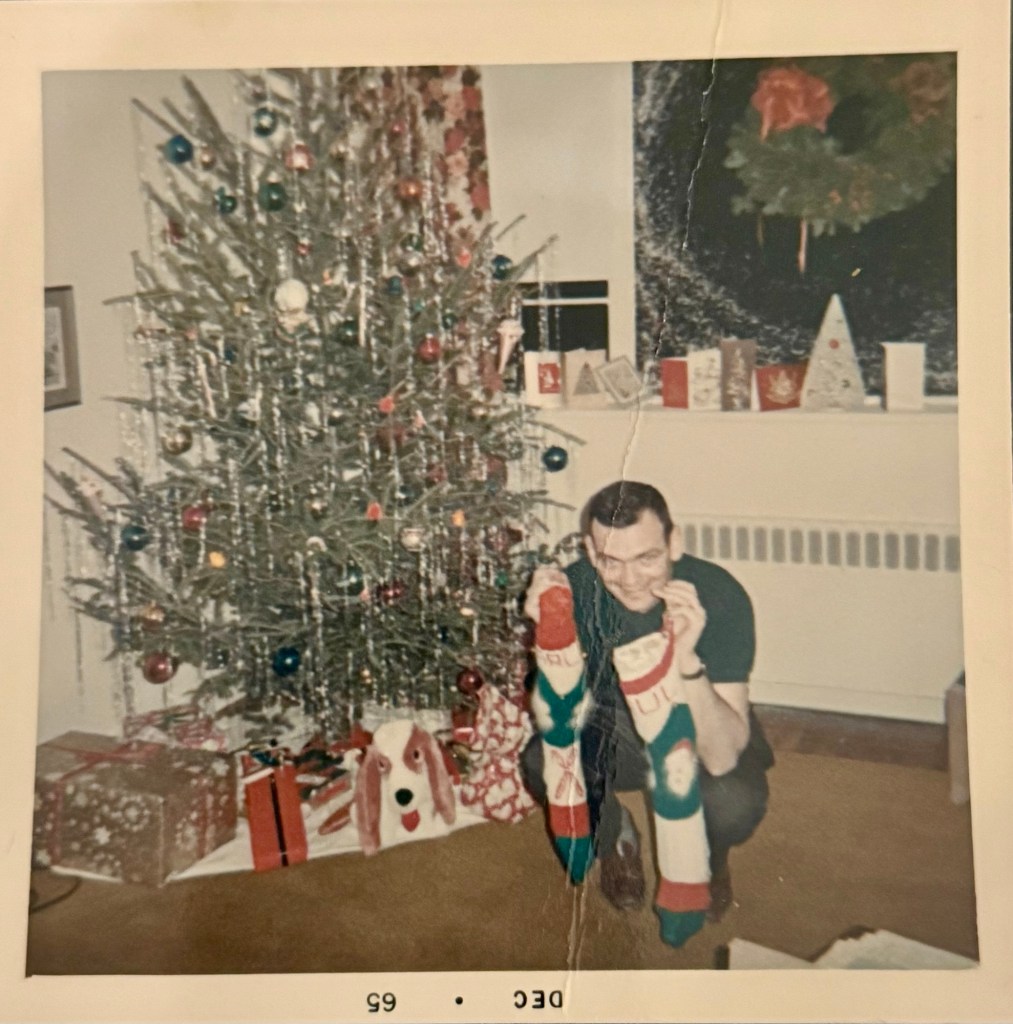
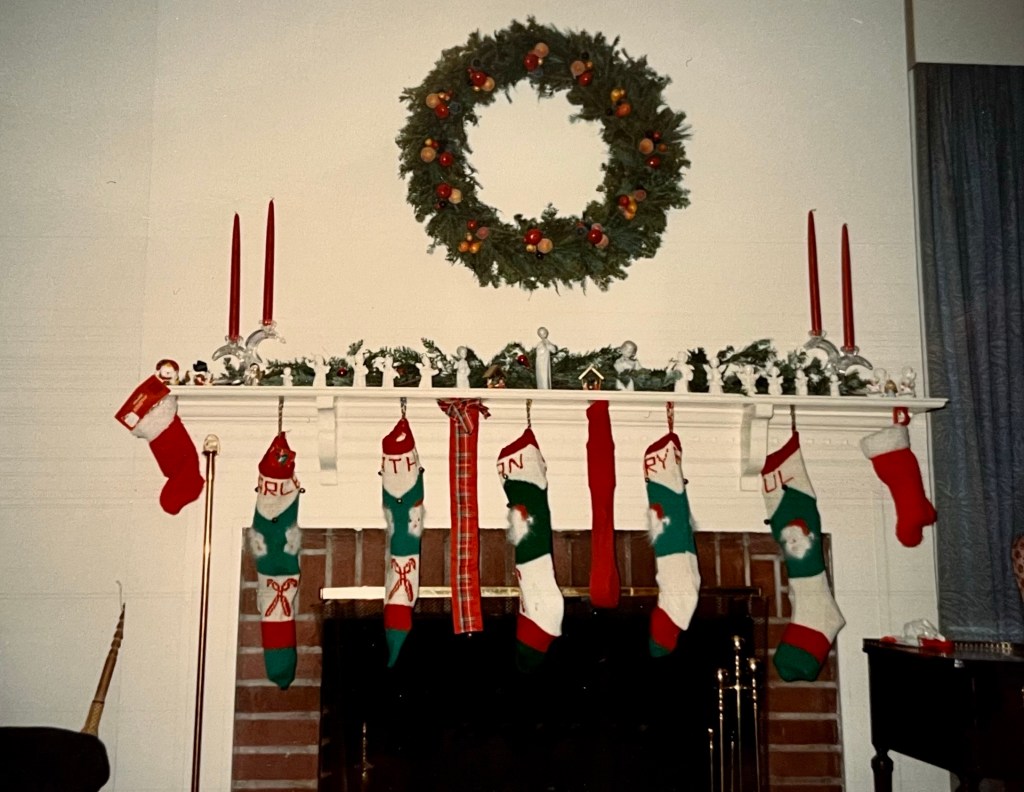
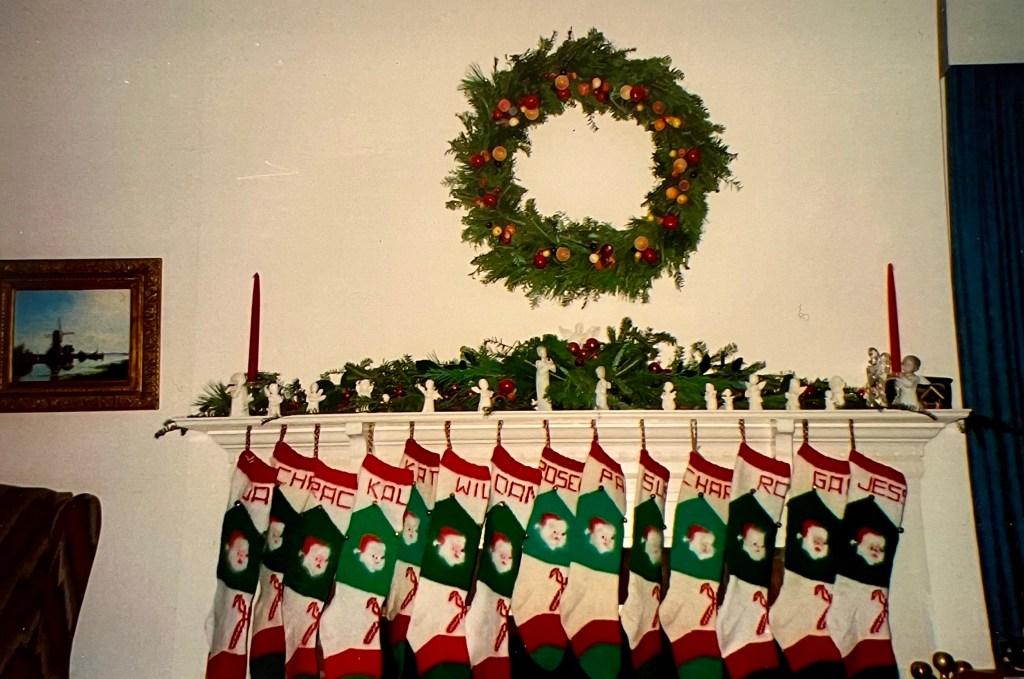
Every year, my parents put up a tree a few weeks before the holiday, and we all decorated it together. My dad made two big wreaths and hung them on either side of the front door, then strung lights in the bushes outside. Inside, my mom put up greens and holiday decorations collected over the years. The stockings she had knitted for each family member were hung on the mantle.

Even the cat and dog got in on the action โ€” the little red stockings are theirs

Dinner on Christmas Eve was usually spent with family friends. When we got home that night, we drank eggnog and sang Christmas carols from songbooks I can still picture. 

My sister and I slept in the same room on Christmas Eve, even after we moved to a house where we had our own rooms. Whoever was up first woke the other person, usually at a ridiculously early hour. We then had to wait until 7 a.m., when my parents allowed us to go downstairs.

Next to the Christmas tree in the living room was a crรจche. Baby Jesus spent the weeks leading up to Christmas lying next to the manger. On Christmas morning, my father read a very long Bible passage about the Nativity, and then one of us got to move baby Jesus into the manger. Then we (finally) got to open our gifts before going to Mass.

After church, my mom made a big brunch, and we ate on special Christmas plates her father had collected one by one over a number of years.

One of my grandfather’s plates

 Christmas afternoon always involved a big gathering with my fatherโ€™s brothers and their families. It was a busy day with cousins, aunts, uncles, grandmothers, food, gifts, chatter, and laughter.

My childhood Christmases probably had tensions I donโ€™t remember or didnโ€™t even realize were there. I just remember them being lively and full.

I have replicated a few of those traditions as an adult. I get a tree every year and put up some of the ornaments that used to hang on my parents’ tree. I also put out some decorations around the house, though in a style more minimalist than my parents. But the day is much quieter than it was when I was young, and the way I celebrate it has changed every year.

Some years my son has been with me, and some he hasnโ€™t. Some years Iโ€™ve been partnered, and many years I havenโ€™t. Since getting divorced from my husband, Iโ€™ve never developed a consistent, happy Christmas Day routine like I had when I was a kid or during the years we were married.

Instead, Iโ€™ve found myself cobbling together plans each year and getting through Christmas Day, rather than looking forward to it. 

I recognize that other people have far weightier reasons for struggling through the holidays, especially those who have lost someone close to them.

Ironically, some of my familyโ€™s happy routines likely grew out of my momโ€™s response to the glum holidays she experienced as a child. 

My grandmotherโ€™s father died of tuberculosis when she was four; nearly 20 years later, her mother died in a psychiatric institution; and when my grandmother was 30, her first child died of pneumonia at 19 months.

I know early death was much more common in those days. Still, that was a lot of loss for a young person to handle, and I can see how someone would feel low during the holidays many years later, thinking of all the people they were missing. I believe my mom went to great lengths to make our holidays celebratory and special so that we wouldnโ€™t experience them as she likely did as a child.

Iโ€™m sure many people who struggle through the holidays have things under the surface that theyโ€™re thinking about, as my grandmother undoubtedly did. Holidays can shine a spotlight on anything that isnโ€™t right in your life; any emptiness feels worse at Christmas.  

It dawned on me recently that Iโ€™ve been focusing on emptiness for the past 20 years. When I was young, I always assumed I would be married for life, to a man, and have three or four children. (Wrong, wrong, and wrong.) 

While I know that divorcing my husband and living a gay life was right for me, I realize that Iโ€™ve spent decades feeling sad that my makeshift holidays bear no resemblance to the Norman Rockwell-ish Christmases from my youth. 

And I think itโ€™s about time for me to give up the ghost, as they say, to stop feeling that my Christmases these days are โ€œless thanโ€ because they donโ€™t look like they did 50 years ago, under entirely different circumstances. 

So, hereโ€™s to the setting of a new tradition from a person who has spent a lifetime seeing the glass as half empty. Hereโ€™s to recognizing that all of my Christmases, every single one of them, have been incredibly abundant and privileged.

And hereโ€™s to letting go of the expectations of how things were supposed to be and appreciating and celebrating how good things actually are.

My dad the night before my brother’s first Christmas
Lamby, my first favorite Christmas gift
My second favorite Christmas gift — a cowboy hat
The mildly lopsided tree at my house last year
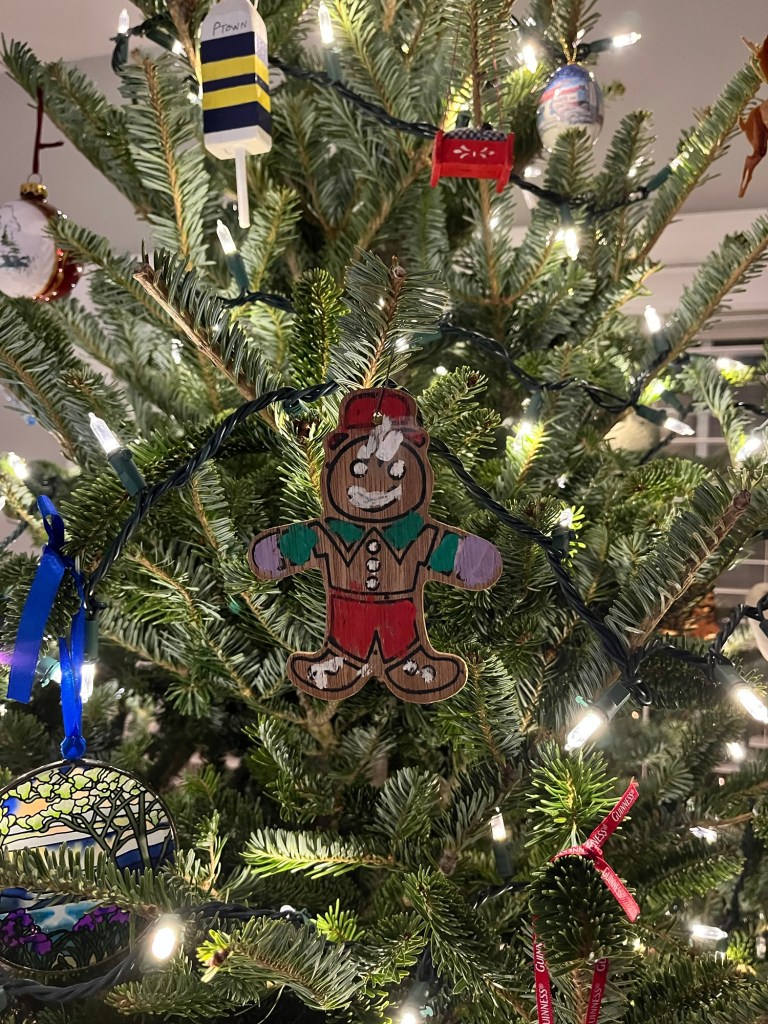
An ornament I made as a child, along with others from many different years and places

A Small Number of Days

A week before Motherโ€™s Day, I walked out of a bookstore in Washington, D.C., got in my car, and backed straight into a parked pickup truck. I actually watched the whole thing unfold on my carโ€™s rearview camera; it even took me a moment to stop after my bumper made contact. The gentleman sitting in the pickup truck seemed as surprised as I was.

The bookstore I had just come out of had a prominent display of Motherโ€™s Day cards that caught me off guard. I found myself tearing up at the sight of them and left in a hurry, only to notice as I walked to my car that there was a mural painted on the side of a building that read โ€œCall Your Motherโ€ in giant letters. (I later learned it was the name of a delicatessen in that block of stores.)

Earlier that day, I was thinking that I was doing better than I expected just three weeks after my motherโ€™s death. But maybe thatโ€™s how grief works. One moment youโ€™re feeling fine, the next youโ€™re in a fog because youโ€™ve had a reminder of the person youโ€™ve lost.

My momโ€™s death on April 21 was not unexpected. She was hospitalized in early March with a blood infection and moved from the intensive care unit to hospice five days later after doctors shared her prognosis: the only fix for her infection was major surgery, and they werenโ€™t sure she was even a candidate. My dad and siblings and I ultimately decided the only choice was to honor my motherโ€™s wishes in the living will she signed years before dementia set in. There would be no extraordinary measures taken, no artificial feeding tubes or intubation, no waiving of the Do Not Resuscitate order.

It was to be a tough end to a tough few months. As we anticipated, she didnโ€™t understand why she had to move in January to the memory care unit at Brightview, a senior living facility, or why she and my father werenโ€™t in the same room. She never stopped asking to go home.

I believe each member of my immediate family will count the first few months of this year as some of the hardest in our lives.

My parents both caught Covid three weeks after moving in, and what was left of my motherโ€™s cognitive skills never returned. It was only a few weeks later that she was hospitalized and subsequently transported by ambulance from the ICU near Tarrytown to Calvary Hospital in the Bronx, a facility devoted to caring for people with advanced illnesses, many of them terminal.  

We didnโ€™t expect her to be at Calvary for long. A palliative care doctor at the ICU who met with our family to discuss options examined her and said she expected my mom would live โ€œa small number of days.โ€ 

She cautioned that it was impossible to predict exactly when the end might come; it might be sooner or much later than a few days. She was right about that. My mother ended up living for another 5 ยฝ weeks. 

Morning walks to the water near my sister’s house brought a welcome dose of serenity

During those weeks, we spent more time together as a family than we had since my siblings and I were in high school. Expecting the end to be imminent, I stayed at my sisterโ€™s house near Calvary for three weeks, then went home to Virginia for two weeks and returned for another week. My brother came back and forth from Boston and was also a lodger at my sisterโ€™s house. Throughout our comings and goings, my sister and dad went to the hospital every day.

My brother and I commandeered the office in my sister’s house for remote work

Iโ€™m not someone who always looks on the sunny side of things. The month and a half my mom was hospitalized was a profound and dark period, to be sure. What surprised me, though, both at the time and in reflection, was that there was some beauty amidst the suffering. 

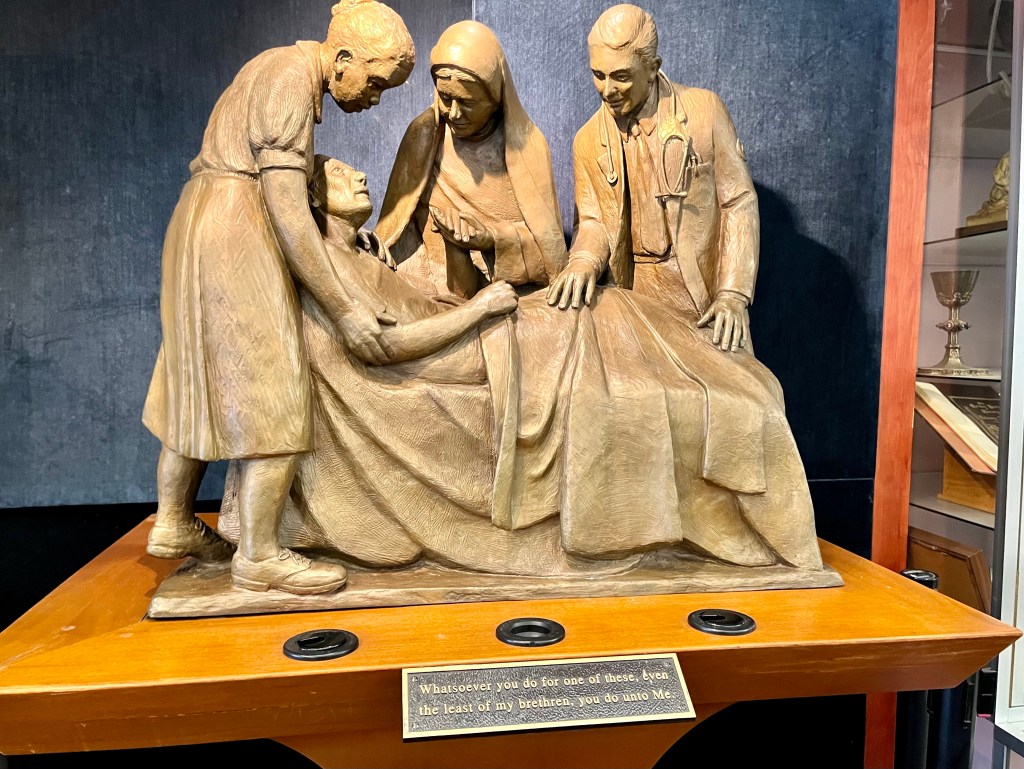
One unexpected bright spot was the people we encountered at Calvary. Compared to the ICU, with its flurry of beeping monitors and people rushing in and out, Calvary was quiet and calm. But more impressive than the atmosphere was this group of individuals who have the capacity to work with the terribly ill every day. When I could bring myself to glance into other rooms as I walked up the hall, I saw people who were bloated, hazy, listless. It takes a special person to give compassionate care to the sickest among us day in and day out. And yet the nurses, aides, doctors and the social worker were, to a person, competent, gentle, and respectful with patients and their families. I found it stunning.

One of the first mornings we were there, I said to one of the nurses, โ€œThis must be a hard place to come to work every day.โ€

She looked confused. โ€œNo it isnโ€™t. Itโ€™s a good place to work.โ€

Her brow furrowed and I was immediately embarrassed. I mumbled something about not being good with medical things before moonwalking away from the nursesโ€™ station.ย 

In the lobby of Calvary Hospital

In addition to the superb group at Calvary, I was also touched by every kindness shown to me and to our family. Friends dropped off food, puzzles, bags of groceries. Drove me to and from the train station. Called, texted, and sent cards and flowers letting us know people were thinking of us. Arranged to have a meal delivered. Invited us over for drinks. Brought over a meal and spent an evening with us. 

Gestures from my immediate family touched me too. My brother, who has made more than 30 lasagnas since the pandemic started as part of Lasagna Love, decided we needed a lasagna, brought down the ingredients from Boston, and made one for us. My sister, who quietly kept us all together, did scores of thoughtful things, including making me a sandwich and putting a Diet Coke in the car for me as I got ready to drive to the hospital the morning we were told that my mom was close to the end. My father continued to think about others during the saddest period of his life, showing up one morning with a birthday card and three wrapped books he had carefully chosen for my brother-in-law.

The small things mattered. 

A book I read about palliative care as I traveled between New York and Virginia helped me feel more at peace with the situation. It was a reminder that death is natural and certain, and sometimes the best we can do is make sure our loved one is as comfortable as possible and then just walk alongside them. 

My last real interaction with my mom came two weeks before she died. I walked into her room, took her hand, and said hello. Though itโ€™s been quite a few years since I crossed a street holding her hand, it felt familiar. โ€œHi Toots,โ€ she said softly, her voice hoarse but clear, and she pulled my hand up and kissed it, then smiled.ย 

At the lunch after my mom’s funeral. It felt a little weird taking a smiling picture for such an occasion, but the wake and funeral truly felt like celebrations of her life. She would have loved the fact that we were all together.

Perhaps the most unexpected outcome of my momโ€™s time in the hospital was that it made me less afraid of death. That may be in part because she was so diminished โ€“ so small and vulnerable, not at all as she was during the rest of her life โ€“ that there was no doubt this was her time to go. The mental and physical aspects of her life were over. We do only get a small number of days, after all, and hers were clearly done. 

As with most mothers and daughters, ours was not a perfect relationship. There were frustrations and arguments over the years. But these last few months I have found myself coming back to one simple thought: Iโ€™m glad she was my mom. 

Iโ€™m not sure either one of us could have hoped for more.

This Old House

I learned recently that my dog helped our family buy a house.

In 1977, when I was nine, my parents put in a bid on a house two blocks away. The house went on the market in the morning, and before noon, the sellers had four identical offers. 

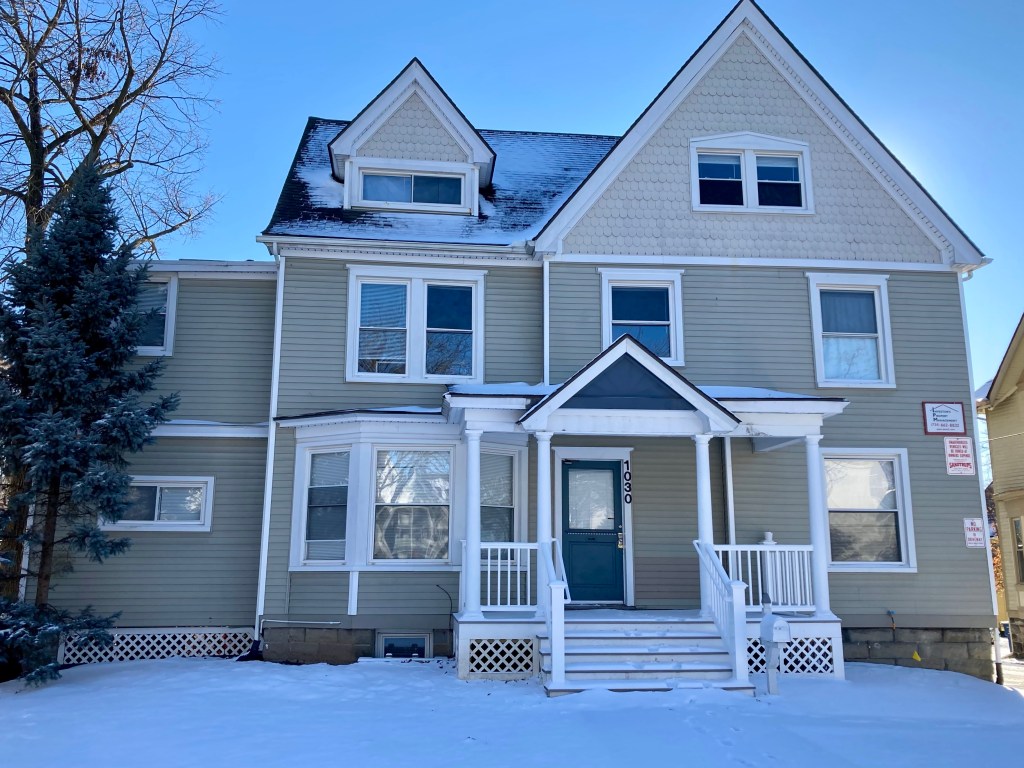
After weighing their options, they decided to accept my parentsโ€™ bid when they learned that my father was the man who always walked a three-legged dog past their house. Our dog, Inky, had been hit by a car the year before. She survived, but one of her back legs had to be amputated. While some of our neighbors didn’t know us, many of them recognized Inky, and that turned out to be the reason we ended up at 138 Kelbourne Avenue.

The rest of my family was excited about the move, but I wasnโ€™t. I was happy that Iโ€™d be getting my own room โ€“ my sister and I would no longer have reason for regular turf wars โ€“ but I wouldnโ€™t be able to look out the window to see if my friends were outside playing kickball or Kill the Carrier. I groused about having to walk two whole blocks to find playmates.

Little did I know that this house would serve as the backdrop for most of our familyโ€™s important life events for the next four decades. 

Two months ago my parents moved out of the house and into an assisted living and memory care facility. My siblings and I have spent a lot of time at the house since then getting it cleared out so it could be sold.

Eloquent birthday poem I wrote for my dad

Going through the closets and boxes was like opening a time capsule. We discovered that my mother kept EVERYTHING. In neatly labeled boxes in nearly every room upstairs, we found drawings, music programs, and elementary school report cards (my teachers wrote things like โ€œSusie is trying to control her silliness!โ€ and โ€œSusie will have to be careful of โ€˜attitudeโ€™ and โ€˜behaviorโ€™ in the futureโ€). There were poems, postcards, letters home from college. I even found the book of cut-out letters and pictures that my mom and I made together when I was learning the alphabet in kindergarten.
In addition to the volume of memorabilia, I discovered that my siblings and I are remarkably in-sync as adults. Even though we have very different personalities and have been spread out over the Eastern Seaboard for the last 30 years, as weโ€™ve come together to clear out the house, we have been in lockstep about what is important and what is not important. Important: supporting my dad, trying to ensure that my mom is being well cared for, breaking down the house efficiently and respectfully; not important: claiming furniture, jewelry, and other material goods from the house.

If you had told me when I was a kid that my siblings and I would be so aligned as adults, I might have been surprised. After all, some of my clearest memories in the house are the epic fights I had with each of them.

Banished to the basement

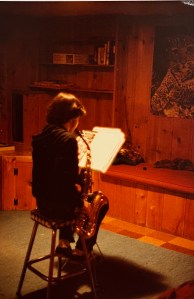
My brother Charlie was in the room next to mine and hated listening to me practice my saxophone. He claimed he couldnโ€™t concentrate on his studies over the sound of scales and repeated renditions of โ€œThe Pink Panther.โ€ My parents took his side and I was sent to the basement to practice so he could concentrate on his homework. That lasted a few weeks. Then he got caught listening to records instead of studying, and the jig was up. Every time I see a picture of the band KISS or hear a song from Frampton Comes Alive, it brings a huge smile to my face. Show me the way, Chibs!

My sister Kathy and I fought bitterly about the telephone. Whenever I was on the phone, she needed it. To get some privacy, I would pull the phone across the breakfast table and squeeze into the powder room, closing the door hard on the cord. Inevitably, my sister would pick up another extension and shout, โ€œI NEED THE PHONE!โ€ and I would shout, โ€œIโ€™M ON THE PHONE!โ€ and then my mother would shout, “GIRLS! STOP SHOUTING!” Whoever I was talking to would get an earful โ€“ usually my friend Sandy, who would say, โ€œYour sister always needs the phone!โ€

On days when I got in big trouble at school, my siblings were eager to get away from me. Most nights we ate dinner as a family at a small table, and you could really feel the tension when something was awry. The night after I got suspended for smoking cigarettes in 8th grade was especially unpleasant. My father dismissed my brother and sister from the table so he and my mother could interrogate me about what on earth I was thinking. I can still hear the clanging of the dishes as my siblings jumped up to get away from the table and out of the line of fire.

Apart from leaving me alone to clean up my own mess, they were generally very kind to me and the three of us were on the same side. We were The Kids and my folks were The Parents, and there was never any confusion about who was who. My parents didnโ€™t involve us in their adult concerns, which allowed us to just be kids together.

After we finished high school and went off into the world, to college and semesters abroad and living in other cities and towns, we always came back to the house, and to my parents. The place continued to be the hub of family activity. When each of us got married and had kids, we brought other people around, and they became part of the history of the house as well. 

Because I live the farthest from New York and have the least flexible job, most of the work in breaking down the house has fallen to my sister and brother. I honestly have never admired them more. They have selflessly worked to take care of detail after detail. They are reflecting back the devotion that my parents showed to us during our childhood.

One of the few things I could do remotely was to go through the many hundreds of pictures that were in photo albums and boxes. Doing that has given me a sense of the continuity that comes when a family lives in a house for 45 years. The photos showed how rituals and traditions passed from one generation to the next.

My dad was always up for having a catch with any of us in the back yard. When we had kids, he had catches with them in the back yard. Then the grandkids grew up and had catches with each other. My mom and sister did puzzles together a lot, and then my mom did puzzles with the grandkids. At Christmas we always hung the stockings my mom had made for the five of us; in later years, when spouses and children joined the family, she knitted a stocking for each of them.

I also remember watching mass on TV with my grandmother when she came to stay with us after a fall. In the last few years, I have watched mass on TV with my parents when my mom was no longer able to go in person.

When the time came to move out, the house was staged and made into a blank canvas so that others could picture how they would make a life there. Though it was very tastefully done, seeing the house on the internet as a real estate listing felt a little jarring. 

When I was looking through the MLS pictures online, I caught myself clenching my jaw involuntarily when I came to the photo of what we called the โ€œfamily room,โ€ a place where we spent so much time together. It was strange to see a picture of the room all cleared out, without my parents in it. 

โ€œWow,โ€ I said to my dad a few days later, โ€œAnother family is going to live in the house. Thatโ€™s going to be different.โ€

โ€œYes,โ€ he agreed, โ€œbut thatโ€™s what these houses are for. They arenโ€™t for a couple of 88-year-olds who have trouble getting up the stairs.โ€

Heโ€™s right, of course. Nothing gold can stay, as the poem goes, and it is time to let go and pass the house along to someone else. It’s been such a great house for our family, and hopefully the next owners will love it as much as we have.


Off to a Yankees game with some visitors from Holland
In the back yard shortly after we moved in
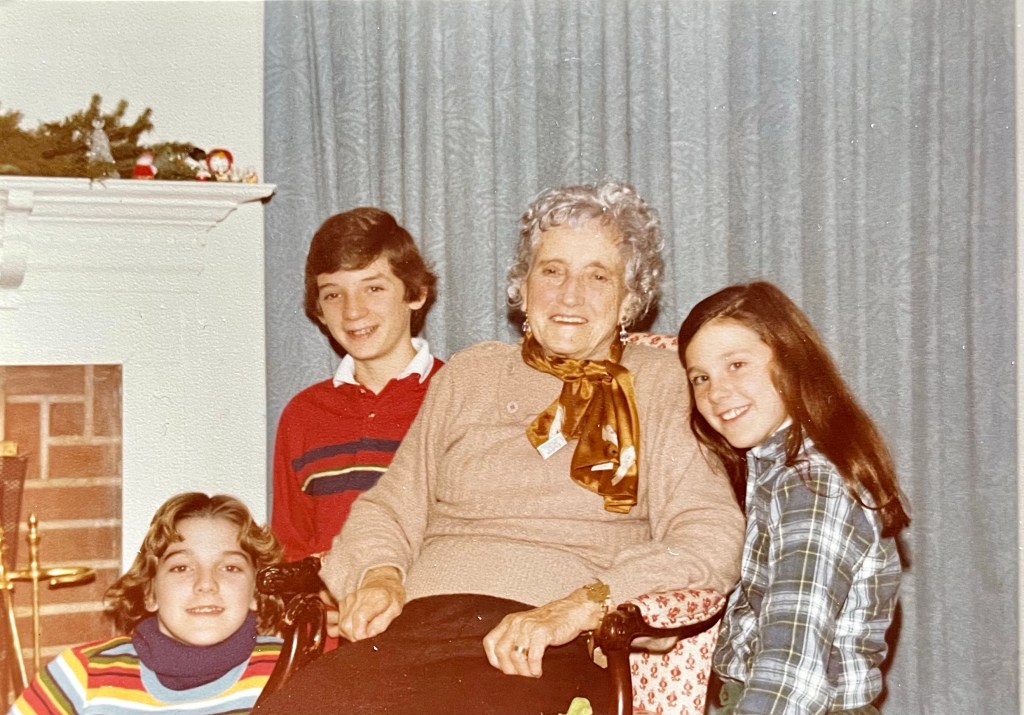
With my grandmother, Aunt Pat, and cousins โ€“ part of the Maine contingent
Mr. Snazzy Cumber Bun before his prom
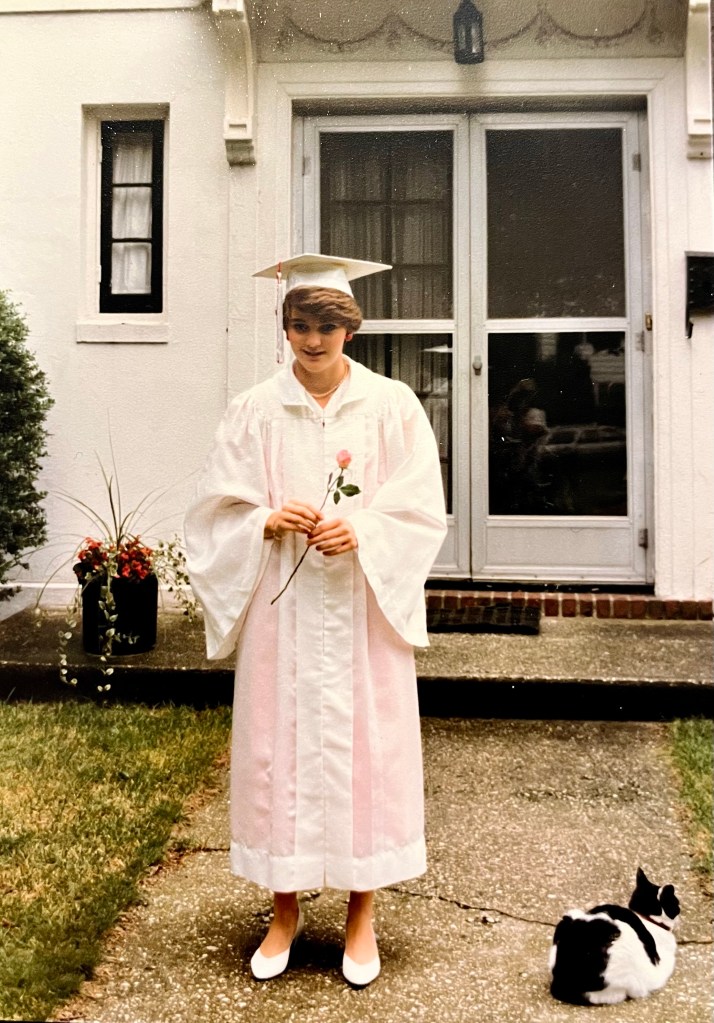
Kathy in her high school graduation gown, with a cat who doesn’t care
The Sibs
KTG before her wedding
Awkwardly displaying a wine glass at wedding shower #1 with my sister-in-law Chris, sister, and mom
Aunts, uncles, and cousins joining the immediate fam to celebrate my dad’s 65th birthday
Invasion of the garden helpers
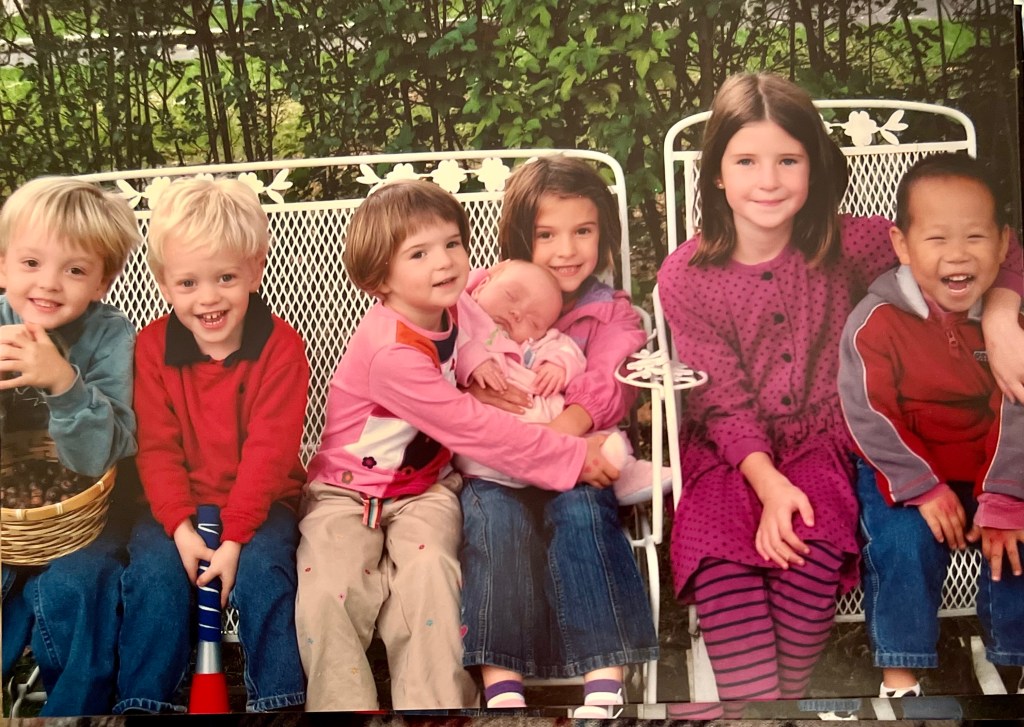
All seven grandkids carefully posed in the backyard
Trying on Nonna’s jewelry
Little Rachel all glammed up
Grandad fielding a serious question in the driveway
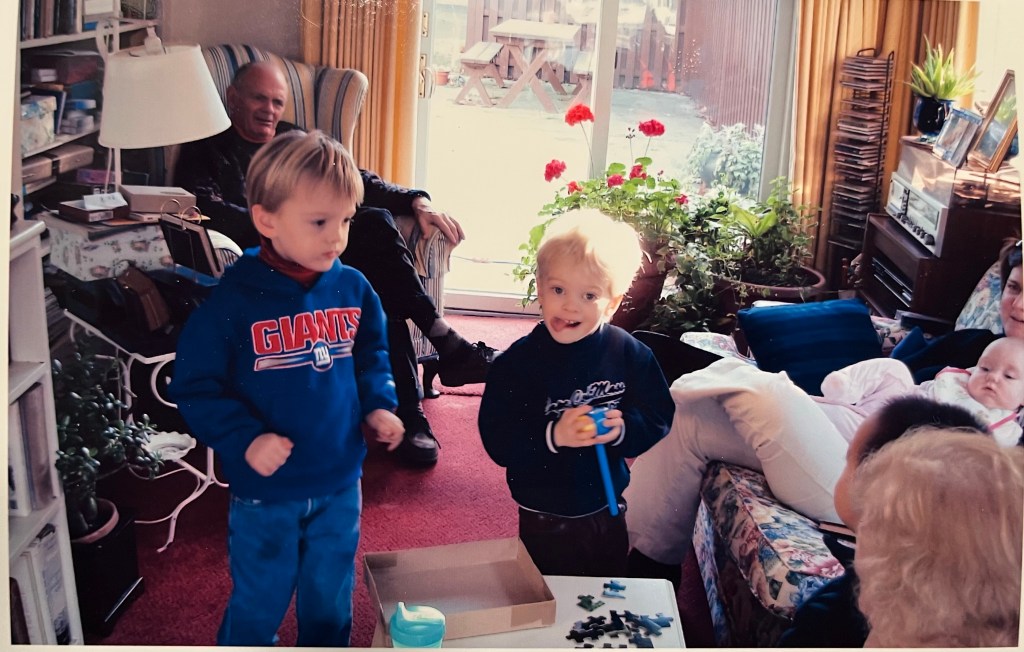
Young O’Connors in the family room
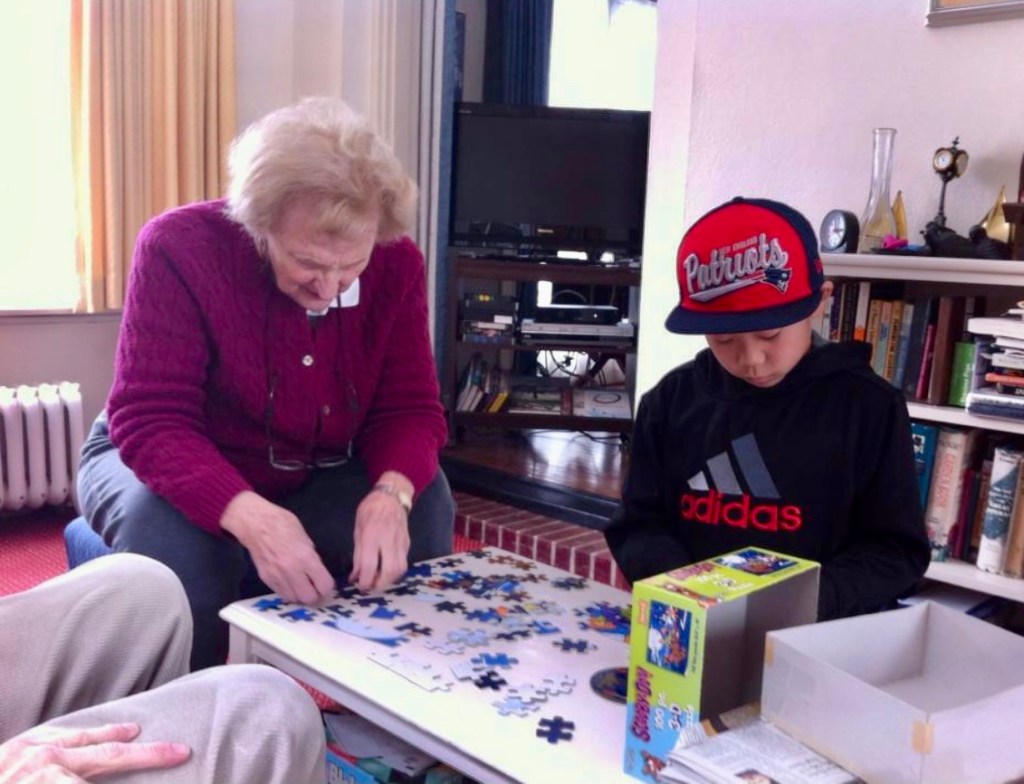
Danny and Nonna doing a Scooby Doo puzzle
Teenage O’Connors and a pandemic birthday celebration
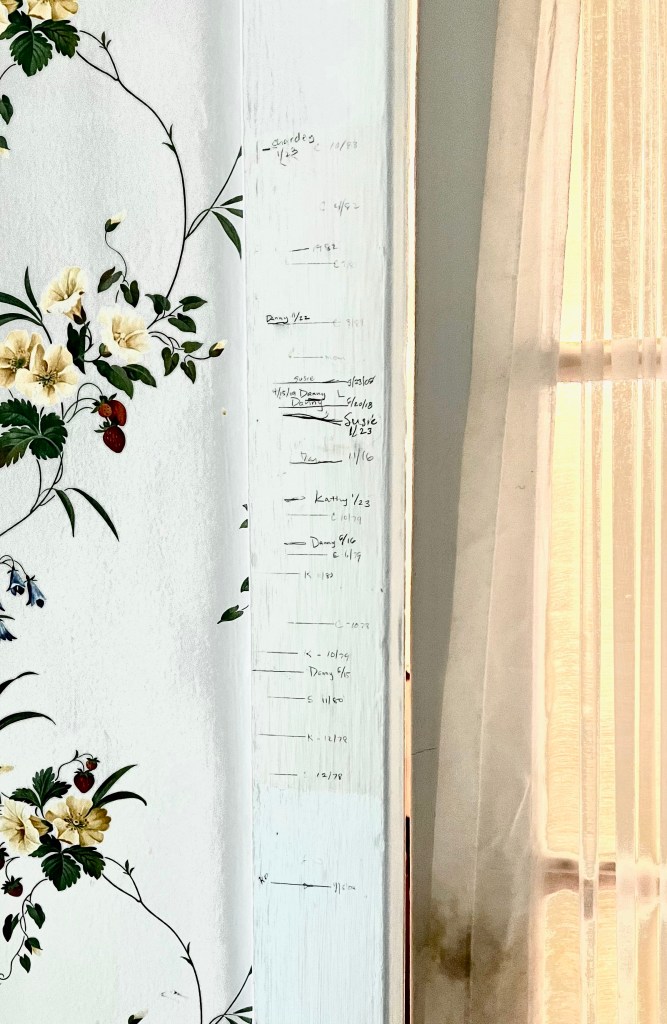
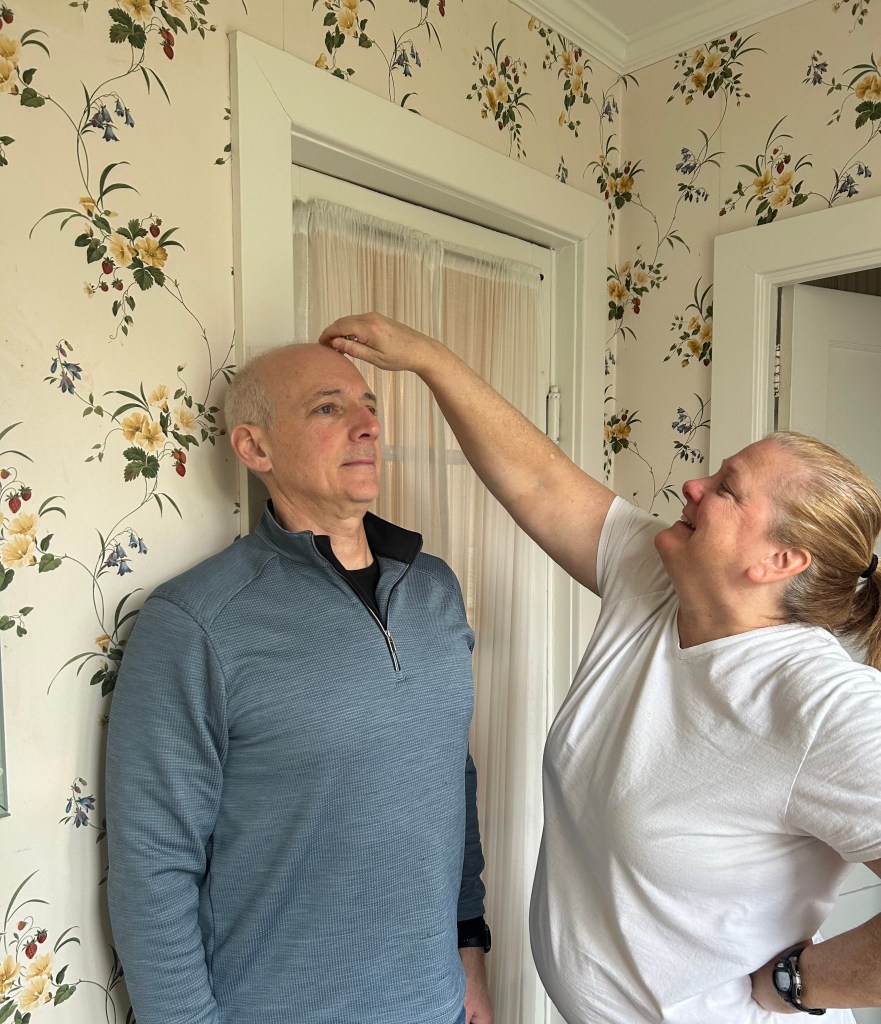
Measuring Chibs one last time before the house clearing started
So long, 138

NOW IT’S MONDAY MORNING

My Mother’s Struggle with Dementia

My sister warned me that my motherโ€™s face would probably look bad, but I still wasnโ€™t prepared. When I arrived at my parentsโ€™ house for Thanksgiving last month, I saw from the side that she had a black eye. When she turned fully towards me, I almost stepped backward. The other side of her face was completely black and blue, including the eyelid, with bruising on her forehead as well.

My mom had fallen the day before as she got out of bed. Apparently, she didnโ€™t react quickly and consequently landed on her face. She didnโ€™t remember what had happened or the trip to the emergency room where she had X-rays that confirmed nothing was broken. Each time she touched her forehead that day, she noticed it was tender. โ€œDid I fall?โ€ she asked my father.

She was quiet the rest of the weekend, though that wasnโ€™t unusual. The house was full of kids and grandkids and she seemed overwhelmed by the banter and activity around her. Once very sociable, sheโ€™s now reserved in a group setting, only chiming in occasionally.

After I returned to my own home in Virginia from the holiday weekend, I called my father to tell him I had arrived safely.

โ€œHi, Toots,โ€ my mother answered, โ€œHow are you?โ€ I was taken aback. She sounded completely normal. If I hadn’t seen her the night before, I wouldnโ€™t know anything was out of order.   

This is a pattern that has become familiar to my family over the last decade โ€“ moments of clarity followed by moments of startling confusion. 

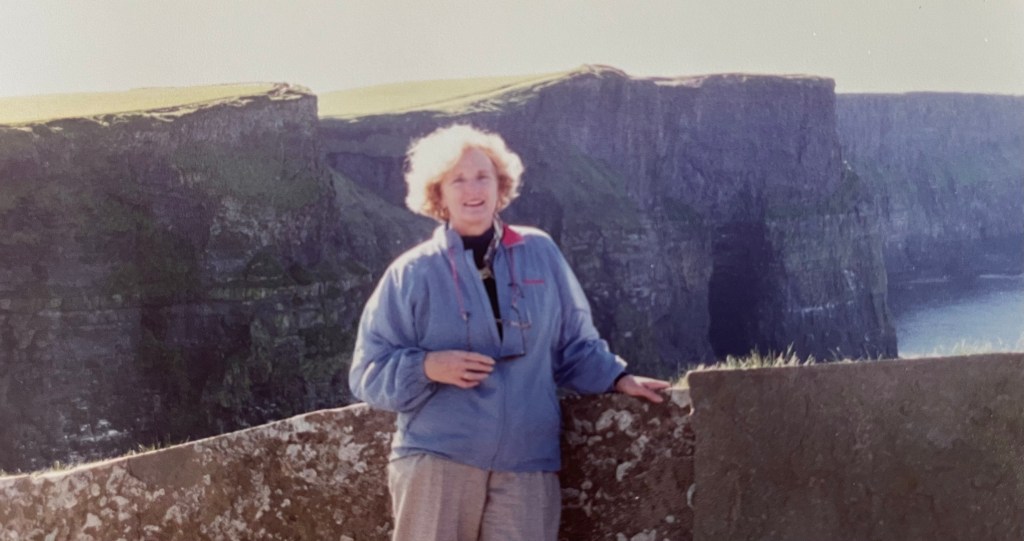
I first became aware that something was really wrong with my mom in 2011. She mentioned that sheโ€™d like to travel to Ireland someday. My parents had taken a 10-day trip there in the late โ€˜90s and we had discussed that trip just weeks before her comment.

Like more than 50 million others across the globe, my mom was eventually diagnosed with dementia, a diminishing of cognitive function that isnโ€™t a normal part of the aging process. Because the number of people who have dementia is accelerating in every U.S. state (and is expected to triple by 2050), my family has joined scores of others who have had or will have the experience of losing someone who is still physically present.

The signs were subtle at first and got progressively more pronounced: not remembering a name became forgetting how to get to a place sheโ€™d been to dozens of times. Then she started to forget entire interactions with people on the phone or in person. Today, my father is her full-time caretaker, along with home health aides at night, and she is completely dependent on others.

Dementia has robbed my mother of things she loved and did well. Friends were always an important part of her life, but her social circle has dwindled because itโ€™s now nearly impossible to have an extended conversation with her. She enjoyed painting for decades, crafting portraits and scenes of the Hudson River. Her painting supplies have been collecting dust in the basement for years now. Math was a strong suit from an early age and she graduated from college with a math degree. She now struggles to tell time. 

My sister got her a clock that reads NOW ITโ€™S MONDAY MORNING on one setting. On the other, it displays the day, time, and day of the week. Lately, she has been setting and resetting her watch (or her โ€œclock,โ€ as she has started to call it), but canโ€™t remember that 10:15 is said as โ€œten-fifteen,โ€ instead calling it โ€œten-one-five.โ€

The details of my motherโ€™s decline are not unique; all of the elements of memory loss that we have witnessed with my mom seem to be commonplace for those with dementia. What has surprised me is how much shame she seems to feel about her condition. 

From the onset of her symptoms, my mom has not wanted to discuss her progressive memory loss. In fact, the only direct conversation Iโ€™ve had with her was a number of years ago. I was hoping to talk about what was happening to her, not to be nosy but to let her know she didnโ€™t have to face it alone. So I asked if she sometimes found that she didnโ€™t remember things.

โ€œI guess, sometimes โ€ฆโ€ she trailed off as she looked away. Another question received a similar answer that clearly signified she was done talking about the subject. I felt as if I was invading her privacy.

To this day, she tends to chalk up any lapse in memory to momentary forgetfulness, and we have all politely obliged.

On the phone, Iโ€™ve learned to steer away from questions that require recall, such as what she and my father did during the day. Instead of acknowledging that she doesnโ€™t know where sheโ€™s been, she asks my father. (โ€œPaul, where did we go this afternoon?โ€)

I now only ask questions about what is physically in front of her when I call home. We always talk about the weather. She spends most of the day in a chair by a big window, and she can look outside and answer. 

My momโ€™s self-consciousness about her condition does not seem to extend to her appearance. As her ability to keep up with personal hygiene has started to fall away, itโ€™s hard not to feel that she has lost some of her dignity. 

This was a woman who would touch up her nail polish in the car on the way to church, who always had makeup in her purse, who always carefully chose what she was wearing, whether she was going to a party or out to do errands. The mother I grew up with would be upset about her appearance these days.

My momโ€™s condition has left my father with agonizing decisions. In an effort to keep my mom at home and not move her to a nursing home, he has taken on a daunting list of  responsibilities. He does the day-to-day household tasks such as paying the bills, doing the grocery shopping, cooking, serving, and cleaning up meals, and organizing the laundry; he also helps my mother get downstairs in the morning and fields repeated questions from her all day.

My siblings and I (or โ€œThe Syndicate,โ€ as he refers to us when weโ€™re out of earshot) have had many conversations with him about what would be best for her and for both of them. Like many families, my family has struggled to find a solution that feels right. There are no easy answers.

The events over Thanksgiving weekend made it clear, however, that her needs exceed what can reasonably be provided through in-home care. Though it feels like a betrayal to my father to bring my mom to a facility, which will likely leave her even more bewildered and out of sorts on a daily basis, she needs to go and he wants to be with her. 

And so, my parents, who got engaged the Saturday before JFK was assassinated in 1963 and who have been navigating the world together ever since, will take their next journey together. Next week they will move out of the house where theyโ€™ve lived for 45 years and into a memory care and assisted living facility a few miles from their home. They will be on separate floors but will be able to see each other and eat together every day.


A few months ago I was sitting in my parentsโ€™ living room with my mom when she asked, โ€œIf I wanted to go to the kitchen, how would I get there?โ€

I tried to hide my shock and was explaining where the kitchen was when my dad walked through the living room.

โ€œAre you going to the kitchen?โ€ my mom asked him.

โ€œYes.โ€

โ€œCan I come with you?โ€

โ€œSure,โ€ he responded.

โ€œOk. It will just take me a minute to get up.โ€

โ€œThatโ€™s fine,โ€ he told her. โ€œTake your time.โ€

And then he slowly walked with her into the kitchen, making small talk along the way.

As the move date comes closer, I see that my father will once again be gently shepherding my mom through a world that is no longer familiar to her. She doesnโ€™t know where sheโ€™s headed or what day or time it is. Thankfully, for her sake, she doesnโ€™t have to make the journey alone. 

On the Road to Find Out

On his show Curb Your Enthusiasm, Larry David often notices small, annoying things another person is doing and then canโ€™t concentrate on anything else.

The same thing happened to me last week. I was waiting in line outside my local library to pick up an at-home Covid test kit and noticed the woman behind me kept inching closer to me. Everyone else was about six feet apart and many people were wearing masks. This woman was not wearing a mask or keeping any distance, and it was annoying me in a Larry David kind of way.ย 

Each time I felt her behind me, I would turn around and glare and then move a little further away. She was gabbing on the phone (changing travel plans), and every time I moved away from her, she would step closer. I was wondering whether she was oblivious to my angry glances or if she just didnโ€™t mind being disliked. Both, maybe?

My mental gymnastics on this issue were interrupted by a call from my son, who informed me that he was getting a tattoo in Washington, D.C. that afternoon. 

We were three days away from traveling to the University of Michigan so he could begin his first semester, and I was desperately trying to avoid getting sick just before we left.

โ€œUh, thatโ€™s not a good idea,โ€ I told him.

โ€œWhy not?โ€

โ€œBecause you are going to be exposed to additional people.โ€

โ€œWell, I have an appointment and Iโ€™m going. I want to do this before I go to Michigan โ€ฆโ€

As he was emphasizing the importance of keeping his tattoo appointment, I pressed the little red button on the bottom of my phone screen.ย 

Bloop! 

End of conversation. 

โ€œWow,โ€ I thought to myself, โ€œI guess I’m a little more stressed than I realized.โ€

When I got home, he let me know he didnโ€™t appreciate being hung up on and asked if I was going to apologize. 

My response: โ€œWhat???โ€

Then I yelled myself hoarse. I donโ€™t remember exactly what I said, but it was something along the lines of how I had canceled all kinds of plans and stayed in the #$%^ing house for ten days to make sure I was able to go to Michigan with him and he didnโ€™t seem to give a #$%^ about avoiding Covid. At the end of my speech, I slammed the door to my office and sat down at my desk.

โ€œNice apology!โ€ he yelled.

After briefly considering homicide, I took some deep breaths and decided to move on.

The lease on the apartment where my son lived for the last year ended a few days before Christmas, and he had moved home on the 22nd. His classes at Michigan would start the first week of January, so our plan was for him to drive with his dad and his things to Ann Arbor. I would be flying to Detroit that same day and meeting them there. 

The two-part move during the holidays and the surge in the pandemic made for a tense ten days. Weโ€™ve had a lot of conflict over the last few years; that pattern was compounded by the strain of living together again โ€“ even briefly โ€“ and the nervous anticipation of the upcoming move. 

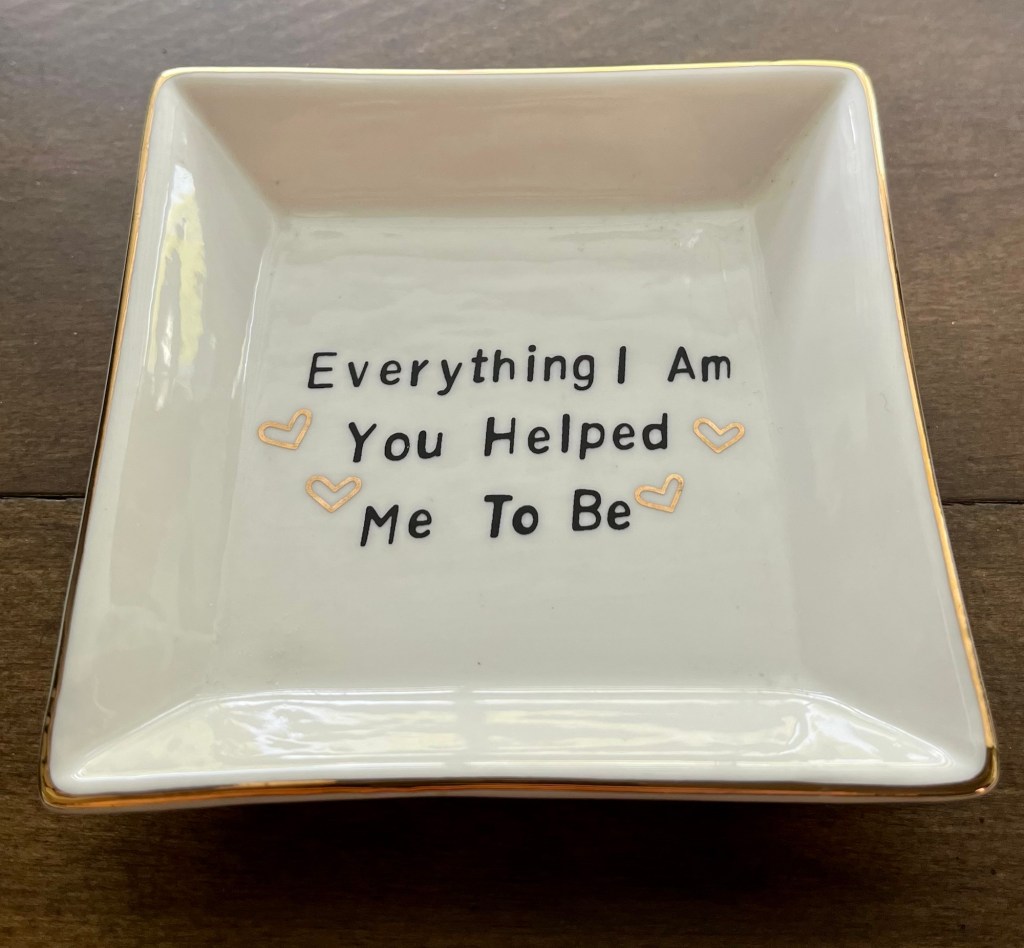
Part of my stress was about fear that something might go wrong for him in this next grand adventure. When I saw this ceramic sign a few weeks before Christmas, it dawned on me that I was more worried than he was. I decided to buy it for him, but in truth it was really more of a reminder for myself that my glass-half-empty approach was not serving either of us.ย 

Mercifully, we were all able to avoid getting sick, and last Sunday we traveled safely to Ann Arbor.

Even in freezing weather in early January, the campus was striking. Ann Arbor is a cool town, with lots of little shops and restaurants and things to do. As we walked around, I was pleased for him that he will have any number of places to explore over the next two-and-a-half years.

I was also so proud of him. If he had listened to me, he wouldโ€™ve taken a gap year after high school to work and mature and then started college last fall. When I made that suggestion partway through his senior year, he asked, โ€œWhatโ€™s a gap year?โ€ and then flatly rejected the idea.  

Instead, he enrolled himself in the local community college, worked harder than he had ever worked before, and earned excellent grades. He researched four-year schools and decided where he wanted to apply, then worked with a friend of mine who does college planning to fine tune his applications.

After getting into Michigan, he lined up off-campus housing for himself โ€“ an independent unit in a large house with 11 other guys, where he will have his own kitchen, bathroom, and living area.  As his dad and I helped him settle into the house, it became clear that it was a great place.

We had not spent this much time together since we were a family of three 17 years ago. As my ex-husband worked to fix a frozen pipe and I arranged things in the kitchen, it felt like the best parts of what we had been as a couple were on display. My ex-husband and I both wanted to be there to send our son off. It wasnโ€™t discussed, but I sensed that all three of us were comforted by the time we had together as we quietly worked to set up the apartment.

After I got back to the hotel that night, I happened to hear Cat Stevensโ€™ On the Road to Find Out, a song about a young man leaving his family to launch his life. I immediately felt a lump of emotion in my throat as the significance of the moment started to hit me.ย 

The next morning my son and I spent a little time together before my flight home. As I was saying goodbye, I started to tear up. Not wanting to do that in front of him, I told him I loved him, gave him a hug, and left quickly. 

I cried the whole way to the airport. I was grateful that I was alone in the rental car so I didnโ€™t have to feel self-conscious or explain the groundswell of emotions to anyone. I wasnโ€™t even sure I understood how I felt. 

After all, my son moved out a year ago. Heโ€™s almost 20. He is at a great school in a vibrant town, and his housing situation seems perfect for this first semester. This is the right step for him. Plus, embarrassingly irritable middle-aged women and 19-year-old young men with ants in their pants do not make good roommates, so I was not questioning the wisdom of his leaving home. 

But there is something primal about leaving your child in another part of the country and heading home on your own that drives home the point that a life stage is ending.ย 

Parenthood is a humbling experience. We care about these little people, expending more time and energy and angst and hope and love than we knew we were capable of, and then eventually we have to stand back and let them make their own way in the world.

Linda Pastanโ€™s beautiful poem captures the experience of these watershed moments when we watch our children wave goodbye.

To a Daughter Leaving Home

When I taught you
at eight to ride
a bicycle, loping along
beside you
as you wobbled away
on two round wheels,
my own mouth rounding
in surprise when you pulled
ahead down the curved
path of the park,
I kept waiting
for the thud
of your crash as I
sprinted to catch up,
while you grew
smaller, more breakable
with distance,
pumping, pumping
for your life, screaming
with laughter,
the hair flapping
behind you like a
handkerchief waving
goodbye.


The house where the boy now lives now with 11 others
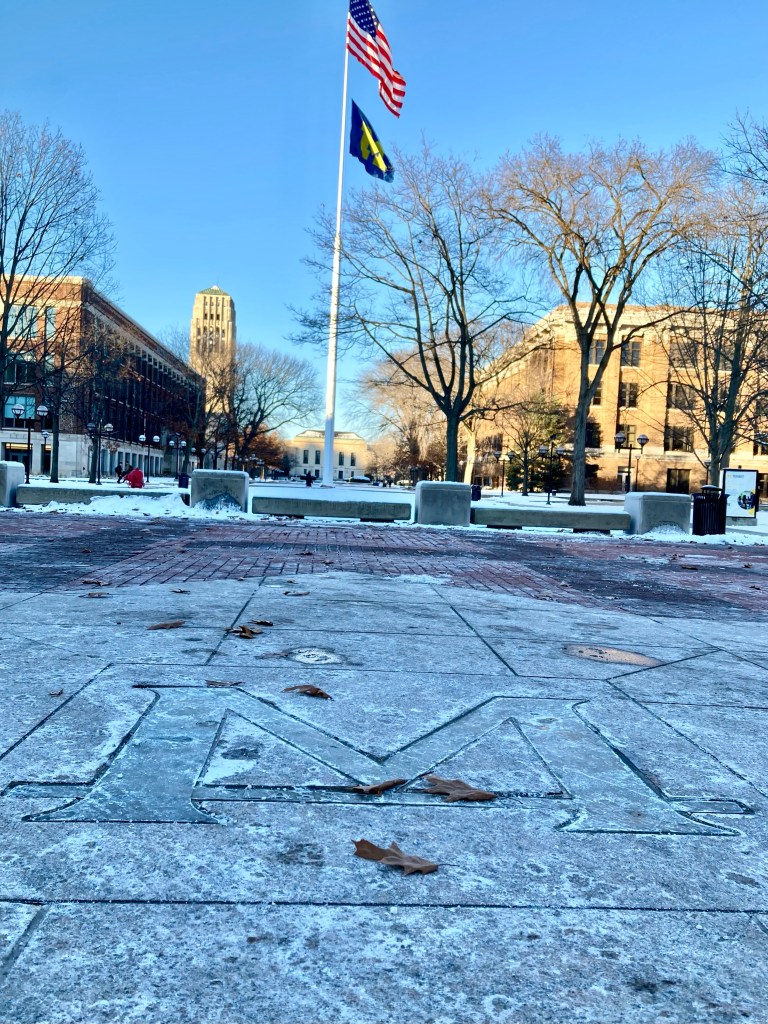
The middle of campus. There is a superstition that stepping on the M leads to bad grades
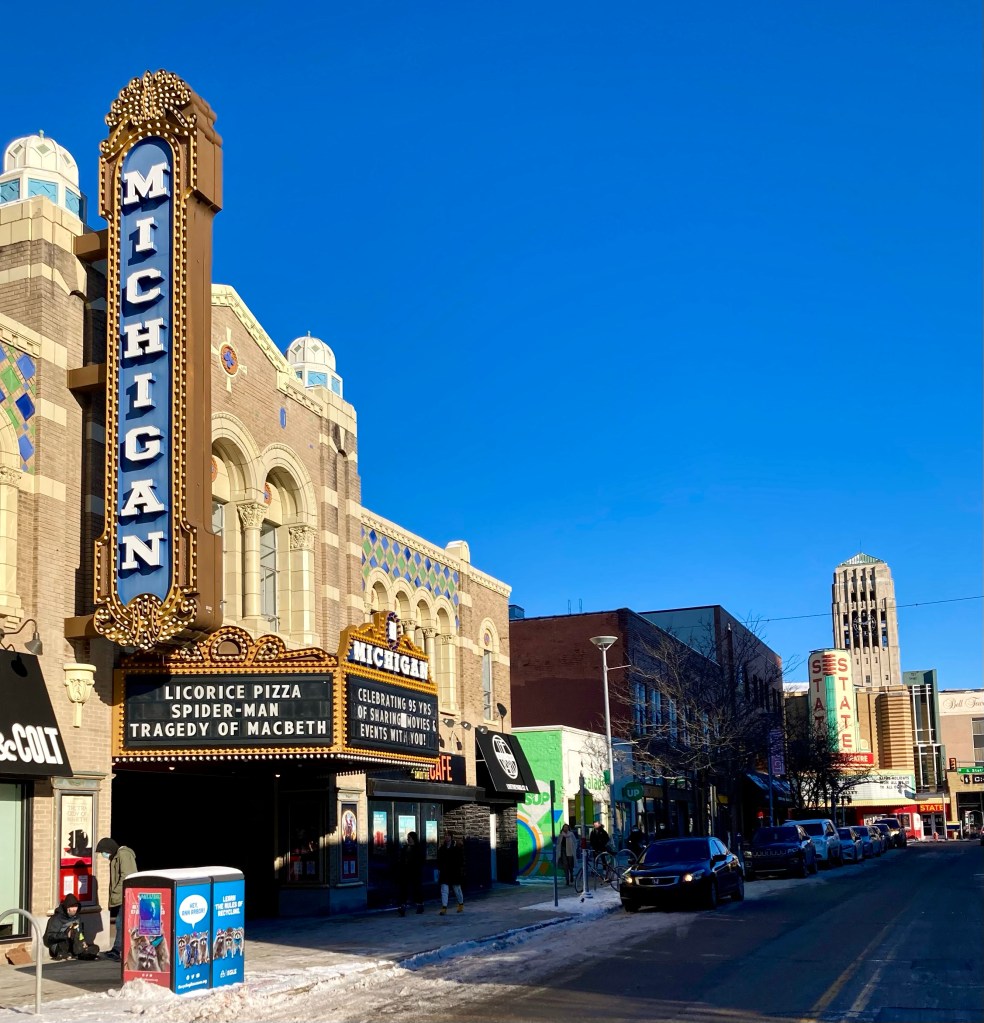
Downtown Ann Arbor — a stone’s throw from Central Campus
Graffiti Alley in downtown Ann Arbor
One of the many places to get Michigan gear. I do love the colors and the football helmets

True (Part-Time) Companion

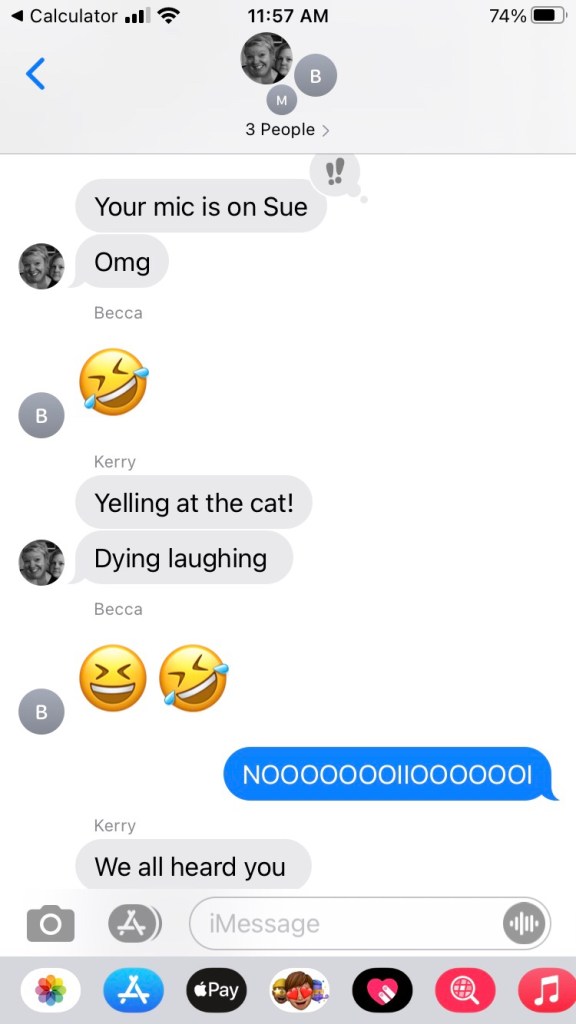
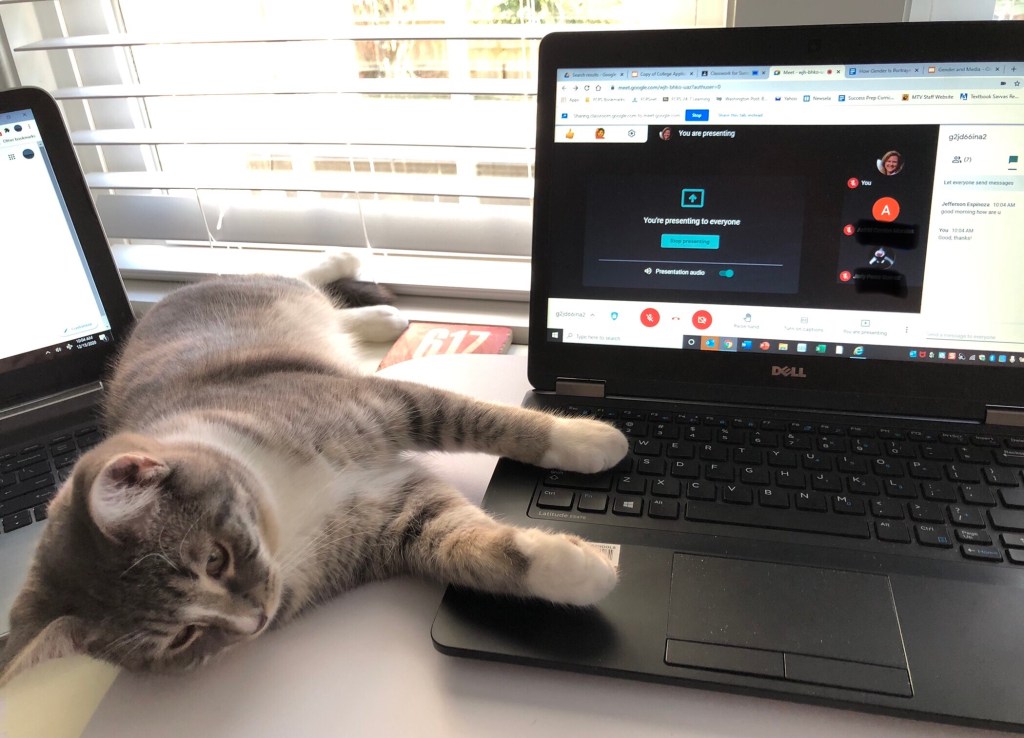
If youโ€™ve ever sat through an online meeting and learned after the fact that your microphone was on, you know that feeling of horror. Itโ€™s especially terrible when your boss is speaking to you and more than 60 of your coworkers and you learn that you have just interrupted the discussion by yelling, โ€œHey!ย Hey!ย Keep it moving!โ€ย 

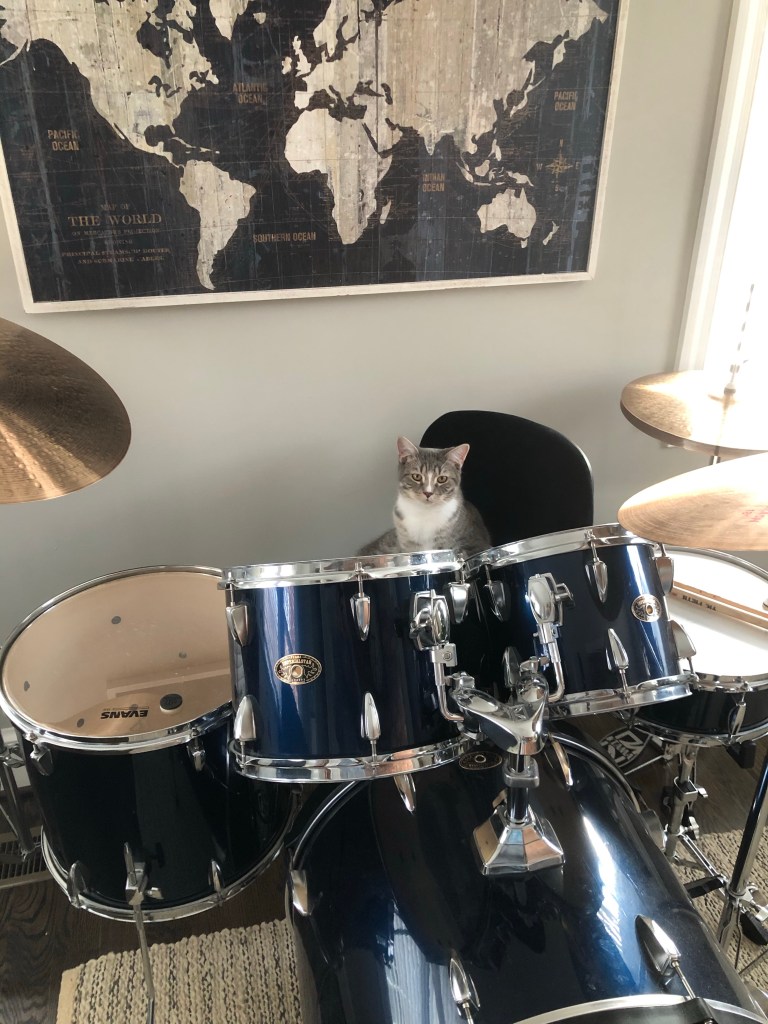
This was what happened to me a few weeks ago during a virtual faculty meeting. My cat walked across my keyboard and turned on my microphone. Iโ€™m still not sure which key he stepped on, but it isnโ€™t the first time heโ€™s discovered things about my laptop that I was unaware of.  (Who knew it had airplane mode?)

To let the cat know that this was wrong behavior, I shouted and quickly scooted him off the keyboard before adding (loudly), โ€œNot on my computer!โ€

It didnโ€™t take long for my work friends to start blowing up my phone. The first message I received is below. Mercifully, the assistant principal (a cat owner herself, as it turns out) immediately muted me, so the only comments that went public were brief. Iโ€™m told there was an awkward silence after my outburst and then my principal continued on with his remarks.

The next day I was in school laughing about the event with a coworker before things got awkward again.

โ€œYour cat is so funny!โ€ she told me.

โ€œYeah, and the thing is, heโ€™s not really even my cat!โ€ I answered.

She looked confused. โ€œHuh?โ€ย 

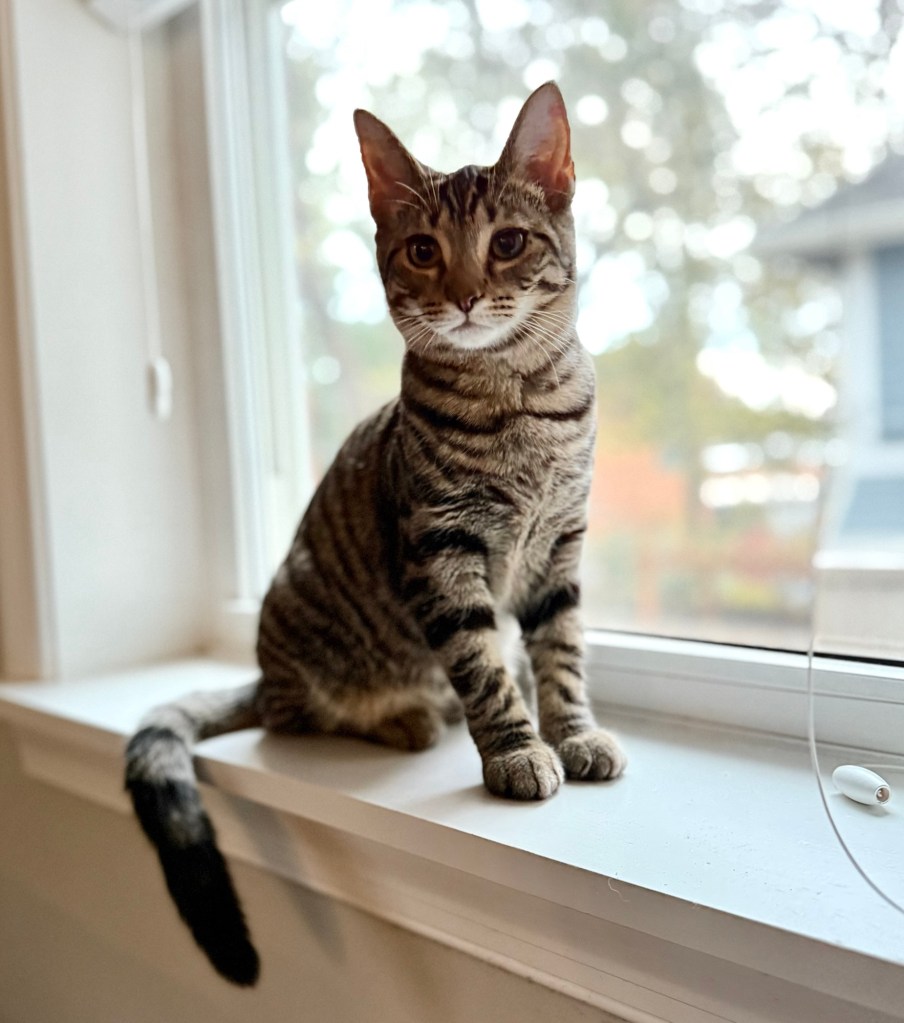
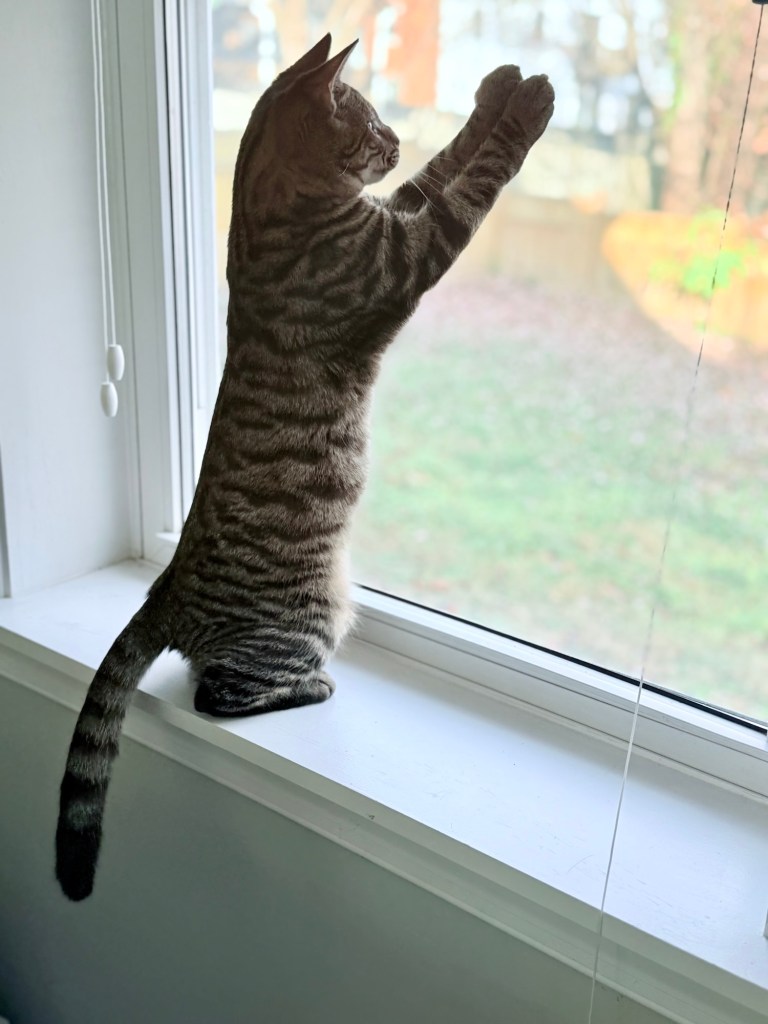
It was then that I explained the unconventional cat-sharing arrangement I am part of these days. Last fall, my friend Kelly was debating getting a cat but had concerns about her busy (pre- and post-Covid) travel schedule. I offered to be the permanent, free pet sitter any time she went out of town, and voilร  — a plan was born. Kelly asked her niece, who fosters abandoned cats in New Jersey, to procure us our new best friend — something very young and very cute. The one condition of his adoption: Kelly was asked to keep the name given to him by the pet adoption group.

A couple of months later, a kitten named Stuey arrived. He had been found in an apartment complex just across the river from Philadelphia. Apparently, he was one of the most sought-after kittens in the litter because he didnโ€™t run away from people like some of his siblings.

The origins of his name are unclear, but I personally hope heโ€™s named after Stuart Little, the charismatic little rodent from the book and the movie, and not Stewie Griffin, the smug baby who speaks in a British accent on the TV show Family Guy. But who knows. He could be named after somebodyโ€™s grandpa.

Either way, for reasons even I donโ€™t understand, I find myself calling him Bubbe (pronounced Bubbie), which is the Yiddish word for grandma. Hopefully this does not offend any Jewish grandmothers.

Should I not be climbing inside a lamp?

Though Kelly has not traveled much because of the pandemic, we have gotten into a routine where Stuey spends a week or two with me each month. Our running joke is that Stuey has two moms and that Kelly and I are like exes sharing custody. But unlike the moms in the classic 1980s book Heather Has Two Mommies, Kelly is not interested in women; I am the only one of Stueyโ€™s moms who dates ladies.ย 

Regardless of the fact that this was never a coupling, it is remarkably close to joint parenting. We incessantly discuss every aspect of Stueyโ€™s behavior — his sleeping habits, favorite foods, etc., etc.  In fact, we talk about him so often that friends and family who are much less intrigued by the catโ€™s every move are politely begging us to take it down a notch. Stuey himself seems well adjusted to having two homes. He may be the only cat I know who willingly walks into his pet carrier when itโ€™s time for him to travel to his โ€œother house.โ€

What? Too loud?

I love cats and always thought that I would get a kitten of my own as soon as I was able, but as it turns out, Iโ€™m perfectly happy with this rather bohemian arrangement. My son is allergic to pet dander, so it didnโ€™t make sense to get a cat while he was living with me. However, he moved into his own apartment in December, so thatโ€™s not an issue anymore.  

I am finding myself surprisingly comfortable with an empty house and a quiet period, especially after a year and a half of full-time single parenting and a tumultuous few years before that when I was preoccupied with the beginning and shortly thereafter the ending of a marriage. As self-absorbed as it may sound, the idea of not committing full-time to anything right now as I decompress feels like exactly the right move. 

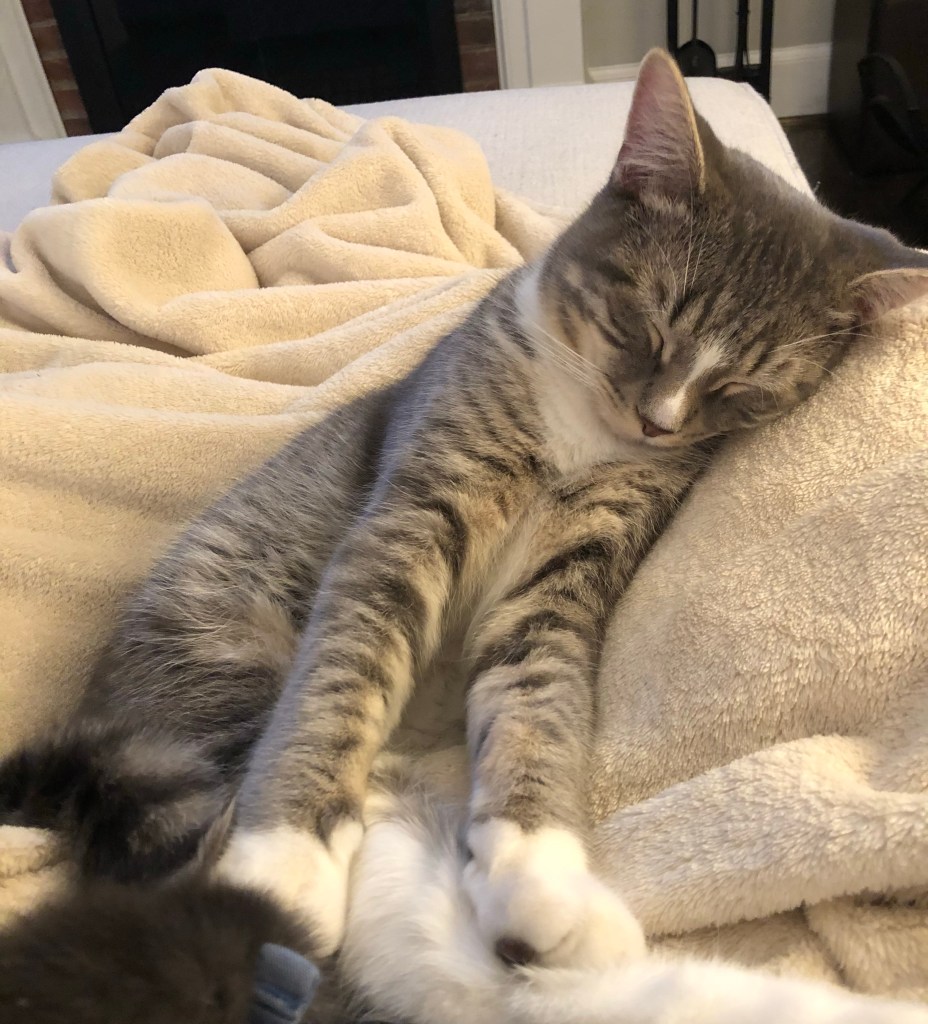
The time I do spend with Stuey is everything I had hoped for. He makes me laugh. I never quite know where he is going to pop up around the house. He loves to sit on my lap purring while I watch TV.  He splits his time evenly — 50% snuggling, 50% biting, scratching, and running around the house like a maniac. Iโ€™m hoping the percentages will shift a little as he gets older.

Helping with my morning class
After being dismissed from my afternoon class
What’s for breakfast?
Is this the elevator that goes to the basement?

Biting and scratching aside, Stuey has helped me understand why so many people have pets. The statistics vary depending on who you ask, but most groups agree that more than half of American households include a pet, and itโ€™s not hard to see why.

Thereโ€™s something primal at work with pets. Having somebody or something to take care of gives us a sense of purpose and makes us feel needed. Doctors say humans are mentally and physically healthiest when they have secure attachments to others. Pets can provide the love and companionship a person needs, especially people who find human company taxing.ย 

My occasional Friday night boyfriend

Even those of us who donโ€™t like animals more than humans understand the appeal. Relationships with pets are simple. Theyโ€™re happy to see you every day. Most enthusiastically greet their owners each time they arrive home. Theyโ€™re happy with simple pleasures like spending time together without conversation. And odds are better than half that youโ€™ll win any argument that arises.

Theyโ€™re also great for kids in terms of building empathy and teaching responsibility. They become important members of the family. I grew up with a cat named Boo and a three-legged dog named Inky, and I loved both of them with all my heart.ย 

I have to admit that I began to sour on dogs about a decade ago, but that was mostly out of jealousy. When I switched teams I had no idea that the lesbian community held dogs in such high regard โ€“ so much so that several of my girlfriends seemed to prefer the company of their dogs over my company. In retrospect, I probably would have done better if I had acted less like a Grand Poobah and been willing the share the road a little more with my canine competition.ย 

As my skin grows thicker, Iโ€™m slowly pulling out of my unjustified bitterness towards dogs. I donโ€™t feel I have the time or energy to manage a dog on my own right now, but I am considering getting one dog or maybe even two once I retire. If I do, I plan to name them Charlie and Kathy, regardless of gender, in honor of my siblings. Youโ€™re welcome, Chibs and KTG.

And at some point, I hope to have another human companion. In the meantime, Iโ€™m good with my part-time commitment to a little furry guy from South Jersey.ย 

My First Turkey

Most years, I am a carefree attendee of a large family gathering on Thanksgiving, yucking it up with other guests, occasionally offering to pass an appetizer, get someone a drink (while I am getting one for myself), or bring an extra chair to the table. Not this year.

After weighing the potential risks of spending the holiday with my parents, I decided it was important to see them and made plans to spend a quiet Thanksgiving at their home in New York. My son and I got COVID tests, packed a bunch of masks, and drove up from Virginia on Thanksgiving morning.

My sister had lined up an entire cooked meal for my parents, my son, and me and brought it over in the early afternoon. After a brief outdoor visit, she and her family returned to their pod across the county. 

Iโ€™ve been known to be unhelpful at all of my previous Thanksgivings. My brother once accused me of getting bedsores on my rear end while others scurried around getting the meal together. This year, I felt it was time to reverse the trend.  

Since Iโ€™m 52, some might find it a little surprising that Iโ€™ve never prepared a Thanksgiving meal. A few years ago I made three side dishes to bring up to my parentsโ€™ house (the standard-issue ones from the 70s that all require Cream of Mushroom soup), but the turkey and several other aspects of the meal were taken care of by others, so I canโ€™t take credit.

This time I insisted that I would handle everything. My dad offered to help, but because I wanted to be the hero, I told him to just relax, eat the appetizers (that my sister had brought), and watch football. Plus, how hard could this be?

Here’s what was on the docket of — and this is key — already-prepared foods:

  • Turkey
  • Stuffing
  • Mashed potatoes
  • Gravy
  • Sweet potatoes
  • String beans
  • Turnips
  • Brussels sprouts

The first order of business was figuring out how to reheat all these dishes. The food was hot when my sister dropped it off at 1 p.m., and my parents wanted to wait until 5 p.m. to eat, so refrigeration and reheating were the challenges before me. I successfully use 350ยฐ to cook all of my batches of Duncan Hines brownies and concluded that what worked for boxed brownies should also work well for reheating an oven full of vegetables, starches, and meat.

The 10-pound turkey was whole and would need to be carved. I resisted the urge to ask my dad for help, even though he has successfully carved turkeys for 50+ years. I figured my good friends at YouTube would provide adequate instructions for my maiden turkey-carving voyage.

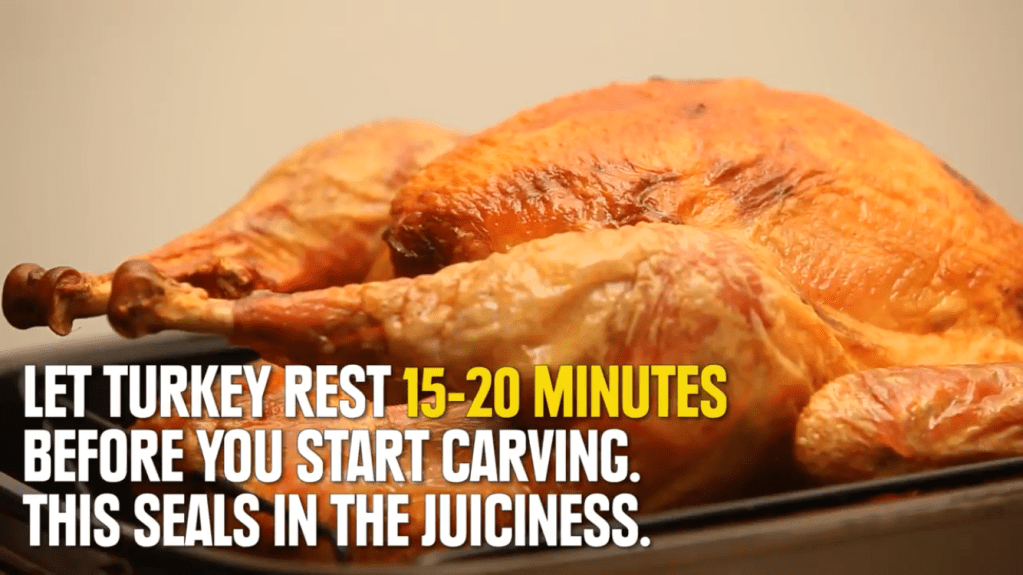
After scrolling through videos with titles like โ€œYour First Turkey!โ€ I landed on a Buzzfeed video called โ€œHow to Carve a Turkey.โ€ I liked that it would only cost me 2 minutes and 53 seconds because I was already feeling behind schedule.

I started to become alarmed at their โ€œyou will needโ€ list:

  • Two cutting boards (why two?)
  • A very sharp knife (shudder)
  • Tongs or a meat fork (I think there’s one of those around here somewhere)
  • Kitchen towels (to mop up the blood?)
  • Turkey platter (buried deep in a cabinet, I think)

The video helpfully breaks the carving process into steps. Here’s how they went.

I started the whole operation at 4:40 p.m. after promising the meal would be ready by 5 p.m., so there was no time to โ€œrest.โ€

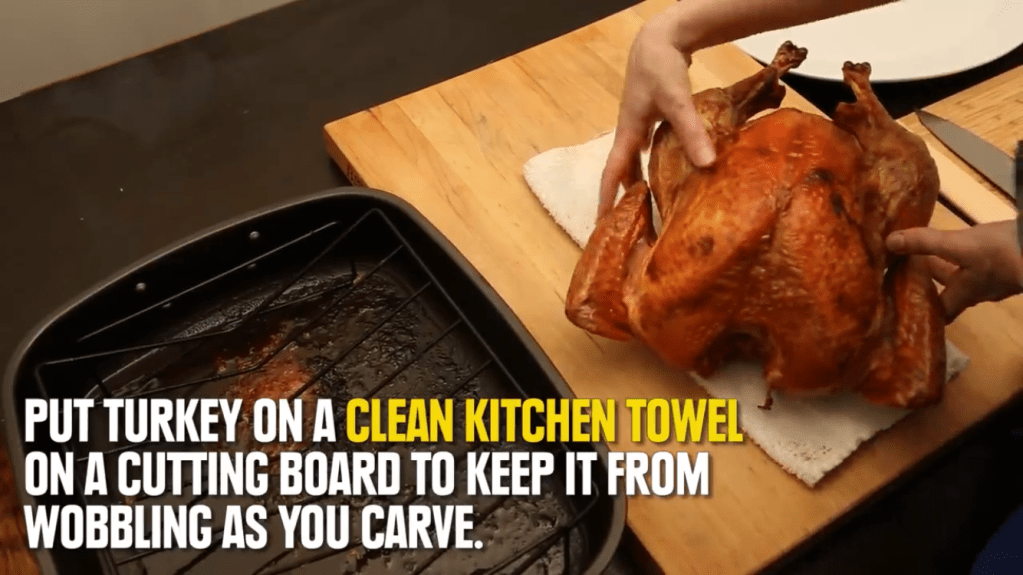
Use a kitchen towel to prevent wobbling? Wobbling was the least of my worries. 

This is where I completely lost confidence. Surgically extracting the wishbone seemed VERY COMPLICATED. And gross. 

Seriously?

Also, turkeys have wishbones? I thought that was just chickens.

(Side note: the wishbone had already been professionally removed. I just didnโ€™t realize that, so in hindsight, I could have waited until Step 4 to lose confidence.)

Forcefully? That sounded aggressive. 

If there was any forceful sawing, it involved trying to get this plastic contraption off the two legs. The turkey was already dead, so I wondered why there was a need to work so hard to prevent it from running away.

More advice involving joints and cutting with a very sharp knife. Have I mentioned my disgust for anything medical?

More importantly, this seemed like a tremendous amount of work just to get one drumstick. 

I canโ€™t be sure, but I believe this is where I abandoned ship and decided to just go it on my own. I have manhandled many a rotisserie chicken, and the turkey just seemed like a bigger version.

And thus I began the real work, starting with an effort to get the giant drumsticks off the turkey. Turns out Buzzfeed was right โ€“ this did involve quite a bit of force and hacking on both sides. I deposited the newly-separated drumsticks in the tinfoil tray and then set out to get the breast meat.

Using the sharp knife, I was able to get breast off on the right side but not cleanly. I made one cut on the left side and concluded that it would just be easier to yank the rest off than to continue using the knife.

Around this time, my son paid me a visit. He surveyed the situation and looked troubled.

โ€œWhat are you doing?โ€ he asked.

I had one hand clamped on the bird and the other hand wrenching the meat off.

โ€œCarving the turkey!โ€

It felt a little like a Julia Child moment, if Julia Child were wearing a hoodie and speaking in a much lower octave.

I plopped the breast on the cutting board and started to cut. The meat shredded into small pieces.

I remembered what Mr. Mayer had taught me in 7th grade woodshop: always cut along the grain. I kept turning the meat in hopes of finding a smooth grain, but never found one. Thatโ€™s when I decided to just pull the meat off in big chunks and put it in its receptacle.

Speaking of receptacles, somewhere along the line in this sweaty 30 minutes in the kitchen I realized I needed a container for all of the turkey meat. I went to the cabinet and spotted the platter that has been used for the turkey at all family holiday gatherings since the beginning of time. However, I had already had an unpleasant experience looking for a bowl for an appetizer and decided the turkey platter was under too many other heavy bowls and dishes. I chose one of the ones on the top, which was essentially a small salad bowl.

As I turned my attention away from the turkey, I discovered that things were not going that well with the other dishes. They were cooking in a stubbornly uneven way; some were lukewarm and others were less lukewarm. 

It was now 5:30 p.m. and I felt that it was time to just get this show on the road. I realized that in true 2020 fashion, this yearโ€™s meal was not going to be perfect. Attractively sliced slabs of turkey? Not this year! Multiple dishes all piping hot at the same time? Not quite.

I called everyone into the kitchen and informed them that they *might* want to heat their plates in the microwave. I realize microwaving meat is sacrilege to some people, but it was the best and only option as far as I was concerned.

In the end, hereโ€™s how the meal looked.

Tongs usually used for hotdogs can also be handy with turkey

Everyone was polite about the quality of the heating job and the less-than-glamorous presentation of the food, and overall it was a very enjoyable event.

The moral of the tale?

I gained a new appreciation for everyone who has ever served me a Thanksgiving meal. I struggled mightily to put out multiple dishes at once, and all I had to do was reheat them.

So to my mom, my sister, my Aunt Adriana, and my former in-laws, I want to say thank you. I’m amazed at how effortless you made a very complicated meal look year after year.

Consider me impressed.

A Steady Hand on the Wheel

A portrait of the young man
My mom and dad on their honeymoon
Ten years later, with three kids in questionable bathing suits

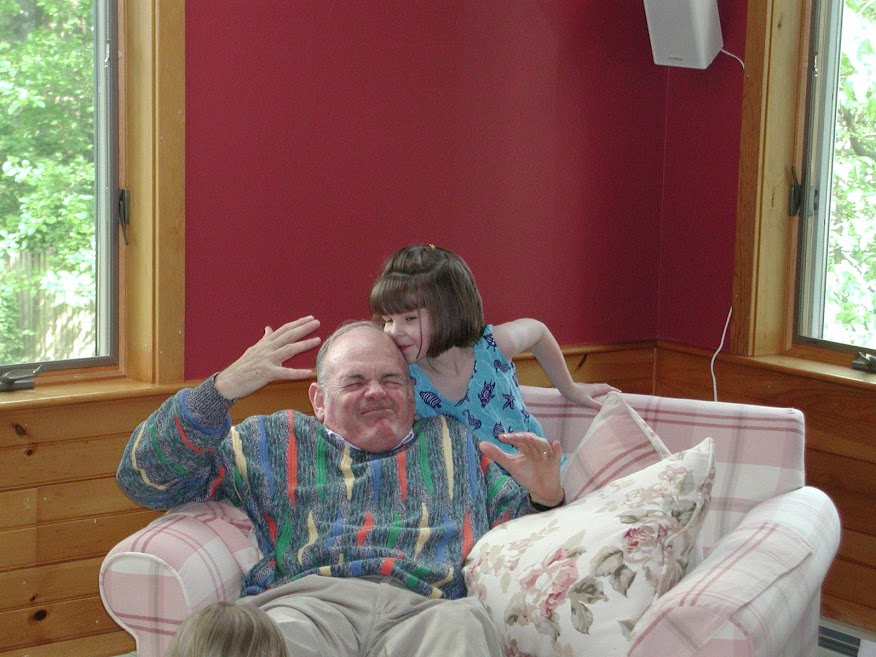
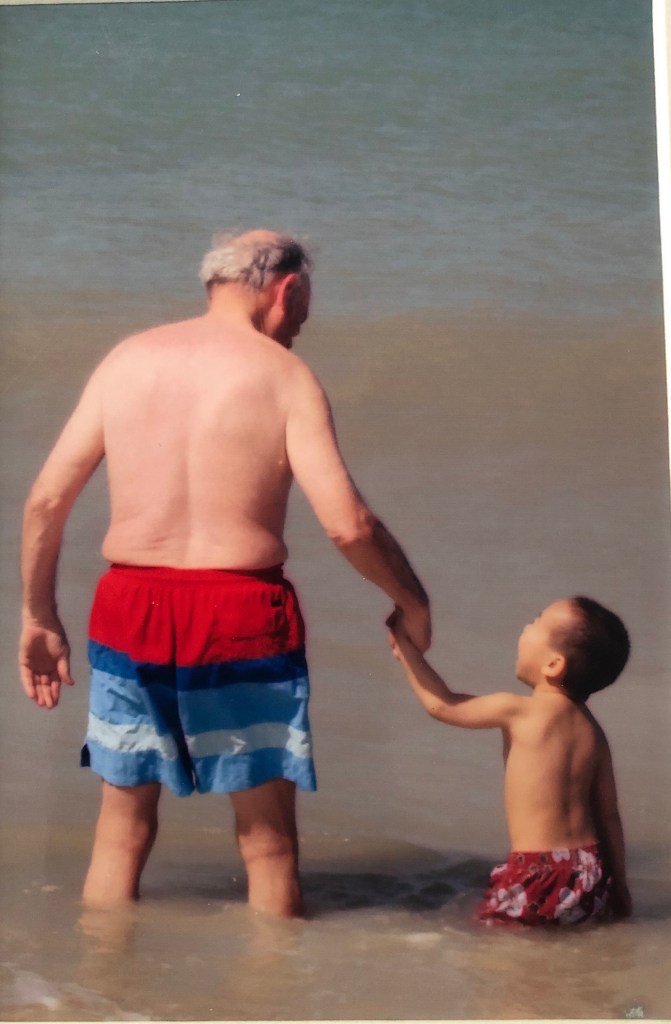
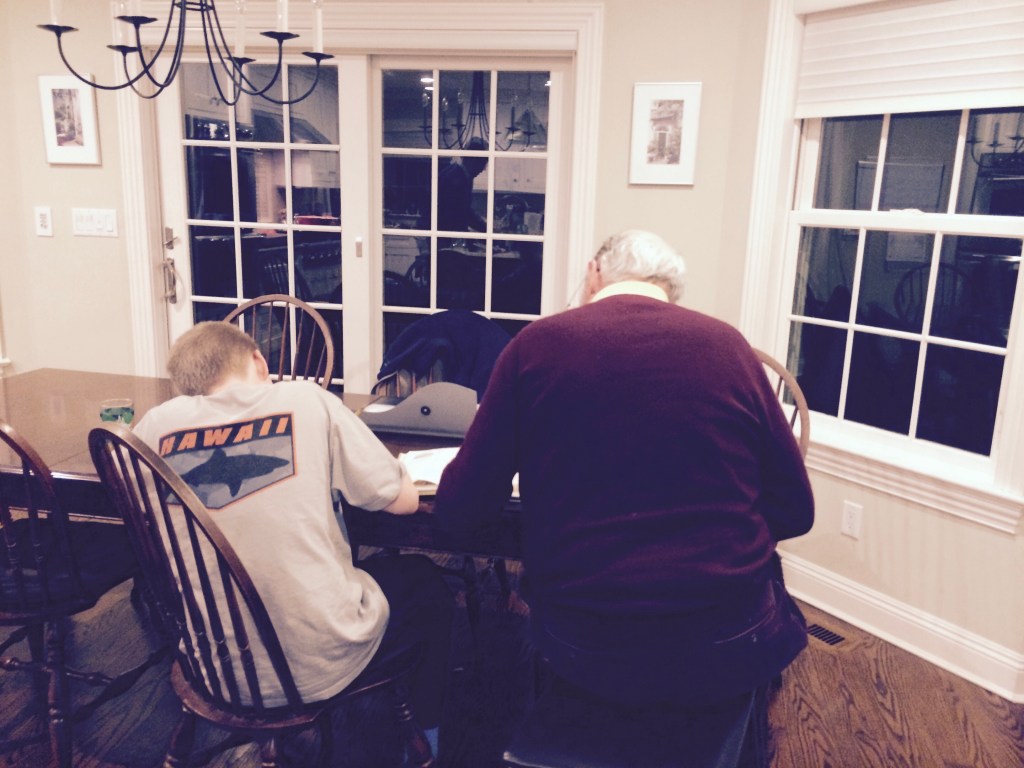
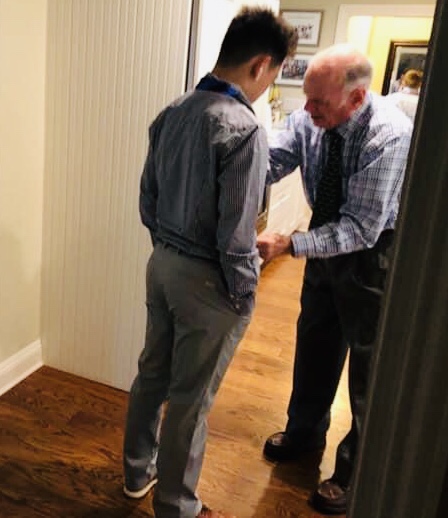
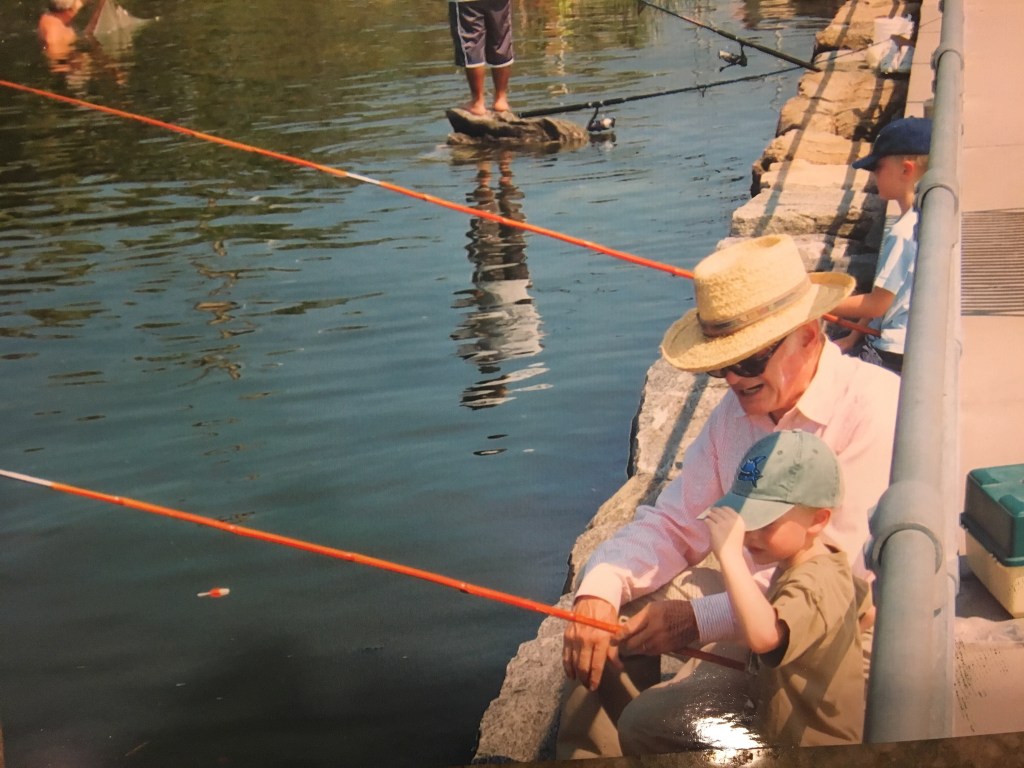
To get a sense of who my dad is, take a look at the pictures of him with his grandkids over the years.  They tell the story.  Here he is playing a game of Horsie, here he is teaching kids how to fish, here he is in the ocean, playing a game, reading a book, tying a tie.

Though there are many fewer pictures of my dad interacting with my brother and sister and me when we were children, the story was the same. (The only group photo I have is above โ€“ perhaps a function of being part of a generation that was much less documented than the current one.)   

He came to our games, our Back to School Nights, our recitals, our concerts.  He wanted to hear from each of us about how the day went every night at dinner.  He had catches with us in the backyard.  He went in the ocean with us in New Jersey every summer and taught us how to play Chicken, where you have to float with your feet facing the oncoming waves. 

I will admit to wishing he were less involved on the days when I got in trouble at school.  My parents were a one-two punch.  My mom would lecture me in the afternoon, and then my dad would come home in the evening and take the Lordโ€™s name in vain when he heard what I had done.  He had a habit of roughly smoothing out the strands of hair on the top of his head during those conversations, which I fear contributed to his early hair loss. 

In retrospect, he was strict, but not unnecessarily so.  I shudder to think how much brattier I would have been if I had not feared the words โ€œwait til your father gets home!โ€

As I transitioned from my teen years into adulthood, and especially into my 30s and 40s when I was grappling with issues around coming out, my relationship with my dad transitioned also.  He was less of an authority figure and more of a confidante.  You might not expect a middle-aged lesbian to be turning to a former investment banker in his 80s for emotional advice, but that is just what has happened.  He really listens — with  a calm, clear-eyed way of sizing things up that has helped me find my center time and time again.

The other day I came across a card he sent a number of years ago when I was working through a tough situation.  Age provides some perspective, he wrote, and though he did not want to sound at all Pollyanna, he said he knew that I would have better days.

The man is not just a supportive father.  Heโ€™s actually great company.

He loves to talk about politics, sports, business, and many other topics.  Heโ€™s an avid reader and is knowledgeable and current on a wide variety of subjects.  And he is genuinely interested in other people, striking up conversations not to make small talk, but because he enjoys learning about the  experiences of others. 

Heโ€™s also very funny.  His demeanor is reserved, but when you listen to what he is saying, you realize he makes lots of quick-witted observations and remarks.  Heโ€™s a great storyteller and has taken a number of writing classes in retirement.  My favorite story was one he wrote about having to learn how to type at age 60 when everyone got their own desktop computers at work.  He took an online keyboarding class developed for children called โ€œMavis Beacon Teaches Typing!โ€  His account of doing poorly on the words-per-minute tests, which included alligators chomping at letters as you typed, was hilarious.

All of this is not to say that everything was perfect or that there was never an angry word or an unpleasant day.  But my dad showed up.  There was never a time when I worried that he would not be there or questioned whether or not he loved us.   The pictures remind me that he has been a constant support for my mom and for each new member of his family as they have arrived. I know his steady presence has been especially important for my son through two divorces and a lot of upheaval.

My dad was talking recently about his own father, who passed away before my siblings and I were born, and said he was a special guy.  Thatโ€™s how I feel about my dad.  Heโ€™s special.  I didnโ€™t appreciate him when I was young — I just took it all for granted.  I donโ€™t now.  I just hope this smart, funny, loyal guy who has quietly done so many good things for other people understands how adored and admired he is.

Obliging one of my son’s many requests to play Horsie
Pitching to a young recruit
Teaching my nephews Jack and Will how to fish
Serving as holder of Jack’s first fish
Pretending to be surprised by my niece Jessica
Getting ready to jump some waves
Practicing reading with Kaley
Meeting Maggie, the youngest grandchild
Having a snowball fight
Helping with homework
Raking in the dough with Rachel
Giving some assistance with a tie
Being a good sport about wearing a birthday hat at his 85th birthday party
With my mom at their 50th wedding anniversary party
Yucking it up with kids and their spouses
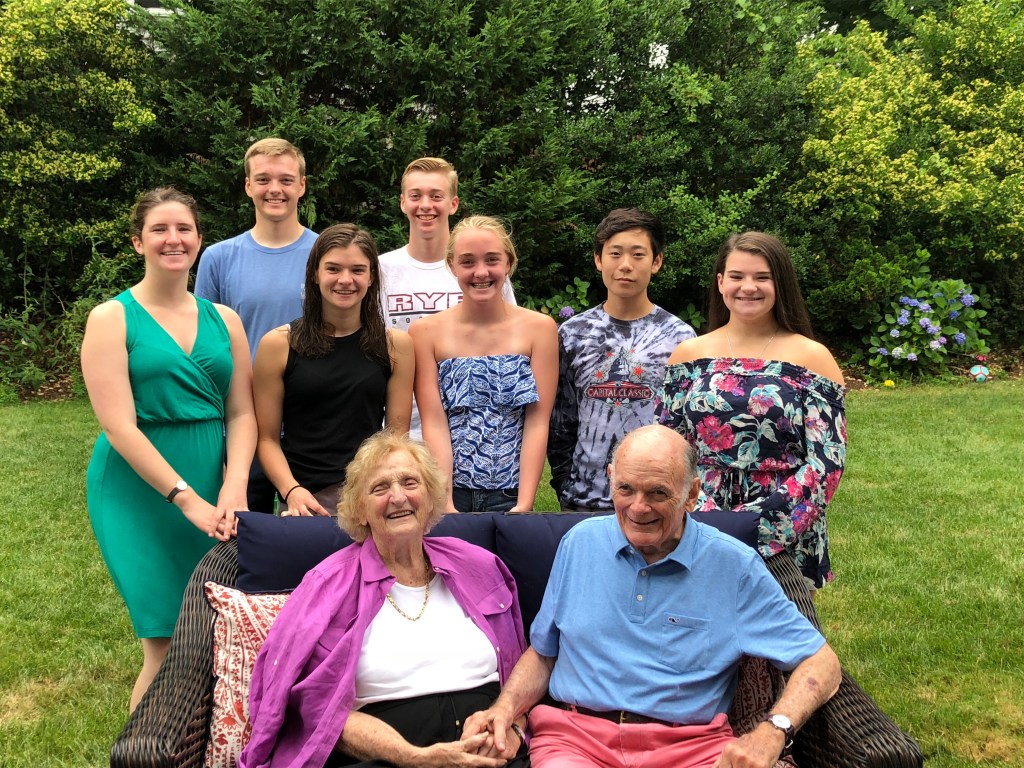
With all the grown up grandkids