
My brush with a CPAP machine (and other modern miracles)
As soon as I heard the words “suction” and “backdraft,” I knew I was out.
I was talking with a sleep technician arranged by my healthcare provider, and told him I found it hard to swallow while wearing the new CPAP mask my doctor had prescribed.
“Yeah, you’ll feel a backdraft,” he said. “That sensation will go away.”
Backdraft? In my windpipe?
He went on to use phrases like “seal of the oral cavity” and “lung pressure adjusts into the back of the throat,” while explaining that I would need to learn to breathe only through my nose while sleeping.
I also remember him saying something about suction, though my memory is fuzzy on the details. I just know that when I heard that word, I thought “oh, hell no.”
I was diagnosed in January with moderate sleep apnea, a condition where the throat muscles or tongue relax and close off the airway during sleep, causing breathing to start and stop.
The best treatment for this condition, I was told, was a CPAP (Continuous Positive Airway Pressure) device with a mask.
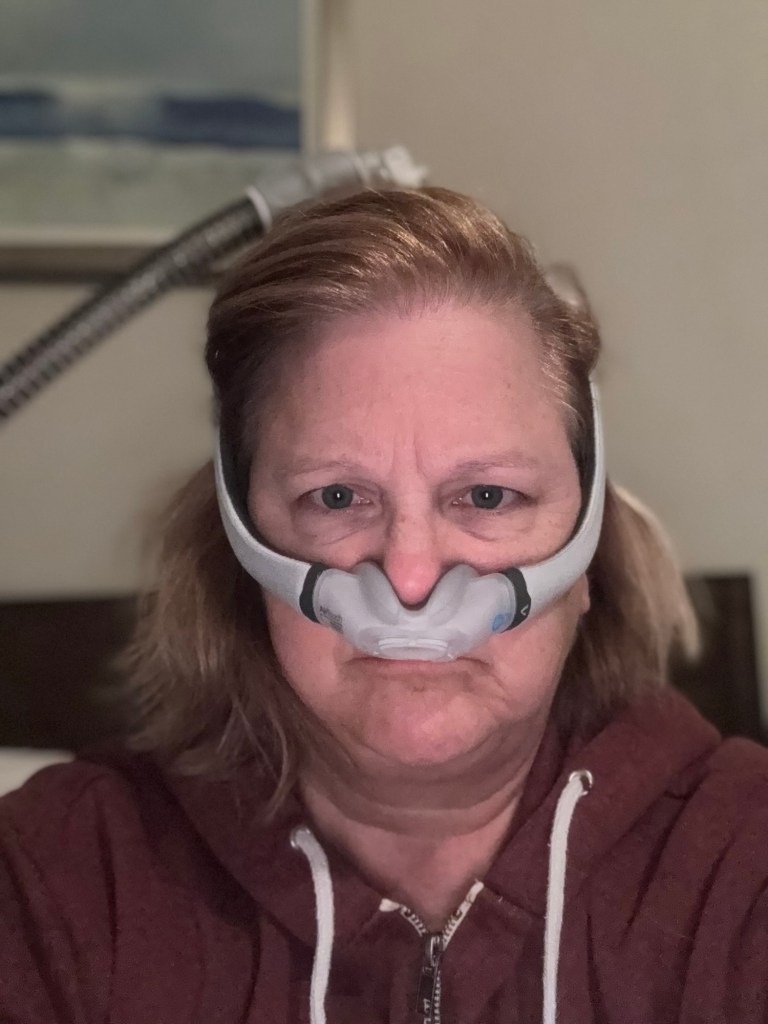
I had heard of these machines but had never actually seen one until it arrived in the mail. The one I received included a box, a long plastic tube connected to headgear, and something called “nasal pillows.”
A description I read said nasal pillows are “two soft silicone cushions that rest gently at the entrance of your nostrils.”
After trying it on, this seemed like a more realistic description: Two portholes cut into a sponge (that smells like antiseptic) allow oxygen to be pumped directly up your nose.
I took a picture of myself in the mask and texted it to my sister. Her reply: “OMG. Not a chance I’d get a wink of sleep in that.”
My thoughts exactly.
The only one who seemed excited about the new contraption was my kitten, who took a flying leap and pounced on the tube the moment he saw it.
I lasted 24 minutes in the mask the first night. The oxygen didn’t flow evenly. If the machine sensed my breath was slowing, it pushed in a puff of air, which startled me.
The purpose of this contraption was to help me sleep better, and it seemed like it was going to have the opposite effect.
But I wanted to give the CPAP machine a fair chance, so I tried it again the next night and waited to go to bed until I was exhausted. I lasted almost an hour and a half before yanking the headgear off and throwing it across the bed.
I tried the machine a third night and lasted about 30 miserable minutes.
During the check-in with my sleep technician a few days later, he suggested a few tweaks and assured me that I would get used to the machine within four months.
Four months?
I didn’t want to give up too easily. After all, the literature on sleep apnea warns that it can lead to horrors like heart attacks, strokes, and even car accidents.
And yet, strapping a medicinal-smelling sponge to my face, with a tube that exits at the top of my head, seemed unlikely to help improve the problem that brought me to the doctor in the first place. So I told the technician I was done.
I didn’t feel good about only lasting three days with my new CPAP machine. I know it works for lots of people and addresses serious problems.
I also began to wonder if giving up too easily was a pattern for me, because this wasn’t the first time I discontinued a medical intervention that has been widely successful for others. Before the CPAP, I tried and quit Wegovy. And before that, I tried and quit Invisalign.
I started Wegovy, a GLP-1 weight loss drug, in December after finding out I was prediabetic. I’ve been more than 50 pounds overweight for close to a decade, which, in addition to the shame it carries, also feels like an invitation for serious health problems.
I decided to try the medication over my winter break, so I would be home if there were any side effects. That turned out to be a good decision. The medicine made me feel terribly nauseous.
In a follow-up visit, my healthcare provider shared that about 45% of people who try the drug experience nausea. She said that most adjust within a few weeks.
For me, that felt untenable. I work at a big, busy high school, and the thought of trying to limp through a few weeks of teaching while feeling sick to my stomach was a hard no.
I decided to table the idea of taking a GLP-1, at least until the summer. In the meantime, I would see if I could try a different approach to losing a significant amount of weight without drugs.
The good news is that I started seeing a new doctor who has a background in obesity medicine. She worked with me to set up a plan, and I’ve made slow but steady progress since January and intend to continue this approach instead of going back to a GLP-1.
Unlike Wegovy, which was just the latest chapter in a significant health struggle, my foray into Invisalign two years ago began because of a relatively minor issue. My dentist recommended it to preserve a loose tooth.
It seemed simple at first.
All I had to do was wear “trays” (clear braces) for 22 hours a day. The trays would be molded to my teeth and would be painless. The most painful part was the cost—$4,000 out of pocket.
Thinking it was better to pay now than to have an even more expensive and complicated procedure to put in a fake tooth somewhere down the road, I signed on.
But I underestimated two things. One was how hard it would be to cram my daily intake of food and beverages into two hours. The trays have to be removed if you’re having anything besides water, which seemed reasonable until I tried it.
For starters, I have various forms of caffeine throughout the day: tea, Diet Coke, and coffee. It takes a minute, because I don’t swill any of those drinks.
Now throw in snacks and meals. Going out to dinner? Having a few drinks with friends? Add that to your total time without trays. It’s surprising how easy it is to blow right past the two-hour “trayless” allotment.
Then there was teaching in Invisalign. I felt like I was wearing my old field hockey mouthguard while attempting to sound authoritative in front of a group of teenagers.
“Guysshhh! Evrbuddy shhhit downnn!”
“I meean uuuht!”
And top it off with having to take the trays in and out of my mouth while at school, in restaurants, or in other public venues. To pry them off, I had to reach deep into my mouth and give them a hard yank. That felt as mortifying as if I were to floss my teeth in public.
But I stuck it out for several months, putting the trays in at night and at times during the day, hoping to elude my dentist’s notice at check-ups.
He didn’t seem to catch on at the beginning, so I got cocky and started wearing them less and less during the day.
And, like the teenagers who sit in my classroom every day, I was annoyed when I got busted at a later appointment. I had a tense conversation with the dentist about whether I wanted to continue with Invisalign.
I insisted that I did (“yes, doctor, I do want braces!”), but as time went on, my motivation waned. I decided to kick the can down the road and just get a fake tooth when (or if) the time came.
It can be hard to know when to walk away from something that isn’t working, and sometimes quitting is the harder choice. But that doesn’t make it wrong.
I’ve come to the conclusion that I have to trust my own instincts and recognize that just because something works for lots of other people, it doesn’t mean it’s going to work for me.
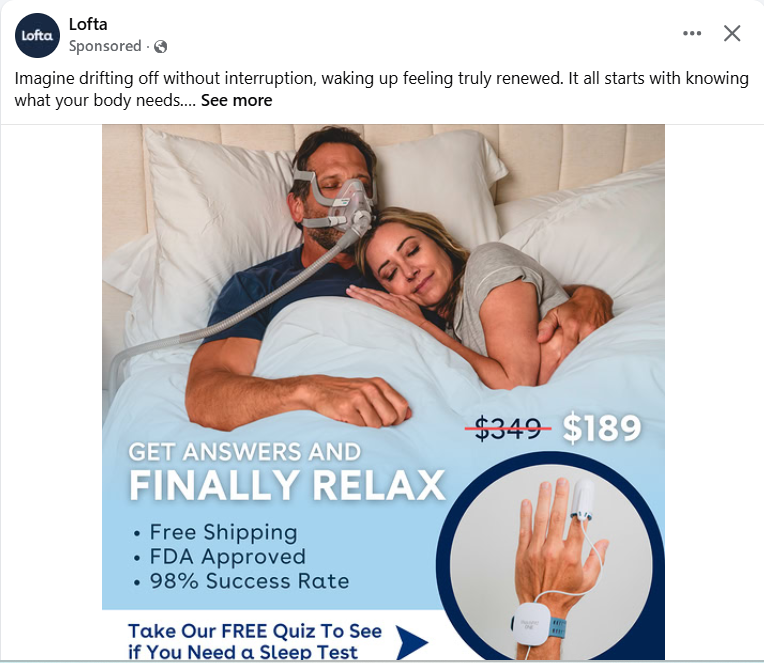
As the folks from Lofta might say, it all starts with knowing what your body needs.
I still can’t say I know exactly what my body needs, even at my advanced age. But I know it isn’t trays or nasal pillows.


