Cape Fear

Adventures in a tin can

“I’m going to need your weight.”

“Pardon?” 

I was flying from Logan Airport in Boston to Provincetown, and I had already checked in online, so I was surprised when passengers on my Cape Air flight were asked to come to the gate. I wasn’t sure I had heard the gate agent’s question correctly.

“I’m going to need your body weight,” she repeated. “It’s a very small plane—there are only nine passengers, and we have to balance the weight.”

A couple of things occurred to me at once.

How close were we cutting it with this balancing thing? If the heaviest people sat in the back, was the plane going to drop tail first into the water after takeoff?

And did she actually just ask me to say my body weight out loud? 

The gate agent looked impatient.

“Ok,” I answered defensively, “I’m going to go with one MILLION pounds.”

She gave me a wan smile. 

“If you want to get on the plane, I’m going to need that information.”  

“Ok, then. I’m gonna go with ____,” I said, eyebrows raised, giving her my actual weight, plus a couple of pounds to account for the ridiculous number of snacks I had eaten since leaving home that morning.

I sat down in the gate area, stewing about the invasion of privacy. Was there a more personal question a woman could be asked? Then again, what did I care about saying a number out loud? I wouldn’t have thought twice about telling her how tall I was.   

I was meeting my college roommate and her wife in Provincetown, and she had purchased my airline tickets as a birthday gift. I had no idea she had already been asked to guesstimate my weight when she booked the flight. I later learned she had graciously shaved 40 pounds off in her estimate.

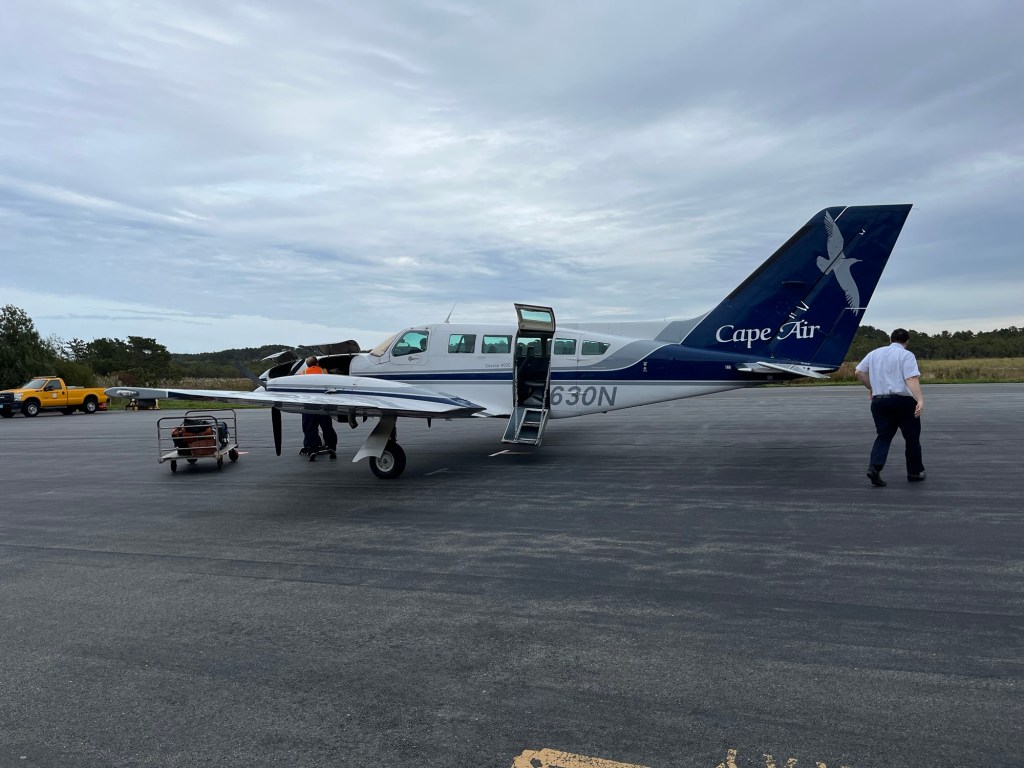
As we waited for a late passenger, the schoolmarm in me wanted to leave her behind to teach her a lesson about being punctual. When she finally arrived, we were marched out to the tarmac by a rather severe Cape Air employee. Once we were outside, I understood why we weren’t allowed to bring any carry-ons. I had never been on a plane so small. 
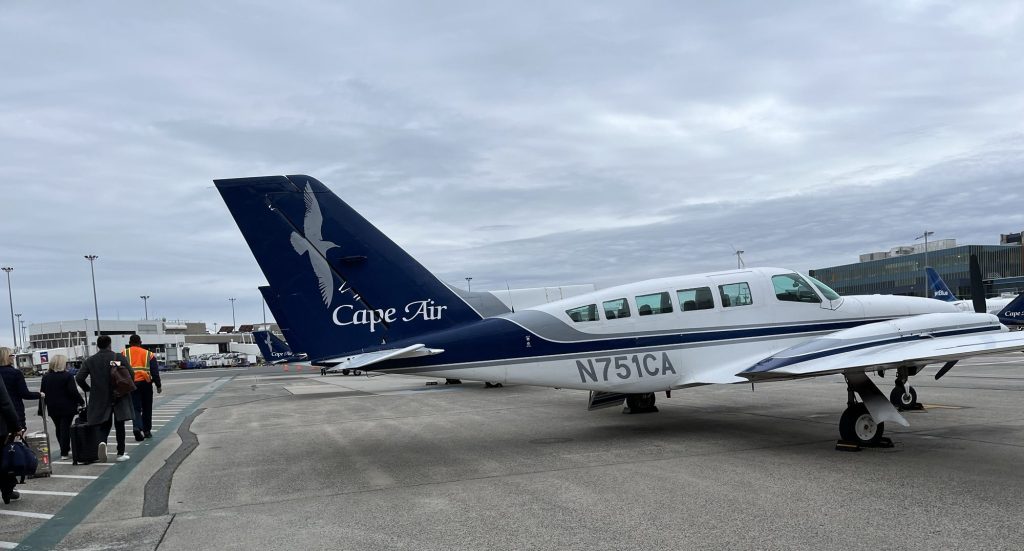
One by one, our names were called, and seat assignments were made based on the “calculations.”

“Phillips?” 

After the Cape Air drill sergeant called my name, he pointed to the middle seat over the wing. Hmm, I thought, what meaning should I assign to this? Was it an insult to be seated over the wing? 

As I hoisted myself up the two steps and into the tiny plane, I thought of Amelia Earhart and hoped we would fare better than she had. To my dismay, we weren’t sitting in airline seats. They were leather-covered chairs. 

Shortly thereafter, a bearded 20-something seated in the pilot’s chair turned around and said, “Hi. I’m Ryan.” His co-pilot, another 20-something in gaming headphones, didn’t turn around or introduce himself. 

We soon began an unsteady takeoff. I usually keep my white knuckles to myself on a plane, but since there were no sides to our chairs, I grabbed the back of the seat in front of me without thinking. I quickly realized I was acting like an annoying 7-year-old and let go. There was nowhere to hold, so I clutched the bottom of my chair instead. I was a study in right angles, my arms rigidly at my side.

The flight was a new experience. Usually, when the air is choppy, the plane bounces up and down. This little aircraft swung side to side as we pulled up and away from Logan. We weren’t very far off the water, which I found unnerving. Would I be swimming with the fishes soon?

I sat locked in that one shape for about 10 minutes, staring out the window. As we got away from Logan, I started to breathe freely again and unclenched my fingers from the bottom of my seat. I reminded myself how infrequent plane accidents were.

That peaceful, easy feeling lasted until I noticed Ryan’s co-pilot craning his neck to stare at something behind us. I had a sudden urge to yell “Keep your eyes on the road!” but stopped myself. A minute later, the same guy was looking down at an information card, flipping from one side to the other. Was he deciding what to order for dinner? 

I’ve heard the expression “God only gives you what you can handle” and God must have known I couldn’t handle much more, because although one of the helpful Cape Air gate attendants had mentioned we were “expecting some weathuh” just before we boarded the plane, the skies were clear for our 20-minute flight. 

I was relieved when Provincetown finally appeared in the distance—until I realized I couldn’t see a runway. Would we be landing on the beach?

We flew up and over the shoreline, then headed down towards some trees. Would we be landing in some trees?

Instead, we had more side-to-side swinging and then dropped hard onto the runway, which was about the size of a two-lane road.

The woman across the aisle from me, the latecomer who smelled of alcohol, had slept through most of the flight. She and two people behind us began chatting about how easy this trip was. “Oh! Only 20 minutes! So much better than a two-hour ferry ride or driving!”

My face curled in disbelief. Had we been on the same flight? 

After the three happy-go-luckies got off the plane, the woman sitting ahead of me to the right (not the one whose chair I had shaken) turned around for the first time. She had the same frozen look on her face that I did. 

She didn’t need to say out loud what I knew she was thinking: that, like me, this was her first and last flight on Cape Air. 
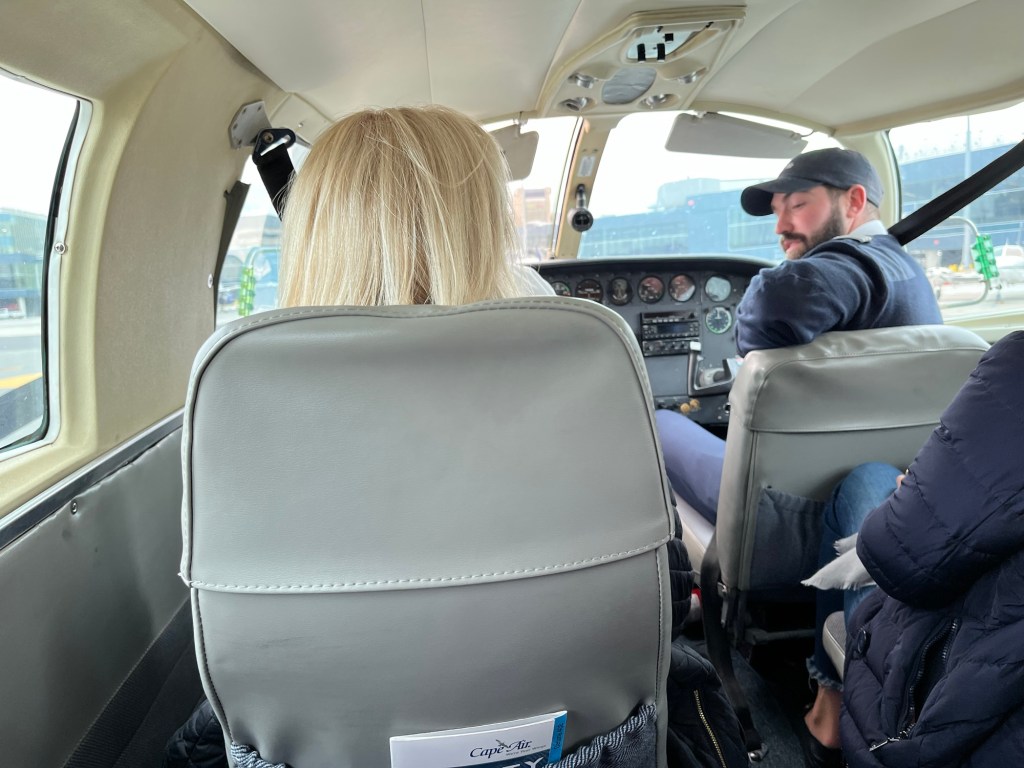
Ryan
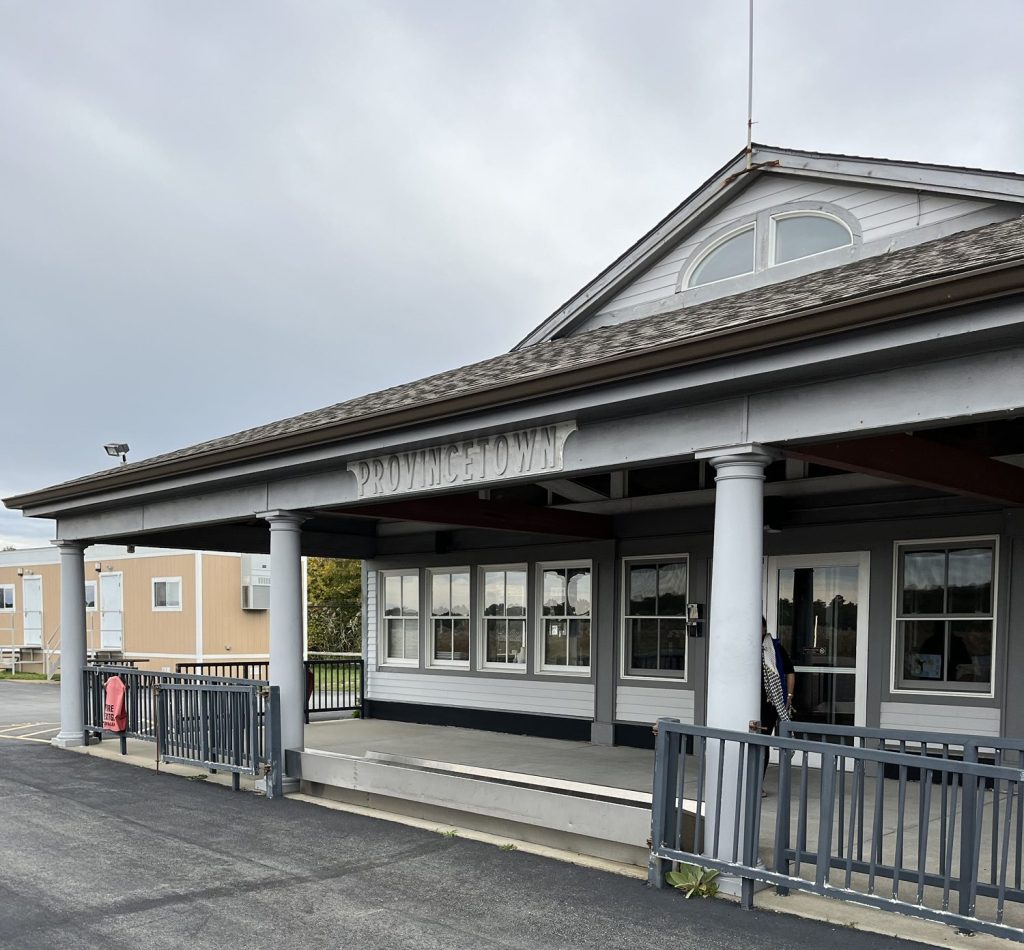
Provincetown Airport. It’s about the size of a Wawa inside
The co-pilot walking behind the plane after arrival. Please note that he’s almost as tall as the aircraft
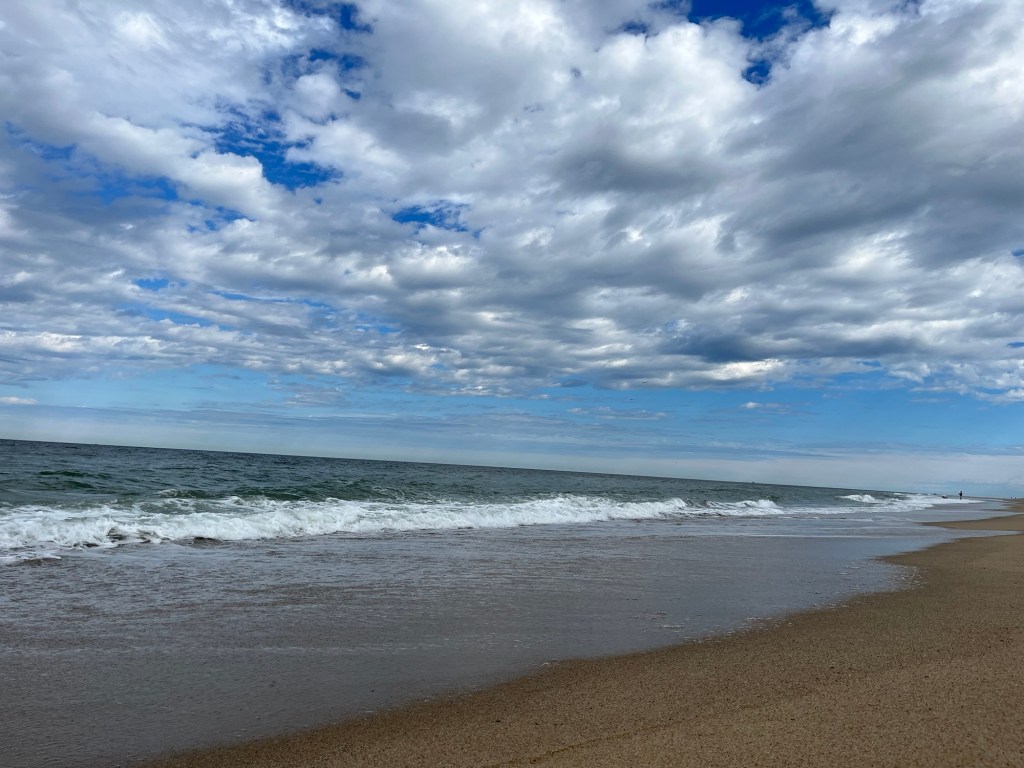
Mercifully, this didn’t end up being our landing strip

Hello, Old Friend: Anxiety Returns

I was halfway over the bridge when I realized my stomach was in a knot. I was gripping the steering wheel so hard that my hands hurt. My palms were sweating. My jaw was clenched. I was in the right lane but found myself leaning left onto the door and driving on the center white line to feel as far away from the edge as possible.  

After what felt like an eternity, I made it to the other side.  

My first thought: PHEW!

My second thought: I have to get home on Sunday. I’m going to have to do this all over again.

I was crossing the Chesapeake Bay Bridge in Maryland on my way to spend the weekend with some friends in Delaware, my first foray out for a non-family get-away in more than a year, and my sudden burst of fear caught me off guard.  

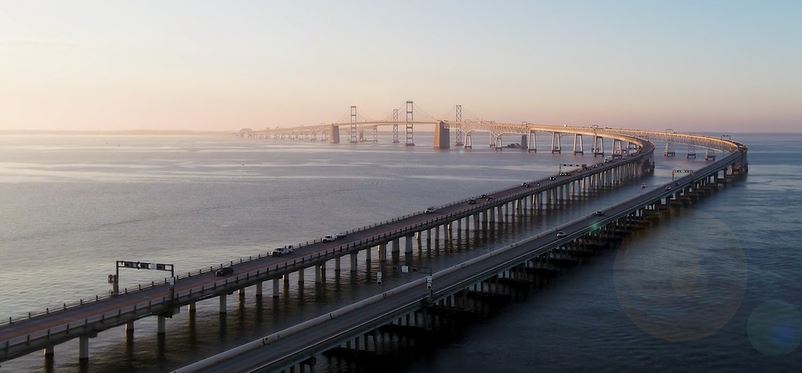
Apparently, I’m not the only person who has this response to the Bay Bridge; it is high, long, and narrow, with ridiculously low guardrails. It has earned votes as the “scariest bridge in America,” causing so many to panic that there’s actually a company that drives people over the bridge in their own cars (one way) for the low, low price of $25.

Irrational fear on display at age 6

Still, I was surprised and annoyed at my reaction. Anxiety has been a part of my life for as long as I can remember, from day-to-day excessive worrying and catastrophizing to phobic feelings about bridges, tunnels, heights, and doctors. But for the last three years, I have experienced much less anxiety, thanks primarily to meditation.

I actually owe some of the shift to Ellen Degeneres. I happened to be watching her show the day her guest was Bob Roth, a Transcendental Meditation expert who taught Ellen and her wife how to do TM. She said it made a huge difference in lowering her stress level.   

Though I thought the name made the practice sound weird (I somehow associated “transcending” with levitating), I knew that science had long supported the positive impact of meditation. I was struggling in my marriage at the time and was desperate to find a way to quiet my mind and make sense of what was going on. I decided to do the TM training and began meditating each morning before starting my day.

Soon after I felt a noticeable drop in my anxiety level. There was nothing magical about it; I just felt I was able to slow my thoughts and function with a greater sense of calm. I eventually found that I was doing things like crossing bridges without really thinking about it. And generally speaking, since I started TM, I have felt less angst when dealing with stressful situations. This is why I was taken aback by my experience last weekend.

I was having a great time with friends — chatting, laughing, drinking beer — but was surprised at how many times my mind kept coming back to the return trip across the Bay Bridge. I knew I was overreacting and unnecessarily expending a ton of mental energy on something that was going to last about five minutes. I just could not shake my sense of dread. It was like having a great time at a party but noticing a man in a trench coat in the back of the room with a grim, knowing stare waiting for you.  

I seriously debated dodging the event altogether and taking a longer route home to avoid the bridge. Ultimately, though, I knew I would create a bigger problem for myself if I avoided it and decided against the alternate route.  

Gulp

It was not an easy trip home. Every time I saw a sign for the bridge my stomach sank, and for a good half hour as I approached, I felt the same tightness in my body I had experienced two days earlier. But I jackassed my way over the bridge by talking to myself loudly and making note of my progress. (“I can see the other side now!”) I can only hope that nearby drivers thought I was either singing along with a great song or enthusiastically talking with a friend on speakerphone. It was an ugly win, but a victory nonetheless. I felt a tremendous sense of relief once I made it across, something that almost approached euphoria.  

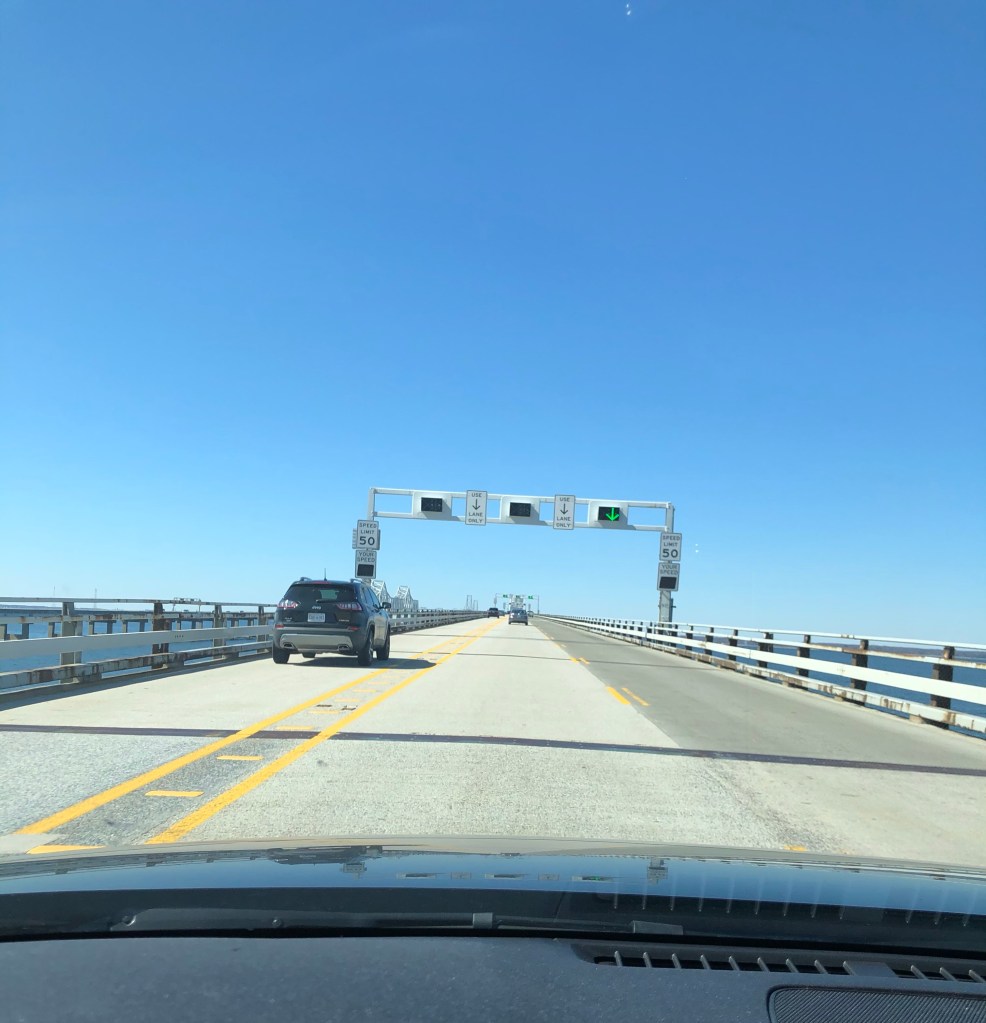
And away we go — driving onto the bridge on the way home

Part of me is embarrassed to write about this. There is such a gap between what I understand intellectually (I’m going to be fine) and what I feel (my last memory will be of this bridge) in certain situations. I know I have an irrational sense of danger about a number of things. I have been driving for 36 years and I’m quite good at driving in a straight line, for example, so I should not feel a sense of terror while on the road. But knowing you’re being irrational and stopping the thought are two different things. I have felt the sting of a dismissive eye roll many times over the years when I have expressed fear, and that doesn’t make anything go away, it just drives it underground. 

A lot of this doesn’t make sense to me, including why fear would crop up again so fiercely after a period of marked improvement. Or why people are afraid of some things but not others. Doctors drive me to distraction, but spiders don’t bother me in the slightest (if I come across one in my house, I get it to crawl on a piece of paper and bring it outside). Don’t bring me to the top of a skyscraper to sightsee, but I love going to parties and don’t even mind going by myself. It seems that one person’s nightmare can be another person’s oxygen. 

I do know that I am hardwired for anxiety, and I can either continue to work to manage it or become increasingly debilitated by it. Last weekend I was reminded that it is not possible to declare a final victory over something just because there has been improvement. Daily meditation has been tremendously helpful but is clearly not the only step I need to take to deal with this issue, especially since it is not limited to one situation but fans out into many aspects of my life.  

Anxiety has made my world smaller over the years. I hope I can reverse this and live more fully by simplifying my goal — to something like “better, not fixed.”

It’s actually pretty when you are not trying to cross it