Finding the Meaning in Objects
Marie Kondo has nothing on me.
Long before I heard the Japanese professional organizer’s advice to keep only things that “spark joy,” I was maintaining a spartan environment.
Years ago, a friend walked into my house for the first time and looked around. She seemed confused.
“Where’s your stuff?”
“You’re looking at it,” I said.
Though I choose to surround myself with less “stuff” than others, I know that doesn’t make me a morally superior person. I just find that a simple, uncluttered environment gives me peace. Or maybe it gives me a false sense of control in a chaotic world.
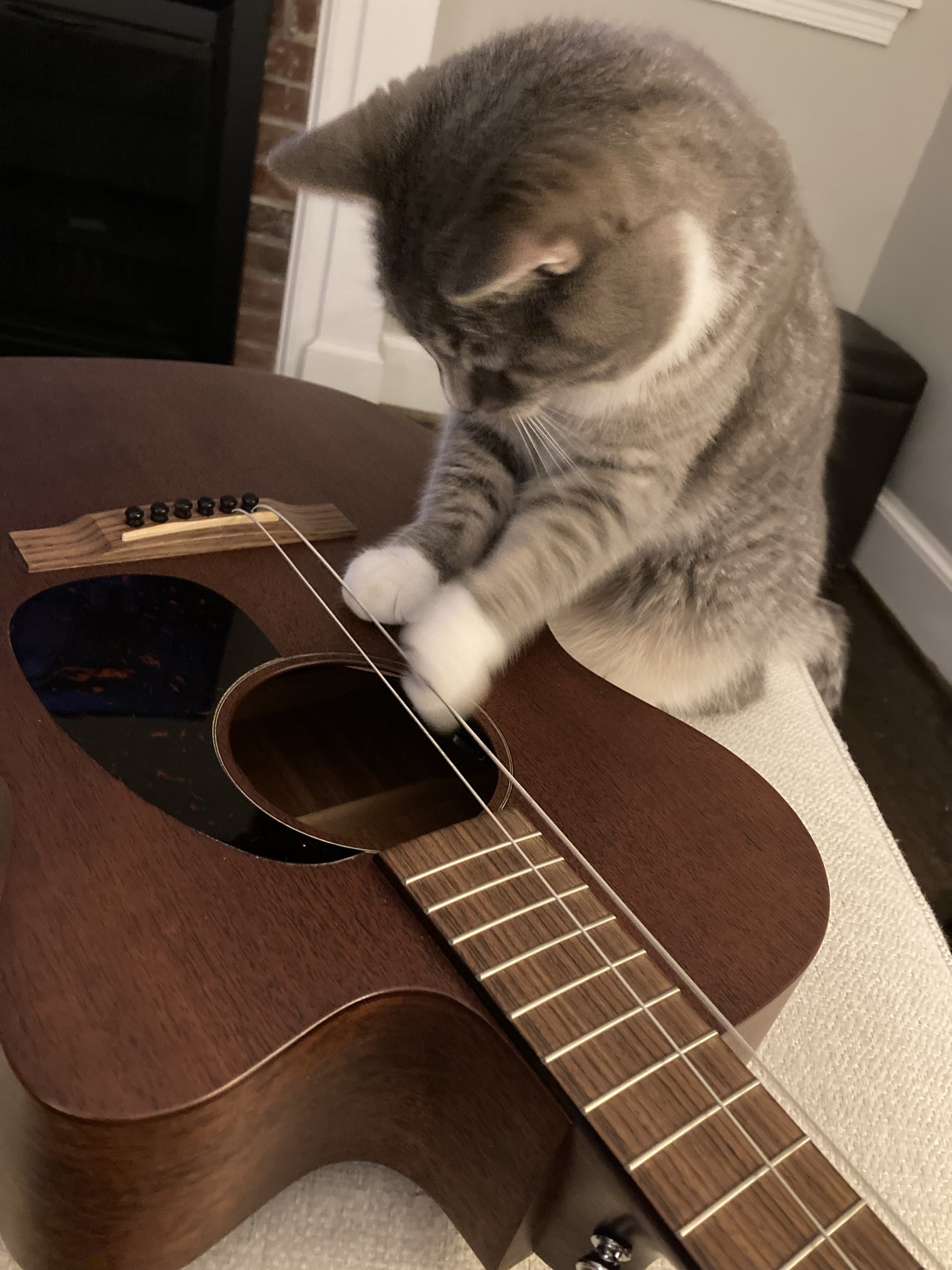
Either way, even I have held on to plenty of objects that have emotional significance. A guitar I bought almost 30 years ago. Letters from my dad. Hundreds of photos of my son and other memorabilia from his childhood. A watch from one of my grandmothers. A book from the other.
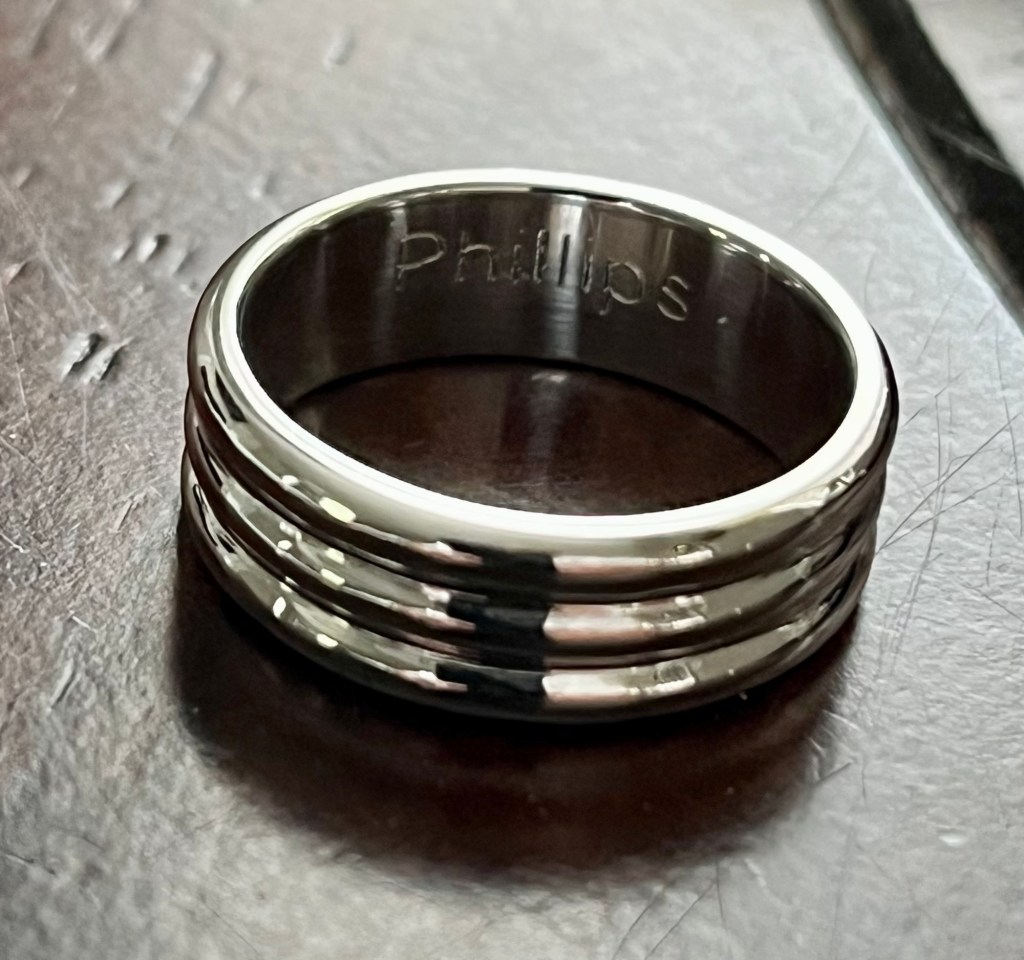
And a few years ago, I had an object made that quickly became one of my prized possessions, something I expect to keep for life: a ring that connects me to my family.
When my parents moved out of our childhood home, my siblings and I helped clear the house before it was put on the market. We each brought things back to our own houses afterward, with a plan to divide them up later if necessary. The two big things I took were the silverware and the photo albums.
Life was hectic and emotional in the months following the move, as my mother was put in hospice and then passed away. The silverware and photos sat in a room in my house for several months.
Over the summer, when school was out, I had the time and emotional energy to sift through what I had brought home. I started with the silverware. Because I don’t entertain with formal china or silverware, I knew the whole set would end up sitting in a closet.
I thought of having the silver melted down and made into a ring, but apparently, that’s a difficult process. Instead, after talking with my siblings, I decided to sell the silverware and use the money to have a new ring made.
Next, I went through the photos and began separating them into piles to send to various people. As I was doing that, I found something interesting.
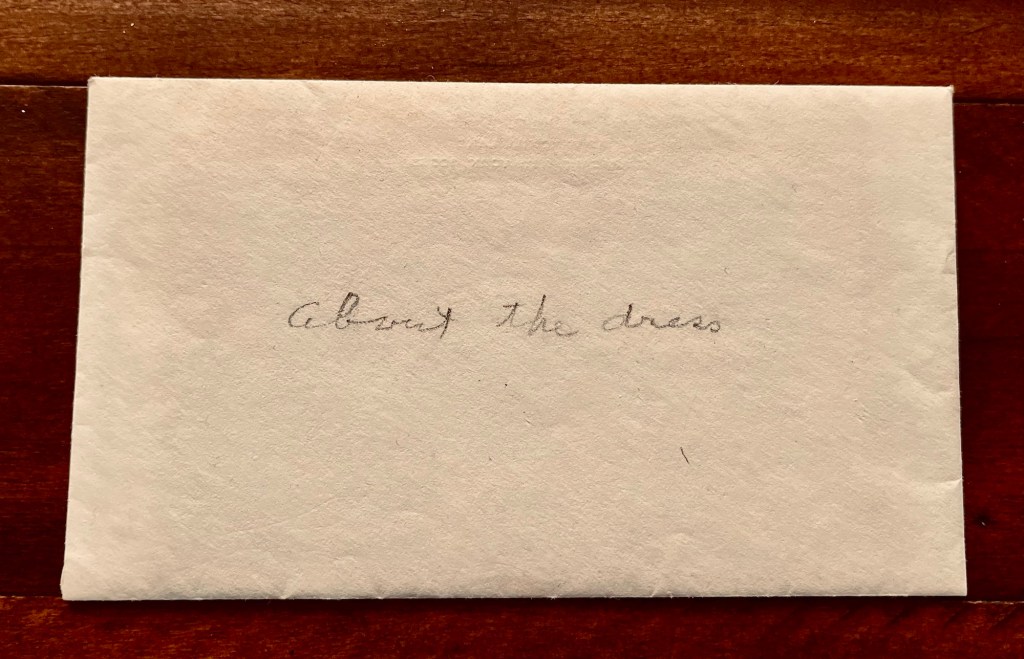
Among my mother’s photo albums, one was from her parents. Tucked into the back of the album was an envelope labeled “about the dress” in my grandmother’s handwriting.
Inside were two letters written in 1955 from a mother and daughter who lived in Scotland. From what I can gather, this Scottish family lived in France near my grandmother’s family during the first four years of her life.
Both letters referenced a christening dress that my great-grandmother had made by hand. It seems that my grandmother knew this family had the dress and wrote to them asking them to send it to her.
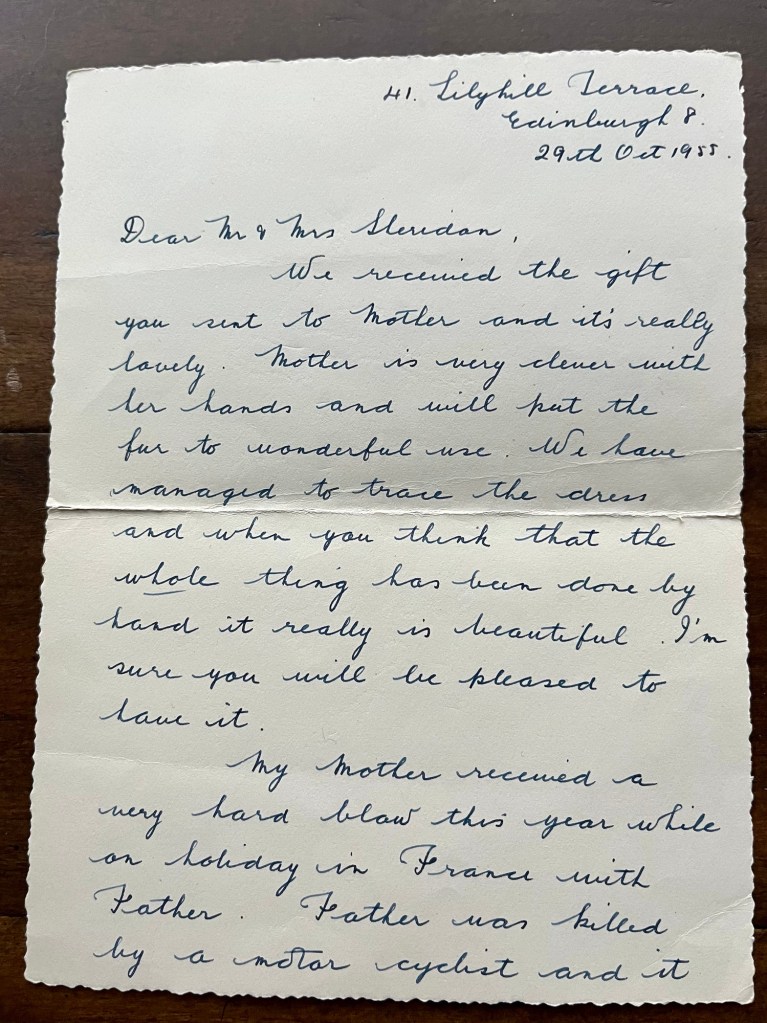
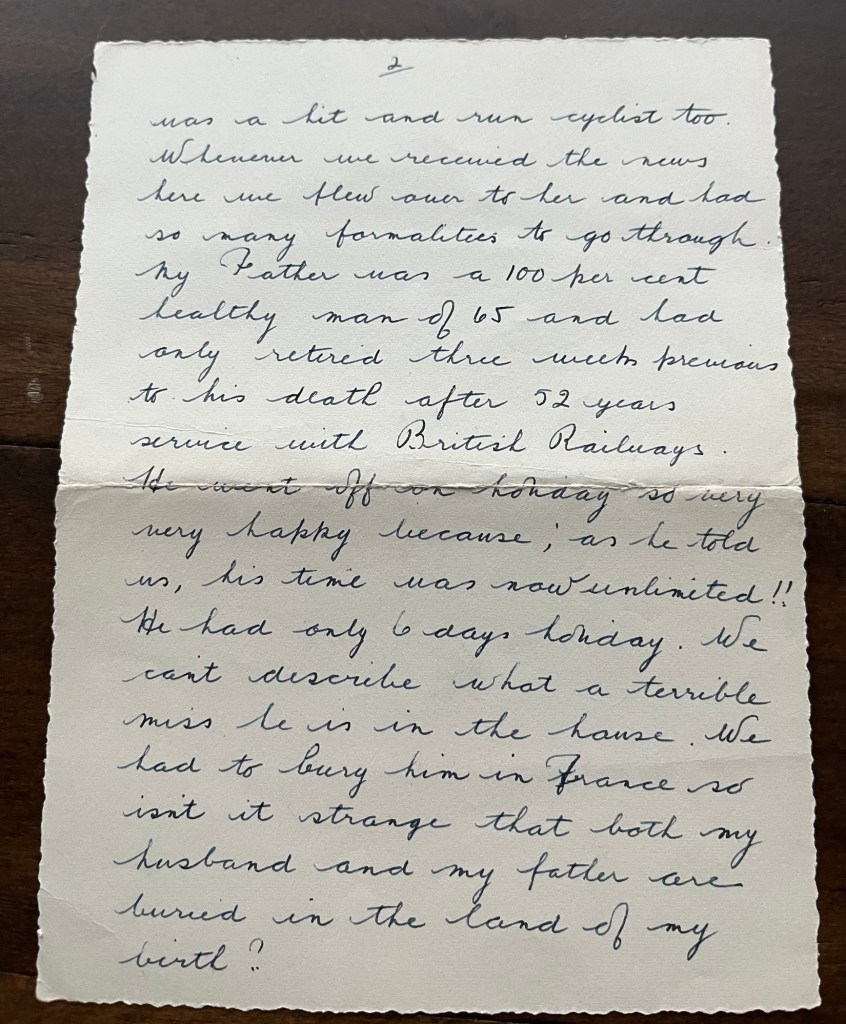
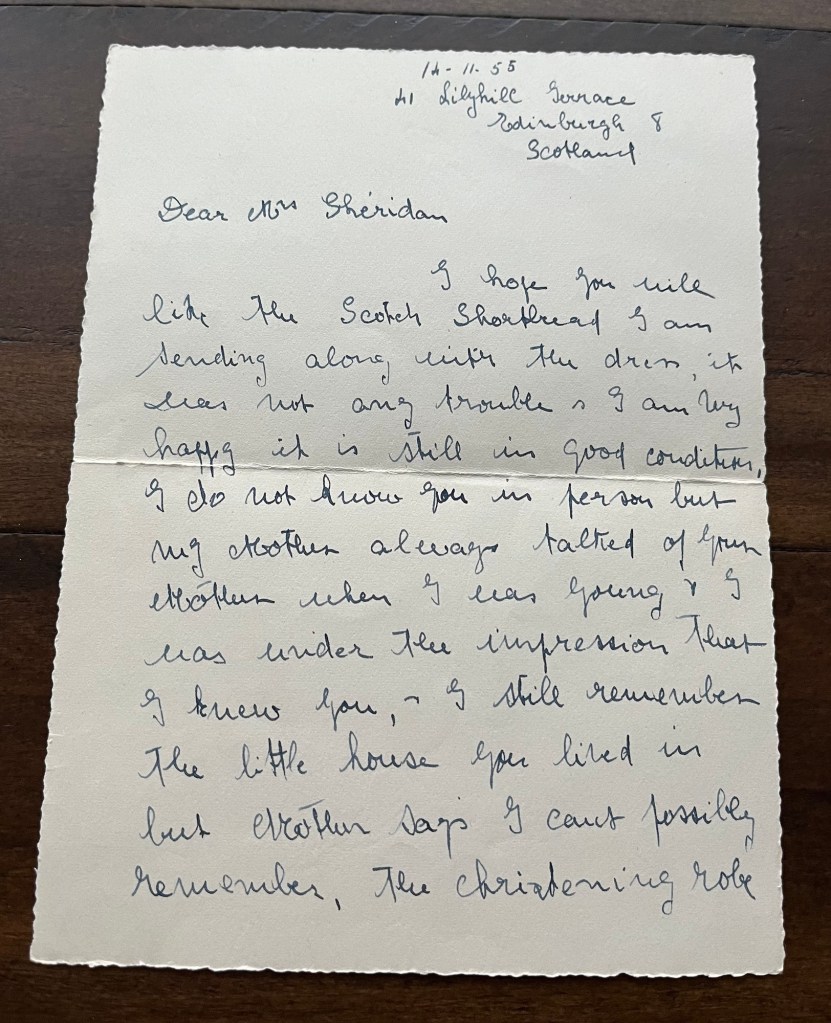
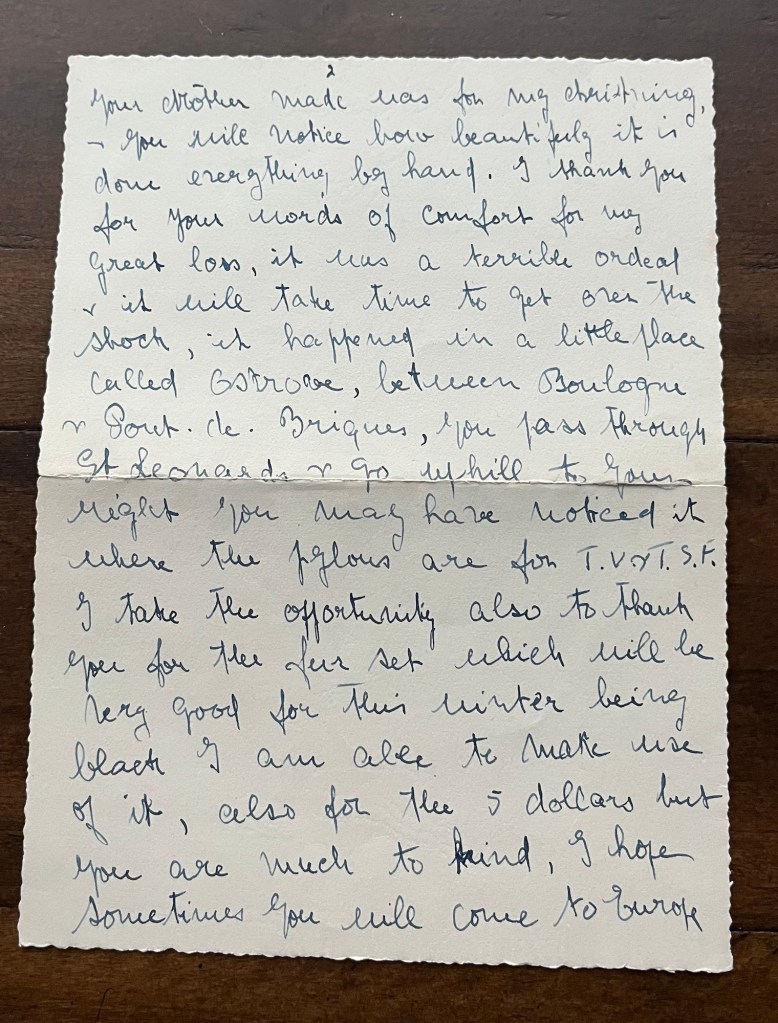
I was struck by the fact that my grandmother wrote to two women in Scotland she had never met, more than 35 years after her mother had died, to ask for the christening dress.
I was also struck by the fact that she sent the letter in 1955 and kept the responses for the rest of her life. She died in 1989.
I never spoke with my grandmother about her own mother. I now know that my grandmother was just 23 when her mom died after being hospitalized in a psychiatric institution for a year. Even if I had asked, I don’t know that my grandmother would have shared any deep insights into what memories she carried or how she felt about her mother’s hard life and sad death.
But I found it telling that decades after losing her mother, she reached out to strangers on a different continent in an effort to retrieve a physical object, something beautiful her mother had made.
I think it’s safe to assume that she went to such lengths to track down a dress made some 60 years earlier because she wanted a connection to her mother. And she may have wanted the dress to be handed down to future generations in hopes of keeping her mother’s memory alive.
Under very different circumstances, the ring I had made in 2023 serves me in the same way that I think the christening dress served my grandmother. It’s a small object that represents a bigger idea.
My ring reminds me of the silverware and all the meals I had with my family, especially on holidays and special occasions. It makes me think of my parents and the many people they welcomed into our house. It’s a touchstone that takes me back to other times.
The design of the ring, which I saw online, photographed, and brought to a local jeweler to replicate, has its own significance. The three strands of silver remind me that I’m one of three siblings. When I look at it, I think of my brother and sister, two of the most important people in my life.
When I told the jeweler why I was having the ring made, he had the idea to inscribe my family’s last name on the inside. At this transitional stage of my life (as an empty nester living solo and periodically feeling untethered), the ring is a tangible reminder that I’m an essential part of something bigger.
Many of our most prized possessions bring us back to a feeling, to a time or place that makes us happy. And when we hold onto these objects, we’re often holding onto memories.
Even a minimalist like me knows the difference between a tchotchke and something precious. And even I understand how important it is to make room for things that carry sentimental value.




























 I Can See Kinda Clearly Now