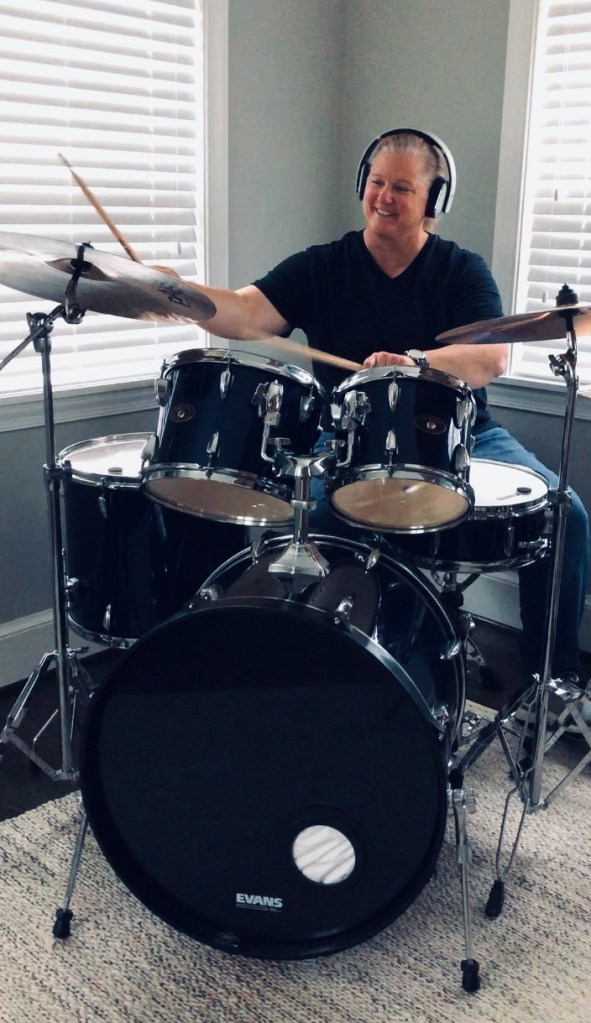
Learning to appreciate the impact we have on others
A few weeks ago, I was scrolling through Netflix and decided to watch a new documentary about Noah Kahan, a musician I was only vaguely familiar with.
About halfway through the film, Kahan is alone in a dressing room before the first of two sold-out shows at Fenway Park in Boston, warming up on his guitar, when a teenage girl and her father are brought in.
She’s frail, and it’s clear that she’s gravely ill; her father tells the musician they are on a “bucket list trip.”
As Kahan absorbs the meaning of that, the young woman tells him how important he’s been to her.
“You’ve gotten me through a lot of my treatment,” she tells him. “Whenever I’m anxious, or nauseous, or sad, or happy, I listen to your music.”
He seems taken aback and deflects the compliment, but also shares that he’s honored and happy to have helped in any way.
He asks if she has a favorite song, then plays it for her. She sits weeping at the beginning, but eventually starts singing along, and breaks into a big smile as she looks back at her dad, who is taking photos.
When the song is over, he gives her a big hug and smiles with her for pictures.
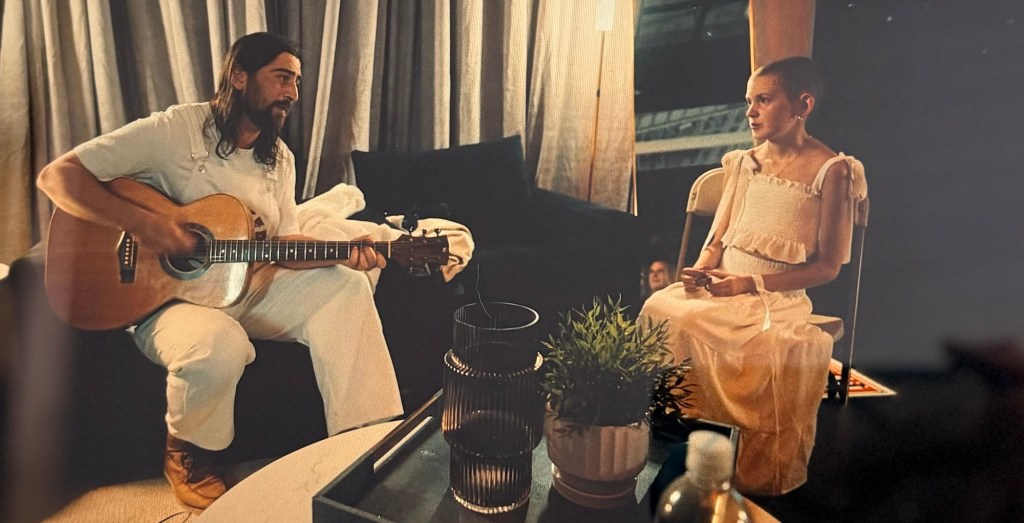
My first thought as I watched this scene was that Noah Kahan had no idea what an enormous impact he’d had on this young fan.
The moment was striking, especially as I watched the rest of the film, because it’s obvious that he has labored over trying to feel better about himself and the way he looks.
When he’s getting prepared by a makeup artist for a press day and is staying silent to save his voice, he writes things like “I have a face for radio,” and “they’re putting lipstick on a cow.”
He later says he’s always felt “physically ugly, facially ugly, mentally ugly.”
Watching thousands of people sing along with him at his concerts and seeing how much they enjoy his show made it clear to me that there was an enormous disconnect between his self-image and how others see him.
The film also shows an event for the Busyhead Project, a nonprofit Kahan started that promotes access to mental health services, especially in rural areas. The organization works to reduce the stigma around seeking treatment for mental health.
This young man, who is 27 at the time of filming, has already brought so much good into the world, but is almost blind to the positive effect he’s had on others.
It reminded me of a reel I saw on Instagram last year entitled “Your impact on others is greater than you’ll ever know.”
One of the greatest tragedies in life
is that you will always be loved
more than you will ever know

Someone on the street loves your smile
and it brightens their path
for the next few blocks

Someone you used to be friends with
still wishes to fondly call your name

Someone who regularly comes into work
is disappointed when you aren’t there to brighten their day

Someone missed you today

Someone noticed when you were gone

Someone loves you when you’re there

Someone loves you
when you’re nowhere to be found at all

You may think you have always disappeared
when you’re no longer in the picture

But you’ve never left the frame
A day or two after I saw the Noah Kahan documentary, I happened across something else that seemed to drive home a similar message.
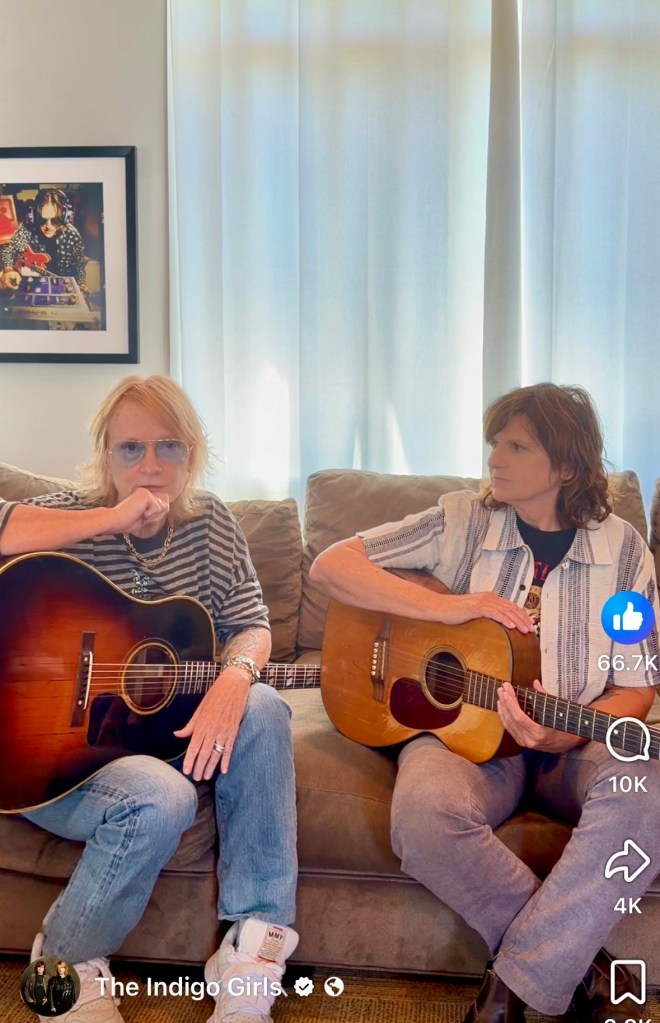
I watched an announcement on Facebook by the Indigo Girls, one of my all-time favorite bands. I’ve seen them in concert more times than I can count over the last 35 years.
One of the two singers, Emily Saliers, has had a noticeable quiver in her voice during the last several shows I’ve been to. The band’s announcement addressed that. Saliers shared that she has been diagnosed with two incurable voice conditions (she called them “movement disorders”).
At one point during their announcement, she got very emotional as she explained that her voice would never be what it once was. Her bandmate, Amy Ray, also got emotional when sharing that they didn’t want to stop touring.
“I just hope that you can have some grace with my struggles for this particular touring year,” Emily said. “We’re going to work hard to make it good, and then whatever the future holds, we’ll see. But … we want to bring you the best show that we possibly can.”
I didn’t read all 10,000+ comments on the post, but many of the ones I did read echoed what I was feeling after listening to their announcement.
I thought about how their music has been part of my life for decades, how it served as an important backdrop during the years when I was coming out and afterward, and how a vocal flaw one of the singers now has would never change that.
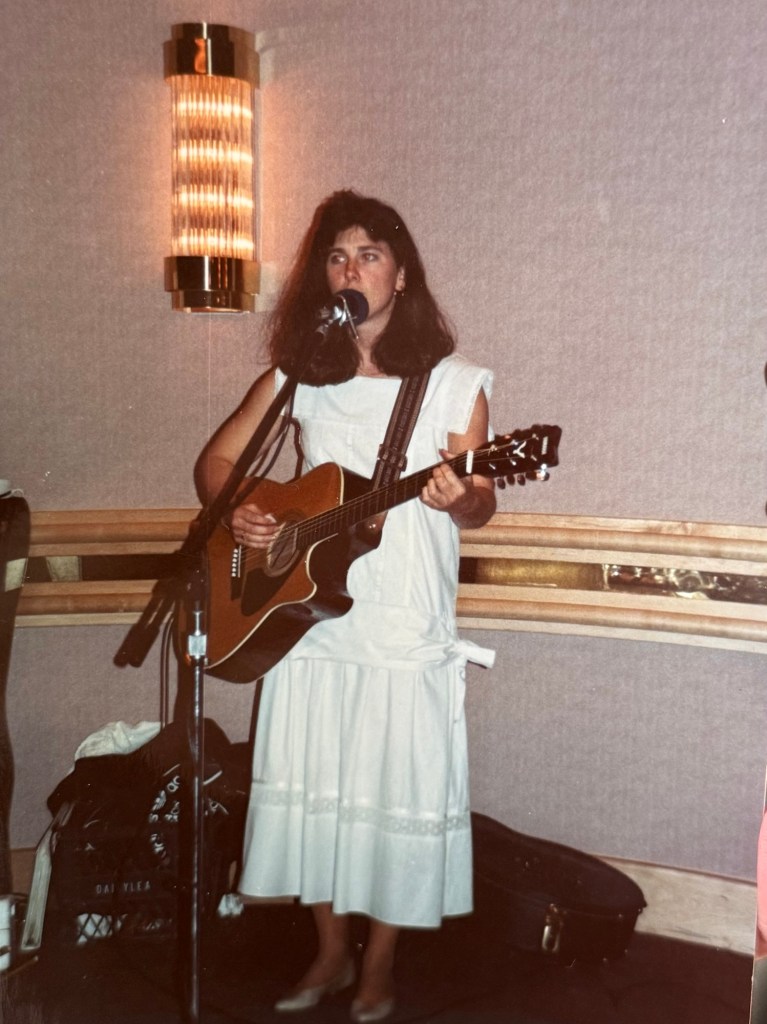
I loved their music from the moment I first heard it in 1989. I used to play and sing their first hit, “Closer to Fine,” when I was a senior in college, occasionally joining a couple of musicians I was friends with onstage at local bars to sing it.
As I got older, the Indigo Girls’ identity as “out” lesbians became important to me as well.
I went through an extended period where I was trying to figure out whether or not I was gay. Someone who was trying to help me solve the mystery suggested seeing how I felt the next time I went to an Indigo Girls concert.
As I looked around at all of the openly gay people at the show, I felt uncomfortable … and then mistook that discomfort as a sign that I wasn’t gay. In hindsight, I was just terribly unsettled at the thought of how coming out would flip my world upside down. Wrong barometer!
Later, when I came to my senses and came out, I made it an annual summer event to see the Indigo Girls play live at a nearby outdoor venue. The atmosphere always felt welcoming; it was a place where I could finally feel comfortable in my own skin.
As I listened to their announcement, I was sad that Amy and Emily (I refer to them as if they’re close personal friends) felt they needed to ask their fans for grace.
Like Noah Kahan, who has brought so much joy and comfort to others through his music and his willingness to be open and authentic, they seemed unaware of the profound impact they’ve had.
There are reasons all three musicians might not be able to fully appreciate their accomplishments. Kahan has described his struggles with depression and anxiety as an ongoing journey, and the Indigo Girls are understandably concerned about the significant vocal issue Emily now faces.
But it seemed to me, in the days after I watched the movie and the announcement, what a shame it was that these individuals were so focused on what they lacked.
And it occurred to me that this idea applies to me too.
Very few of us are like these three rock stars, with thousands of people screaming along to our songs, but many of us also focus on all the ways in which we’re inadequate. I know I do.
I’ve been a public school teacher for three decades, and now I’m doing some public-facing writing. I’ve generally been very critical of myself in both arenas, hoping my work has had a positive impact but fearing it hasn’t.
If I were friends with Noah Kahan and the Indigo Girls, I would encourage them to spend less time focusing on things like weight, looks, and sounding perfect, and more time appreciating any good they’ve been able to bring into the world.
And then I might try to follow my own advice.